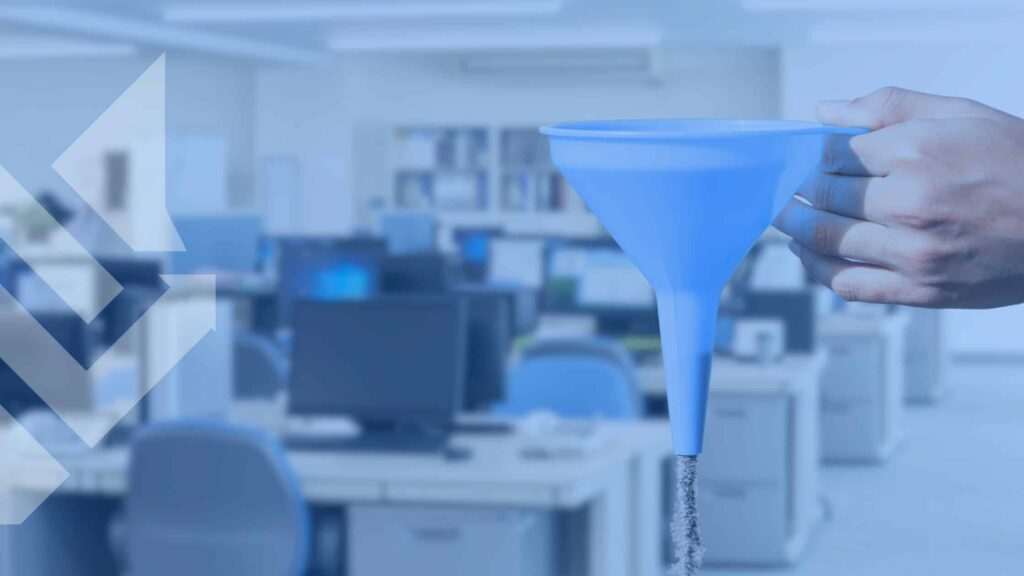

Your digital marketing funnel is the path people follow from first discovering your business to becoming a customer. When this path is clear and well built, people understand your services faster, feel more confident, and choose you more often.
People move through four main intent stages, from first visit to repeat service. They begin with early questions, shift to comparing their options, and then look for the best place to book.
Your funnel should match those stages so every piece of content gives people what they need at the right time. This guide walks through how to build one that fits your business and audience.
Step One: Understand the Digital Marketing Funnel Stages
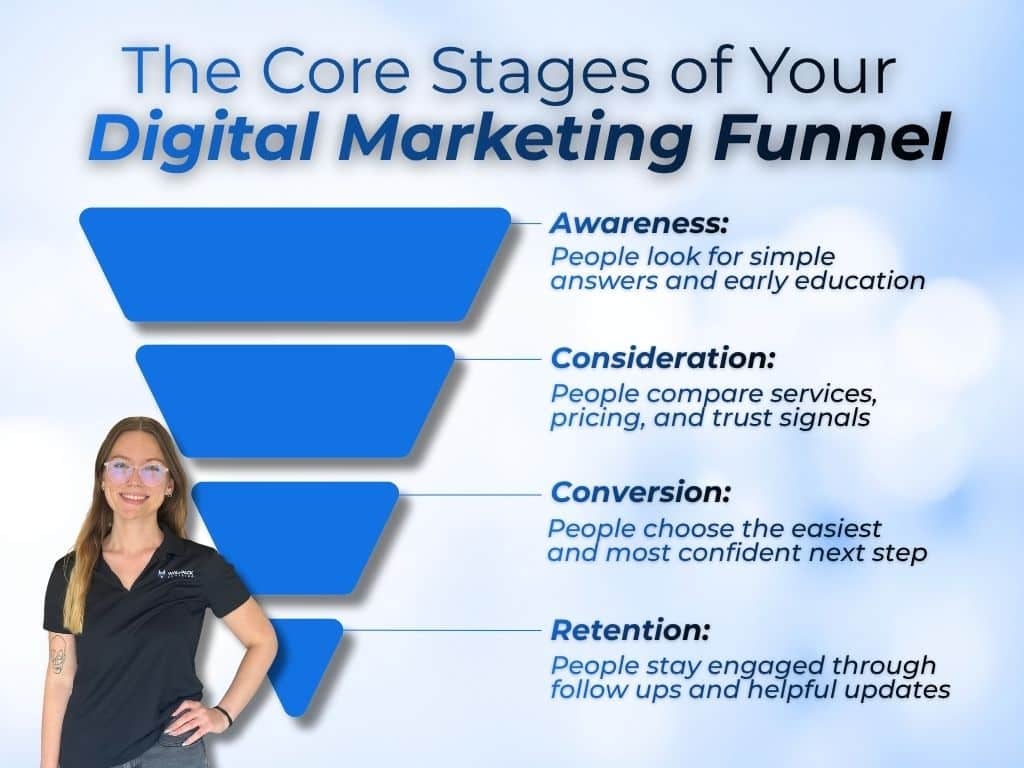
Your funnel works best when you understand what people hope to find at each stage. These stages match real search behavior and real questions people ask before choosing a service provider.
Awareness Stage: When People First Try to Understand the Problem
The awareness stage begins when someone notices a problem or wants to learn something new. They look for simple explanations online and want clear answers.
At this point, they are not ready to buy. They are gathering information.
People often search for things like:
- Why is my AC leaking
- How to spot termites
- What does a home inspector check
- What is digital marketing
These are broad questions that show early curiosity. The person wants to feel informed before they move to the next step. Helpful awareness content includes blog posts, short videos, how-to guides, and simple checklists.
This type of content positions your brand as a helpful resource at the exact moment someone starts learning.
This stage matters because most online journeys start here.
Google reports that more than half of all searches begin with broad educational queries.
If your brand is missing at this stage, your competitors become the familiar names people see first.
Consideration Stage: When People Compare Solutions and Providers
At this stage, someone understands what they need and is ready to compare their options. They want clear details about the service, what it includes, and why your business is a better choice.
People search for phrases like:
- Best pest control near me
- Crawl space repair cost
- Home inspector in my area
- SEO services for small businesses
They’re looking for:
- Service explanations
- Photos
- Reviews
- Case studies
- Pricing information
- Your process from start to finish
- Email or CRM follow-up that helps them make decisions
This is the stage where weak content creates friction. If service pages are thin or outdated, people move on quickly. When pages have photos, FAQs, trust signals, and a clear process, users stay longer and feel more confident.
Studies show that people are far more likely to convert when a service page answers their main questions without making them hunt for information.
Conversion Stage: When People Decide Who to Book With
When someone reaches this stage, they are ready to take action. Their searches become more specific, and they look for the simplest way to move forward.
They search for things like:
- Schedule a home inspection
- Book pest control
- HVAC help near me
- Roof repair today
At this point, people want a fast and simple process. They expect very clear booking choices, short forms, visible phone numbers, and mobile-friendly layouts.
A study by Formstack found that shorter forms can more than double conversion rates because users are less likely to abandon the page.
Fast follow-up is also important. Many buyers choose the first company that responds. This is where your CRM system supports the funnel by sending confirmations, reminders, and follow-up messages without delay.
Retention Stage: When You Keep Customers Coming Back
A complete funnel does not end at conversion. Strong businesses continue the journey by keeping customers engaged after the service is complete.
Retention plays a major role in long-term growth, and it is often simpler and more cost-effective than new acquisition.
Retention includes:
- Regular follow-ups
- Helpful post-service tips
- Annual reminders
- Seasonal check-ins
- Review requests
- Referral programs
- Education-based emails
- Updates about new services
This stage matters because returning customers convert at much higher rates than new visitors.
Studies show that keeping a customer costs far less than earning a new one, and returning customers can spend more over time.
A clear retention plan supports ongoing trust and creates repeat business that feeds the entire funnel again.
Retention also supports brand reputation. When customers receive helpful, ongoing communication, they are more likely to leave positive reviews, share your content, and refer others.
Step Two: Build Your Digital Marketing Funnel
Once you understand how people move through the funnel, it becomes much easier to design a clear and effective path.
Identify Where Your Leads Are Coming From
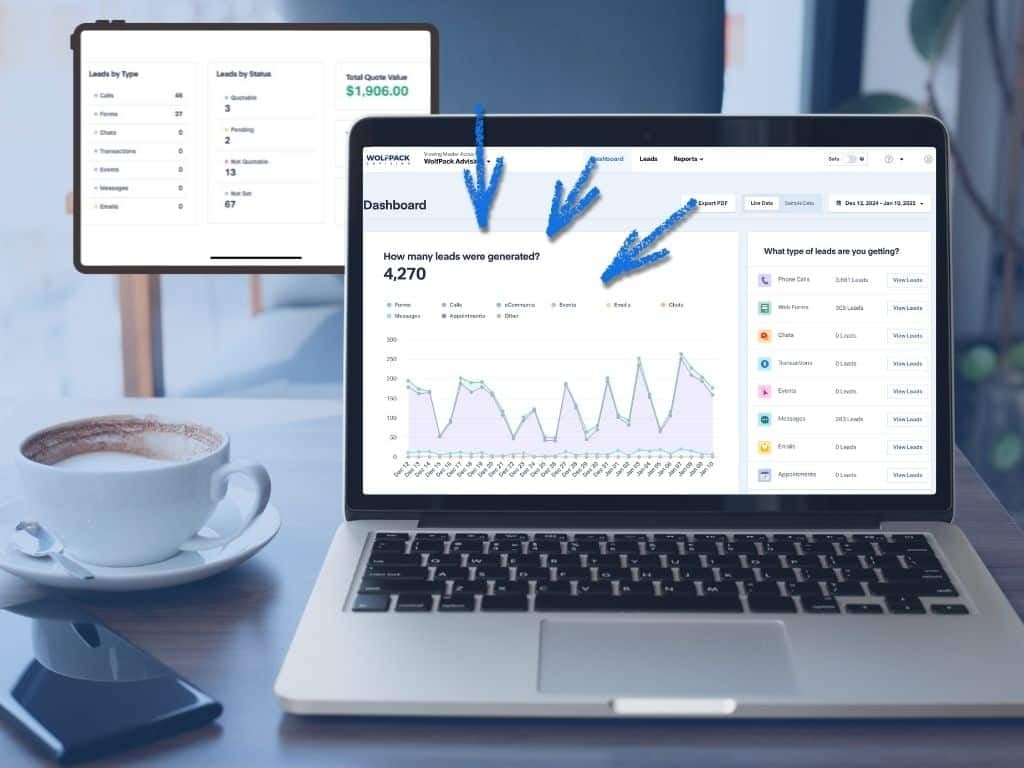
To build a strong funnel, start by reviewing your current traffic and lead sources. This helps you understand what is already working and where support is needed.
Use Google Analytics and your CRM to look at:
- Which pages bring in the most new visitors
- What sources bring people to your site
- How users move from one page to another
- Where people drop off
- Which sources bring the best leads
- How many repeat visitors return
- What devices do people use
Understanding your traffic helps you plan better content, improve pages that lose visitors, and support the channels that already work well.
Traffic Source Overview
| Source | What It Shows | What to Look For |
|---|---|---|
| Organic Search | SEO strength | Steady new users each month |
| Paid Search | Ad quality | Strong form submissions |
| Social Media | Early awareness | Clicks that lead to visits |
| Nurturing | Strong open and click rates | |
| Direct Traffic | Brand familiarity | Returning users |
| Referral Traffic | Reputation | High conversion rate |
Match Your Content to Each Funnel Stage
People move through your funnel in a predictable pattern. Your content needs to match the questions they ask at each stage.
Funnel Content Breakdown
| Stage | What People Need | Helpful Content |
|---|---|---|
| Awareness | Clear answers | Blogs, guides, reels |
| Consideration | Trust and detail | Service pages, photos, case studies |
| Conversion | Fast action | Forms, booking links |
| Retention | Support and connection | Follow ups, reminders, updates |
Each piece moves the user forward. When your content matches intent, your funnel becomes smoother and more predictable.
Set Up Tracking That Measures Real Progress
Tracking helps you understand whether your funnel is working. You do not need complicated tools. You only need to measure a few key points.
Use:
- GA4 for traffic and engagement
- CRM tools for lead tracking
- UTM tags for campaigns
- Heatmaps for user behavior
- Monthly goals for each funnel stage
Clear goals help you understand what to adjust next.
Sample Funnel Goals
| Stage | Goal | What to Monitor |
|---|---|---|
| Awareness | More visits | Sessions and impressions |
| Consideration | More engagement | Time on service pages, scroll depth |
| Conversion | More leads | Form submissions and calls |
| Retention | More return users | Repeat visits, email opens |
Step Three: Apply Your Funnel Across Channels
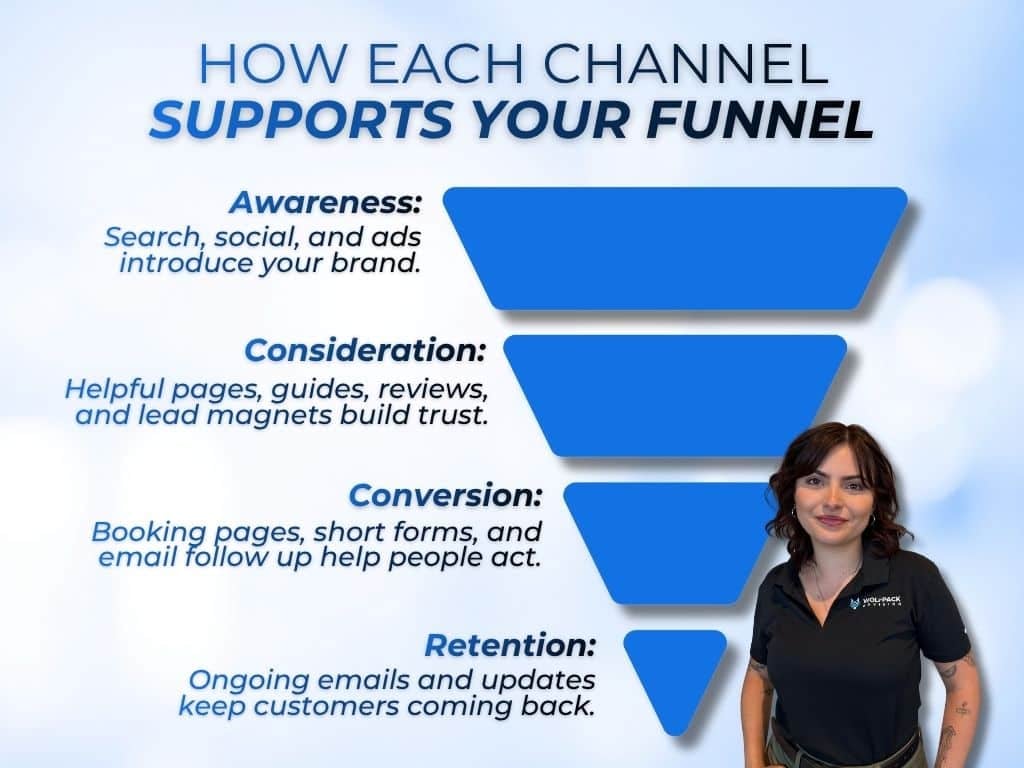
A funnel becomes effective when it works across your website, email, social media, and CRM tools.
Use Your Website to Support Each Funnel Stage
Your website is the main path people follow. Each page should give users a clear next step.
Improve:
- Homepage clarity
- Service page depth
- Local service area pages
- Reviews and social proof
- Galleries and project photos
- FAQs
- Forms and booking tools
- Navigation
- Page speed
- Mobile experience
Clear formatting helps users skim and understand quickly. Headings, short paragraphs, and well-placed calls to action make the path forward easy.
Google reports that more than half of users leave a slow-loading site, so speed is an important part of funnel success.
Use Email and CRM Tools for Nurturing and Retention
Email and CRM tools support the middle and bottom of the funnel and keep customers connected after the job is done.
Helpful emails include:
- Welcome sequences
- How your service works
- Customer stories
- Reminders
- Thank you messages
- Review requests
- Post service tips
- Seasonal updates
- Annual check-ins
Email remains one of the highest return channels, earning an average of 36 dollars for every dollar spent. CRM tools help you respond faster, stay organized, and keep customers in the loop throughout their lifecycle.
Retention benefits greatly from email. People are far more likely to return when communication is helpful, clear, and timely.
Use Social Media and Short Form Content Across the Funnel
Social media supports the top, middle, and retention stages. Posts help you stay visible, answer common questions, and show proof of your work.
Post:
- Before and after photos
- Short how-to clips
- Quick tips
- Customer stories
- Behind-the-scenes videos
- FAQ based content
These posts help people trust your brand even before they visit your site or book a service. They also help bring people back for future services.
How to Improve Your Digital Marketing Funnel Over Time
A digital marketing funnel is something you update, refine, and improve as your business grows.
Identify Funnel Issues and Fix Them One at a Time
Below are common problems that weaken funnels and simple changes that improve performance.
Common Funnel Issues
| Issue | Impact | Simple Fix |
|---|---|---|
| Thin service pages | Low trust | Add FAQs, photos, clear steps |
| Add FAQs, photos, and clear steps | Lost leads | Use CRM reminders |
| Long forms | Form drop offs | Reduce fields |
| Slow pages | Low engagement | Improve speed |
| Missing reviews | Low confidence | Add testimonials |
| Confusing structure | Lost traffic | Update layout |
| No retention follow up | Missed repeat business | Add reminders and post service content |
Track Key Metrics Each Month
Monthly tracking gives you a clear picture of your funnel’s health. You only need simple numbers to understand where users drop off and where they stay engaged.
Track:
- Sessions
- Landing page performance
- Service page engagement
- Time on page
- Scroll depth
- Form submissions
- Calls
- Email opens
- Email clicks
- Repeat visitors
- Social engagement
- Lead sources
- Conversion rate
This helps you understand where to update content, improve pages, or adjust follow-up processes.
Related Questions
How does SEO support a digital marketing funnel?
SEO brings in users at every stage. It helps people find your educational content early, then guides them to service pages as their intent increases.
What makes a service page strong inside a digital marketing funnel?
A strong service page explains the service clearly, shows proof of quality, and answers common questions. This builds trust and reduces hesitation.
How do I know which funnel stage needs the most attention?
Check your data. High traffic with low leads usually points to a weak consideration or conversion stage. Low returning users may show a gap in retention.
What role does email play in the digital marketing funnel?
Email supports both nurturing and retention. It helps people learn about your service, compare options, and stay connected after the job is done.
Why is fast follow-up important in a digital marketing funnel?
Fast follow-up builds trust. Many customers choose the first business that responds, so quick replies lead to more booked jobs.
Conclusion
A strong digital marketing funnel does not need to be complicated. It simply needs to match what people want at each stage of their journey. With clear content, fast follow-up, and a website that guides users forward, your funnel becomes a reliable system that creates steady growth.
When your funnel is clear and connected across your website, email, social media, and CRM tools, you attract better leads and help them make confident decisions.
If you want help building a complete funnel that fits your business, the WolfPack team can work with you to shape a simple and effective plan.