
The short answer: Local Service Ads are best for capturing ready-to-buy customers who want to call right now, and Google Ads are best for control, reach, and catching people earlier in their search. Most successful contractors run both.
But both platforms changed a lot in 2025 and 2026, so if you are working off an older playbook, you are likely overpaying or losing leads.
Here is how each one works today, what it costs, how to win on it, and where Meta and Microsoft Ads fit in.
What Are Google Local Service Ads?
Google Local Service Ads (LSAs) sit at the very top of the search page, above regular Google Ads and above the map pack.
When someone searches “plumber near me,” they see a short list of local businesses with a name, star rating, review count, phone number, and a blue Google Verified badge. There is no website link in the standard format. The lead goes straight to you as a call, message, or booking.
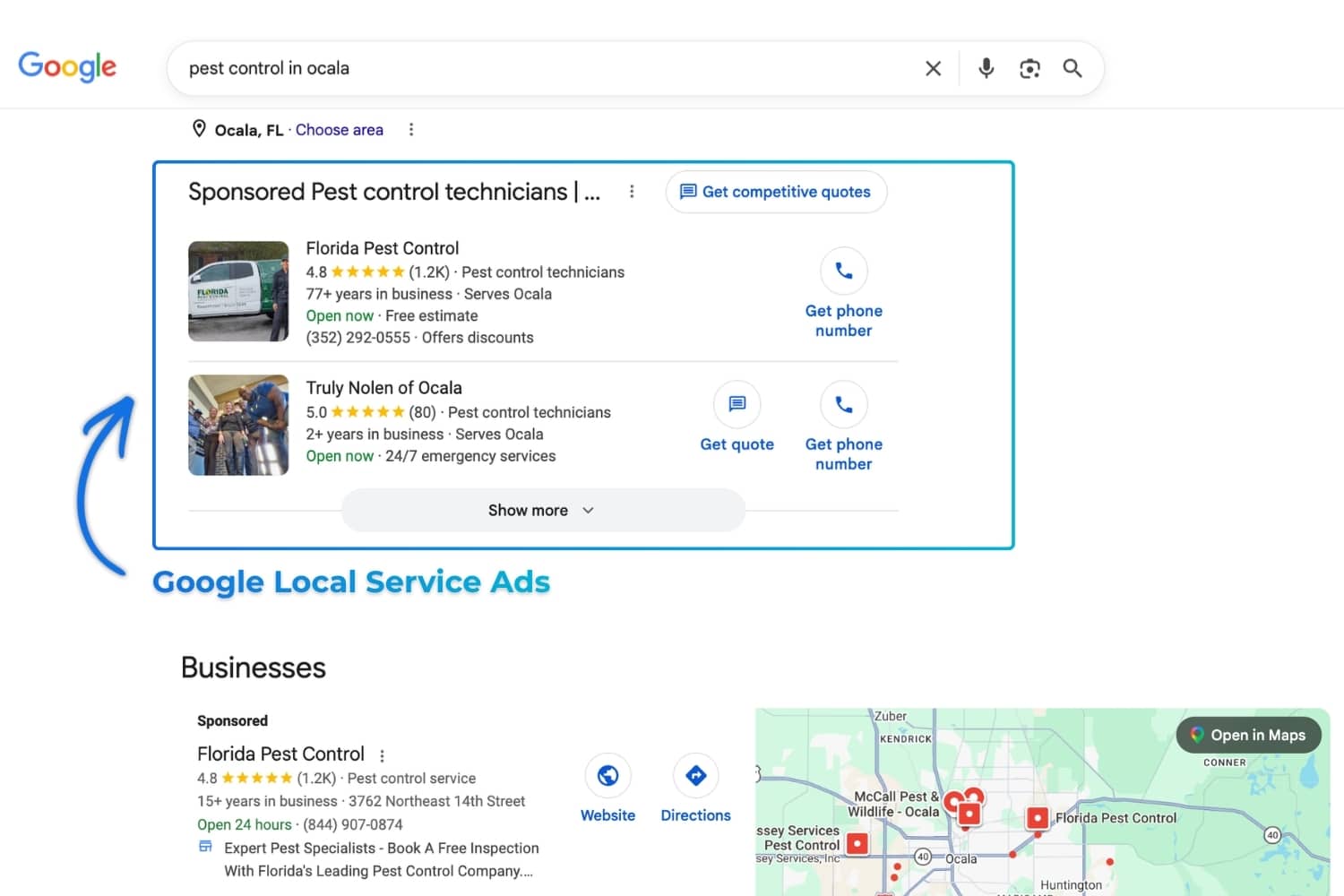
Here is what makes LSAs different:
- You pay per lead, not per click. Someone scrolling past your ad costs nothing. You only pay when a customer actually contacts you.
- You must be verified. Your business passes background checks and shows proof of license and insurance before your ads can run.
- A linked Google Business Profile is required. Since late 2024, your ads will not run at all without a verified, active Google Business Profile that matches your LSA details.
A few big things changed recently, and they matter:
The old green “Google Guaranteed” and “Google Screened” badges were retired in October 2025 and replaced with a single blue Google Verified badge.
The money-back guarantee that used to come with Google Guaranteed ended on November 7, 2025. We broke down what that means for your trust signal in our post on the new Google Verified badge.
Your reviews now live in one place. As of mid-2025, LSA reviews are handled entirely through your Google Business Profile. There is no separate LSA review pool anymore, and your Google Business Profile rating and review count now directly drive where your ads rank.
Local Service Ads today rank on five signals: review count, review rating, response time, booking rate, and how close you are to the customer. A lower bid with a five-minute response time will beat a higher bid with a forty-five-minute response. Budget alone will not move you up.
LSAs are a great fit if you want leads from people ready to hire a local pro today. For a deeper how-to, see our guide on a Local Service Ads strategy for high-quality leads.
What Are Google Ads?
Google’s broader ad platform is Google Ads. It lets any business show ads across Google Search, Maps, YouTube, and millions of partner sites.
It runs on a pay-per-click (PPC) model, which means you write ads that appear for keywords related to your business, and you pay when someone clicks.
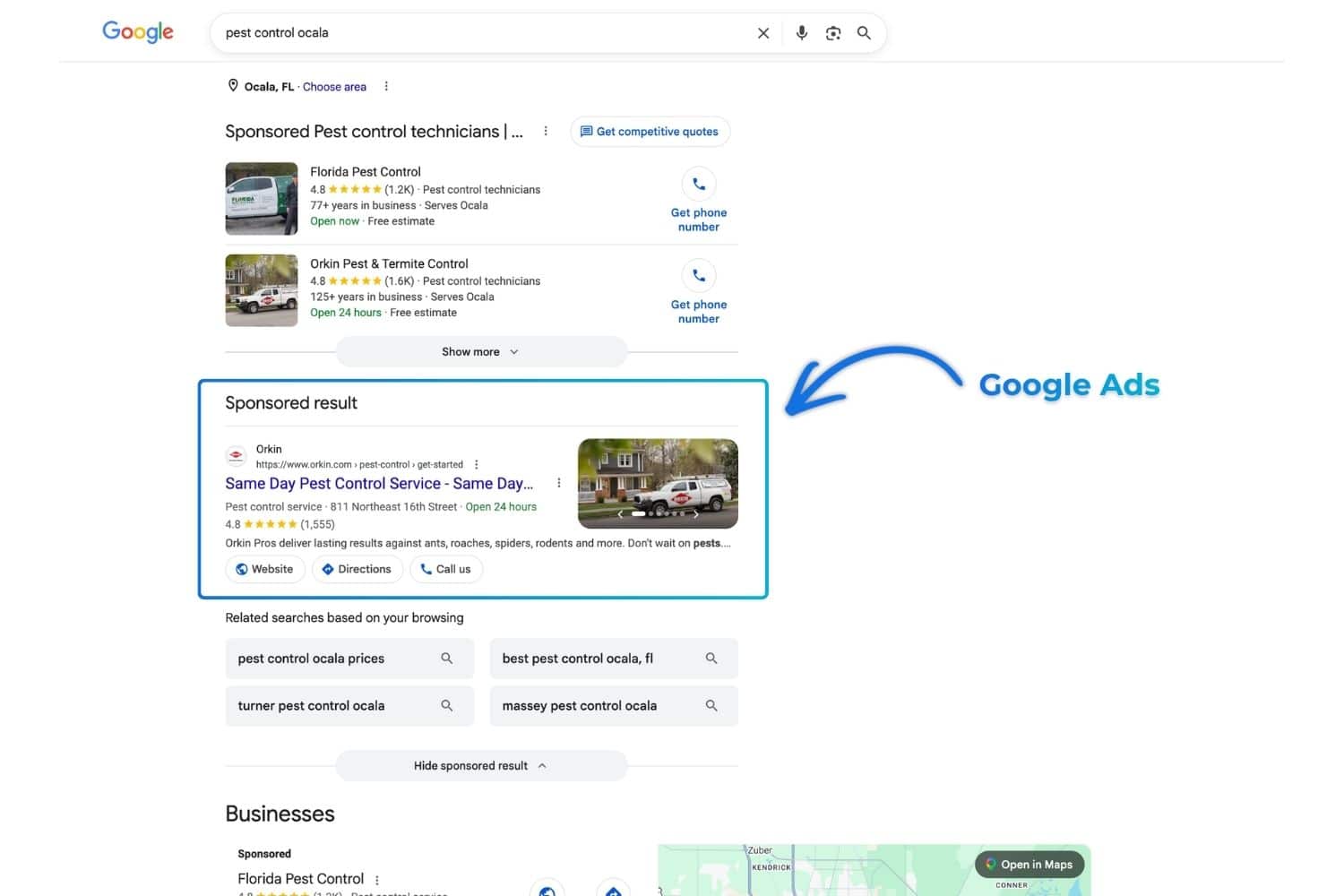
Key features:
- Flexible targeting. You can target keywords, locations, times of day, devices, and audiences.
- Creative control. You choose the ad copy and where the click goes, usually a landing page or service page.
- Lighter verification. Google requires a quick Advertiser Verification (identity and business details), but there is no background check, no license, and no insurance requirement like LSAs. Ad quality and relevance still affect how well you do.
The biggest change here is AI. In April 2026, Google’s AI Max for Search moved out of testing and became widely available. The platform has leaned hard into those features lately, and Google will happily nudge you toward hands-off, AI-driven settings that expand your keywords and spending automatically.
Here is the honest truth about that: those AI settings are built to spend your whole budget, not to protect it. Left alone, they match your ad to searches that will never book and quietly raise what you pay.
The businesses that win treat Google Ads as something to steer, not set and forget. That means the manual moves that actually move the needle: tight keyword targeting, a strong negative keyword list so you stop paying for junk searches, smart bid adjustments, and daily checks of your search terms in the first few weeks.
Our post on avoiding irrelevant keywords covers that discipline.
In short, Google Ads is ideal when you want more control, want to reach people at different stages of their search, or run a business that does not qualify for LSAs.
Key Differences at a Glance
| Factor | Local Service Ads | Google Ads |
|---|---|---|
| Placement | Very top of local search, above everything | Search, Maps, YouTube, Display, AI Overviews |
| Cost model | Pay per lead (call, message, booking) | Pay per click |
| Verification | Required (background, license, insurance) | Not required |
| Setup | Simpler, tied to your Google Business Profile | More complex, ongoing management |
| Targeting | Local and service-specific | Keywords, locations, audiences, devices |
| Trust signal | Blue Google Verified badge | Based on ad quality and landing page |
| Best for | Ready-to-buy local customers | Control, reach, and earlier-stage searches |
What Each One Costs in 2026
Cost is where owners get the most bad information, so here are real, current ranges. Treat them as directional, since price swings a lot by trade and zip code.
For Local Service Ads, you pay per lead. A 2026 benchmark study across hundreds of home service contractors put the blended cost per lead near $53, with most trades landing between $25 and $80.
Roughly speaking, electrical runs lower, HVAC and plumbing sit in the middle, and roofing and restoration run higher. Contractors booked about four out of every ten LSA leads. The number that actually matters is not cost per lead; it is cost per booked job.
One thing that protects your budget: Google credits back leads that do not count, like calls from outside your service area, wrong-number calls, or repeat contacts from the same customer. You are not stuck paying for leads you could never book, as long as you flag them.
LSAs tend to run roughly half the cost per lead of blended Google Ads for home services. That is a big reason they are often the first paid channel we turn on for a local trade business.
For Google Ads, you pay per click whether or not that click becomes a customer. That is the tradeoff for the extra reach and control. It also means Google Ads needs steady management, a strong landing page, and good tracking to stay profitable, since you are paying for interest, not just leads.
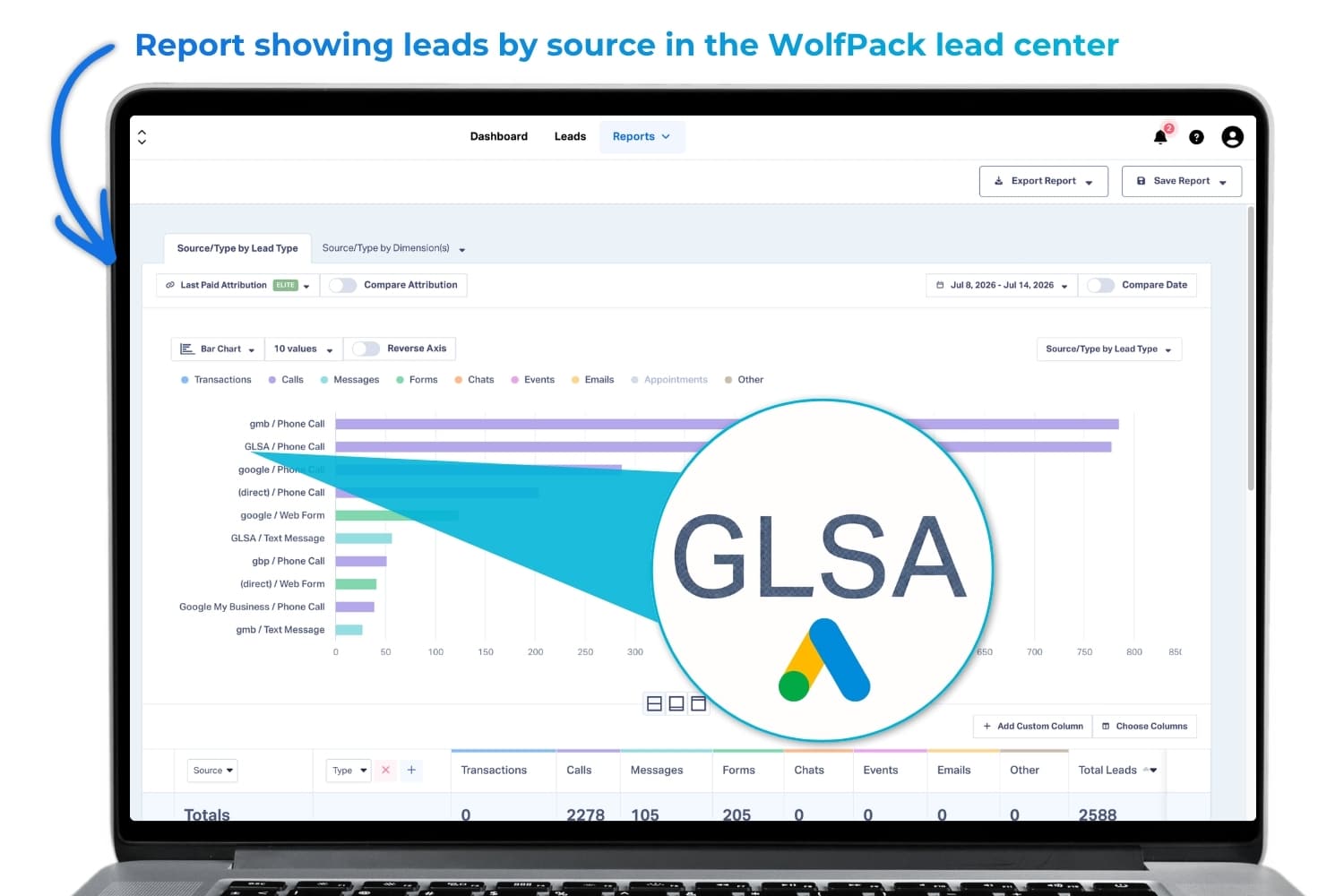
This is exactly why lead tracking and ROI reporting matter so much. If you cannot see which ad turned into a booked job, you are guessing with your budget.
How to Win on Each Platform in 2026
Turning ads on is easy. Making them profitable is the work. Here is what actually moves the needle now.
To win with Local Service Ads:
- Get your Google Business Profile in perfect shape first. It controls both your organic rank and your LSA rank now, so it must be verified, complete, and free of suspensions.
- Answer fast. Response time is a ranking signal and the difference between winning and losing a lead. Aim to answer within five minutes, even if that means a call service.
- Build reviews steadily. Volume plus a strong rating beats a tiny pile of perfect reviews. Our review management service exists for this exact reason.
- Rate and dispute every lead in the dashboard. Mark the good ones so Google sends you more like them, and flag the bad ones (out of area, spam, or a repeat customer) to get credited back for leads that should not count against you.
To win with Google Ads:
- Steer it manually. Use tight keyword targeting and a strong negative keyword list so you stop paying for searches that never book. This beats letting Google auto-expand your spend.
- Send clicks to a fast, focused landing page, not your homepage. A slow or generic page wastes every dollar you spend. A strong website is part of your ad budget, whether it feels like it or not.
- Track conversions properly so you optimize toward booked jobs, not just clicks.
The theme across both is the same. In 2026, these platforms will happily run themselves, but hands-off rarely means best-off. The winners set clear limits, make deliberate manual changes, and measure what turns into real work.
That is exactly the part a good agency handles for you.
Beyond Google: Where Do Meta and Microsoft Ads Fit In?
Google is where you catch people already searching. But two other platforms round out a strong strategy, and both got major AI upgrades this year.
Meta Ads (Facebook and Instagram)
These are a different ballgame than search. Nobody opens Facebook looking for a plumber. Instead, Meta puts you in front of homeowners in your area before they need you, which builds awareness and fills the top of your funnel.
Meta’s AI system, called Advantage+, now runs most of the targeting for you. The 2026 approach is broad targeting plus strong creative, because the AI finds your customers better than manual interest lists do.
For home services, raw lead costs on Meta Ads often land in the low tens of dollars, though cheaper leads need fast follow-up to stay worth it. Meta is also where those simple, helpful videos you film on your phone pay off.
Microsoft Ads (Bing and Beyond)
The quiet bargain. Because fewer businesses compete there, clicks tend to run around a third cheaper than Google on average. The audience skews a bit older, more affluent, and more desktop-based, which fits plenty of home service buyers and commercial work.
Microsoft ads also show across Bing, Yahoo, DuckDuckGo, and the fast-growing Copilot AI assistant, and the platform includes a free AI helper plus unique LinkedIn-based targeting that is handy for property managers and commercial accounts.
Best of all, you can import your existing Google Ads campaigns in a few clicks, so testing it costs very little time.
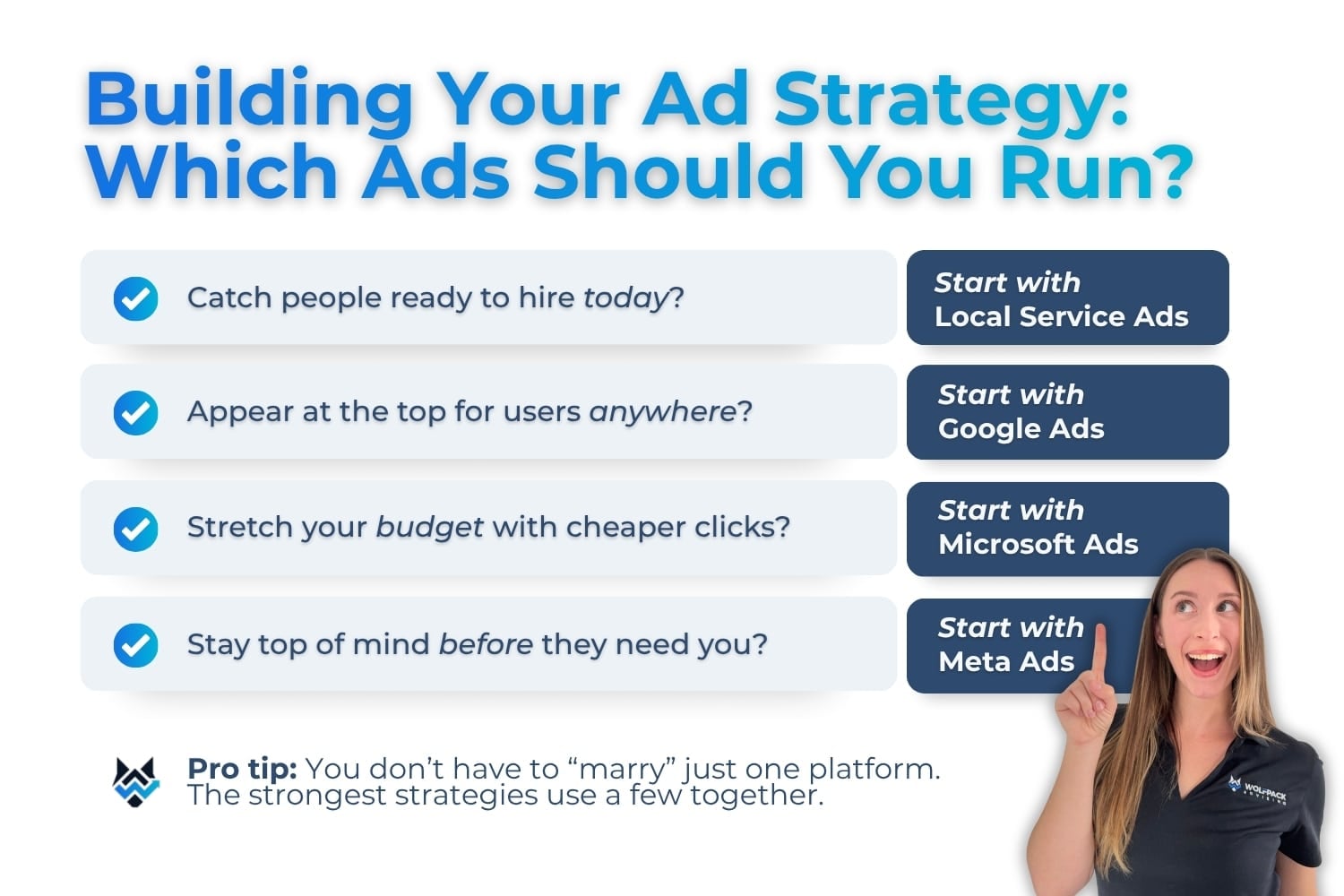
A simple way to think about all four:
- Local Service Ads: catch people ready to buy now.
- Google Ads: control and reach across the whole search journey.
- Microsoft Ads: cheaper clicks and an older, affluent audience.
- Meta Ads: build awareness and stay top of mind before the need hits.
Which Should You Choose, or Should You Run Several?
Your choice depends on your trade, your goals, and your budget.
- Start with Local Service Ads if you qualify for an eligible category (most home service trades do), you want phone calls from people ready to hire, and you want the simplest option that brings in leads without heavy management.
- Lean into Google Ads if you want more control, you want to reach people earlier in their search, you want to drive traffic to your site, or your business is not eligible for LSAs.
- Add Microsoft Ads when you want more volume for less money, especially once your Google campaigns are working and you can import them.
- Add Meta Ads when you want to build your brand, stay visible between jobs, and warm up customers before they are ready to call.
Here is why many home service businesses run more than one. LSAs capture the ready-to-buy calls, Google Ads build reach and catch earlier searches, Microsoft stretches your budget further, and Meta keeps you top of mind.
Running several also means you can show up more than once on the same search, which raises your odds of winning the click or the call. You do not have to start with all of them. Most contractors begin with LSAs, add Google Ads, then layer in the others as budget allows.
Our advertising team can help you sequence it.
What Else Supports Your Ad Strategy?
Paid ads work best when the rest of your marketing is ready to catch the leads they send:
- Local SEO: A well-optimized Google Business Profile lifts both your organic visibility and your LSA rank. Your SEO and PPC should always align, not compete or contradict.
- Reviews and reputation: Strong reviews and real photos improve your LSA ranking and make every ad more convincing.
- A fast website: A quick, mobile-friendly site turns more of your Google Ads clicks into calls.
- Lead tracking: Ongoing tracking and tuning lowers your cost per booked job over time and shows you what is actually working.
Pair paid ads with a strong overall presence, and you attract more qualified leads while getting more out of every dollar.
View a real WolfPack client case study:
Conclusion
Local Service Ads and Google Ads both help home service businesses get found; they just do different jobs. LSAs win the ready-to-buy calls at the top of the page. Google Ads give you control and reach across the whole search.
Microsoft Ads stretch your budget, and Meta Ads keep you top of mind. In 2026, all of these platforms lean heavily on AI, which means the winners are the businesses that feed them clean data, set smart limits, and track what turns into real work.
If you are ready to get more from your ad budget, WolfPack Advising can help. We manage LSAs, Google Ads, Microsoft Ads, and Meta Ads, plus the local SEO, reviews, and lead tracking that make them all perform.
Book a quick call, and we will build an ad strategy that drives real results for your business.