Organic keywords are the words and phrases people type into search when your website shows up for free, without paying for an ad.
TL;DR – Organic keywords are the searches your website shows up for without paying. They keep natural traffic steady, long-term, from people who are looking for what you do. You find relevant keywords with tools like Google Search Console, and rank for more by publishing pages that answer real questions.
If someone searches “emergency plumber near me” and your page appears in the normal results, that phrase is one of your organic keywords. At WolfPack Advising, it’s the first thing we look at when a service business wants more calls from Google. Let’s jump into the guide.
What Is an Organic Keyword?
An organic keyword is any search term that brings visitors to your website through unpaid search results. “Organic” simply means you didn’t pay for the click. You earned the spot by having a page Google trusts enough to show.
Here’s a plain example. A roofing company in Tampa might show up for searches like:
- “metal roof repair tampa”
- “how much does a new roof cost”
- “signs of roof leak after a storm”
- “best roofing material in FL”
Each of those is an organic keyword. Every time someone searches one and clicks the company’s regular (non-ad) listing, that’s free traffic earned by the content on the page.
Here’s something most owners don’t realize: a single page can rank for dozens, sometimes hundreds, of organic keywords at once.
That one roofing page about storm damage might also show up for “shingles blown off roof,” “insurance claim for roof damage,” and “roof repair after hail.” You wrote one page, but it quietly answers a whole family of related searches. That’s the compounding effect we’ll come back to.
One thing trips people up here.
An organic keyword is not the same as a keyword you’re actively targeting.
A target keyword is one you intentionally rank for. An organic keyword is one you already rank for when people search. It’s a report of reality, not a wish list. Google Search Console shows you exactly which ones you’ve earned, and we’ll walk through that below.

Organic Keywords vs. Paid Keywords
The difference between organic and paid keywords comes down to one thing: whether you pay for the click. Organic keywords earn you a spot in the regular results through SEO.
Paid keywords put you in the ad slots through Google Ads, and you pay every single time someone clicks.
| Factor | Organic keywords | Paid keywords |
|---|---|---|
| How you show up | Earned through SEO | Bought through Google Ads |
| Cost per click | $0 | You pay every click |
| Time to see results | Weeks to months | Same day |
| When you stop | Rankings stick around | Traffic stops instantly |
| Where they appear | Regular search results | “Sponsored” ad slots |
| Reader trust | Higher | Lower (most people skip ads) |
Both have a place. Paid search is great when you need calls today, like a new location opening next week. Organic search is the long game that keeps paying off long after the work is done.
Most service businesses we work with use both, but organic is the foundation everything else sits on. If you want the full comparison, read our breakdown of SEO vs. PPC.
And yes, a phrase you bid on in Google Ads can also be one you rank for organically. Plenty of businesses run both at once for the same keyword.
What Organic Keywords Do for Your Business
Organic keywords bring in steady, free traffic from people who are already looking for what you sell. No ad budget required, and the results compound over time.
Think about what a search actually tells you. Someone typing “water heater not working” has a problem right now. If your page answers that question and shows up, you’ve reached a customer at the exact moment they need you. That’s a world away from an ad someone scrolls past while checking their phone.
A few reasons organic keywords are worth the effort:
- They’re free: Once you rank, you don’t pay per click. Ever.
- They build trust: Most people skip the ads and click the real results.
- They compound: A page that ranks well can bring in leads for years.
- They tell you what customers want: The phrases you rank for are a live list of what your market is searching for.
Here’s how that plays out in real life. Say you run an HVAC company and you publish one honest page explaining what a furnace tune-up includes and what it costs. Six months later, that page is ranking for “furnace tune-up cost,” “what does a furnace tune-up include,” and “furnace maintenance near me.”
You’re not paying a cent for those clicks, and the phone keeps ringing. Try to match that reach with a paid ad, and you’d be paying for every click, every day, forever.
For service businesses, this is often the highest-return marketing you can do. One well-ranked page for “AC repair” in your city can quietly out-earn months of paid ads.
Which Organic Keywords Are Worth Going After?
Not every organic keyword is worth chasing. The best ones for a service business match what a ready-to-hire customer would actually type. That usually means local, specific, and tied to a real problem.
Three quick filters help you choose:
- Match the intent: “How to relight a furnace pilot” is someone doing it themselves. “Furnace repair near me” is someone reaching for the phone. Both have value, but the second one books jobs. Chase the ready-to-hire searches first.
- Go local: For service businesses, your city plus your service is gold: “drain cleaning Sarasota,” “roof replacement Fort Myers.” There’s less competition, and every click is a real potential customer in your area.
- Go long-tail: Longer, specific phrases like “cost to replace a 40-gallon water heater” get fewer searches, but they’re easier to rank for, and the people typing them are close to hiring.
A good rule of thumb – win the specific, local, ready-to-buy searches before you reach for the huge general ones. You’ll rank faster and get better calls.
How Organic Keywords Work in AI Search
Organic keywords still matter for AI search. The goal is just shifting from ranking a blue link to becoming the answer.
When someone asks Google’s AI Overview or a tool like ChatGPT a question, those systems pull from pages that already rank well organically.
Search is changing fast. Google now shows AI Overviews at the top of many results, and more people type full questions instead of three-word phrases. People are searching by voice too, talking to their phones the way they’d talk to a person, so the phrases you rank for look more and more like real questions.
Here’s the good news for service businesses: the work is mostly the same. Pages that clearly answer real questions are the pages AI tools quote.
What this means for your keywords:
- Questions are the new keywords. “Why is my AC leaking water?” matters as much as “AC repair.”
- Clear, direct answers win. AI pulls short, helpful answers straight off your page.
- Being the source builds authority. When AI cites your page, that’s trust at scale.
This is why we tell clients not to panic about AI. Strong organic keywords are still how you get found, whether the searcher is a person or a machine answering on their behalf.
Google’s own guide to how Search works is a good reminder that helpful, people-first content is still the core of all of it.
How to Find and Grow Your Organic Keywords
The fastest way to see the organic keywords you already rank for is Google Search Console, a free tool that shows the exact searches bringing people to your site.
Here’s a catch a lot of owners hit. You won’t find your organic keywords in Google Analytics anymore. Google hides most of them behind a label called “(not provided).” Search Console is where the real data lives.
To find your organic keywords:
- Set up Google Search Console (it’s free) and verify your website.
- Open the Performance report.
- Click the Queries tab. Those are your organic keywords, with clicks and average position for each one.
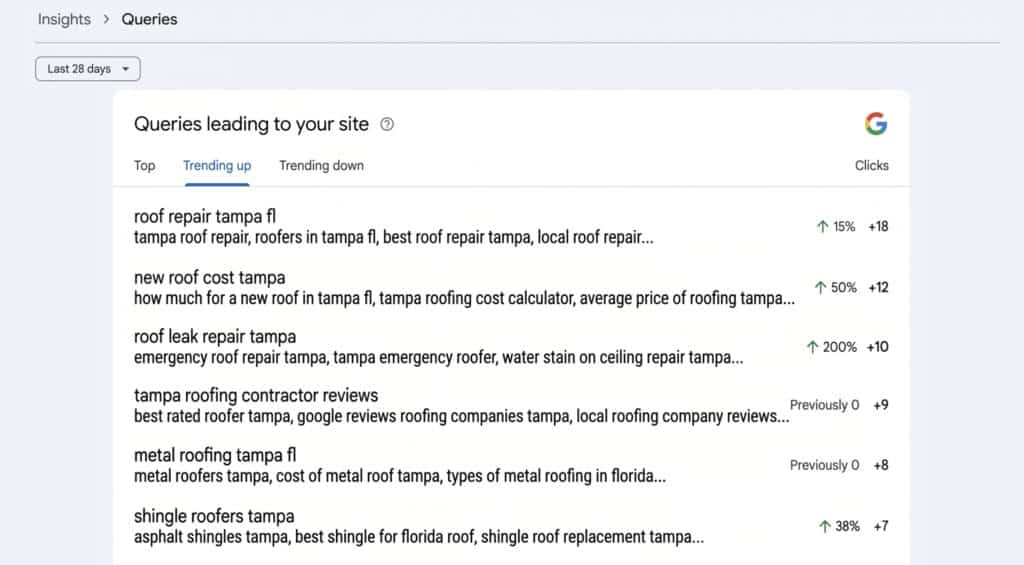
Once you know what you rank for, you can grow the list. A few proven moves:
- Go after long-tail keywords. Longer, specific phrases like “tankless water heater install cost” are easier to rank for and bring in ready-to-buy searchers. Here’s how we find low-competition keywords with real traffic.
- Answer real questions on your pages. One clear question, one clear answer.
- Improve the pages you’re close on. If you rank #11 for a phrase, a small update can push you onto page one.
- Publish helpful content on a schedule. More good pages means more organic keywords. See exactly how blogging helps SEO.
Keyword tools help too, but Search Console is the free place to start. When you’re ready to go deeper, read our guide to advanced keyword research techniques.
Search Terms in Plain English
New to this? Here are the words that come up most, minus the jargon:
- Organic traffic: Visitors who reach your site through unpaid search results.
- SERP: The search engine results page. It’s just the page of results you see after you search.
- Ranking: Where your page lands on that results page. Higher is better.
- Search intent: What the person is really after. General information, a local service, or ready to buy.
- Long-tail keyword: A longer, specific phrase, like “emergency AC repair for a rental property.”
- Google Search Console: A free Google tool that shows the organic keywords your site already ranks for.
Keep this handy, and the rest of your SEO reading gets a lot easier.
Related Questions to Explore
What is an organic keyword?
An organic keyword is a search term that brings visitors to your site through unpaid results. You earn the ranking with helpful content instead of paying for an ad.
How do you increase organic keywords?
Publish pages that answer specific questions, target long-tail phrases, and improve pages that already rank on page two. Over time, each strong page can rank for dozens of related searches. If your site isn’t showing up at all yet, start here: why your website isn’t showing up on Google.
How do you find organic keywords in Google Analytics?
You mostly can’t. Google hides them as “(not provided)” in Analytics. Use Google Search Console’s Performance report instead. It lists the actual queries people used to find you.
What affects organic keyword search?
Content quality, how well your page matches what the searcher wants, your site’s authority, page speed, and on-page basics like titles and headings all affect which organic keywords you rank for.
How do you choose organic keywords?
Start with what a paying customer would type, then get specific and local. Match the search to intent (someone ready to hire beats someone just browsing), favor your city plus your service, and pick long-tail phrases you can realistically rank for. Chasing giant, general keywords usually wastes time.
When to Work With Search Pros
You can handle the basics of organic keywords yourself. Set up Search Console, publish helpful pages, and answer your customers’ real questions.
It makes sense to bring in a professional when results stall, the competition is fierce, or you just don’t have time to keep at it.
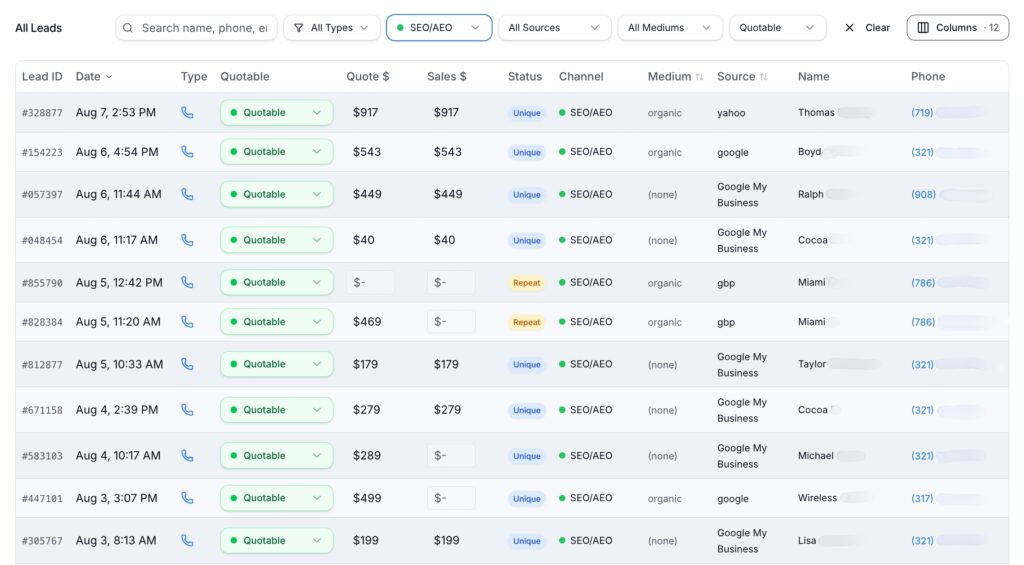
See the same playbook grow organic traffic for a real business.
These results aren’t theory. They come straight from the companies we work with every day. Here’s what 18 months did for EnviroQuest, which started with almost no organic presence:
DIY works well for:
- Setting up Search Console and reading your queries
- Writing pages that answer common customer questions
- Targeting a few local, long-tail keywords
But it’s worth partnering with experts when:
- Your rankings are stuck, and you’re not sure why
- You’re in a competitive market with lots of companies fighting for the same searches
- You want a real strategy instead of guesswork
- Your time is better spent running the business
That’s where a team like WolfPack Advising comes in. We run SEO for service businesses with full transparency, month to month, with no long contracts and direct access to the specialist doing the work.
You own your accounts, and we focus on leads and revenue instead of vanity metrics.
Conclusion
Organic keywords are the unpaid searches that bring customers to your website. A quick recap:
- Organic keywords are free traffic you earn with helpful content, not ads.
- They still drive search, including AI Overviews and AI answers.
- Start with Google Search Console to see what you already rank for, then grow the list.
You don’t need a big budget to get found in search. You need pages that answer what your customers are actually asking.