Last updated on June 23rd, 2026 at 01:40 pm
Listing management boosts your local SEO rankings by keeping your business information accurate and consistent across the web, which helps search engines trust your business and show it more often in local results.
If your listings are wrong, outdated, or inconsistent, your rankings can suffer even if your website is well built. When your listings are managed properly, they support stronger visibility, better map rankings, and more customer calls.
This guide explains how listing management works, why it matters for local SEO, and how it fits into a complete strategy for long-term growth.
What Is Listing Management in Local SEO
Listing management is the process of keeping your business information accurate and consistent across online directories and platforms.
These listings usually include:
- Business name
- Address
- Phone number
- Business hours
- Website link
- Business categories and services
In local SEO, these listings are often called citations, a term defined in resources like local SEO citations. Search engines use them to confirm that your business exists, operates where it says it does, and provides the services it claims to offer.
Claiming a listing is only the beginning. Real listing management means checking, updating, and monitoring those listings over time.
Why Accurate Listings Matter for Local Search Rankings
Search engines want to show users reliable results. To do that, they look for consistency.
When your business information matches across multiple trusted platforms, it sends a clear signal that your business is legitimate and active. Consistent listings contribute to visibility and trust, foundational concepts in local SEO strategies.
Accurate listings help search engines:
- Verify your business location
- Match your business to relevant searches
- Reduce confusion caused by outdated data
- Rank your business more confidently in local results
Inconsistent listings create doubt, and that doubt can quietly push your business lower in rankings.
How Listing Management Boosts Your Local SEO Rankings
Improves Google Maps and Local Pack Visibility
Google Maps relies heavily on accurate business data. When your listings across the web support the same information found on your Google Business Profile, your profile becomes stronger.
This reinforcement can improve:
- Map pack placement
- Local finder visibility
- Click-through rates from maps
Businesses with consistent listings are easier for Google to trust and rank.
Strengthens Trust Signals Across the Web
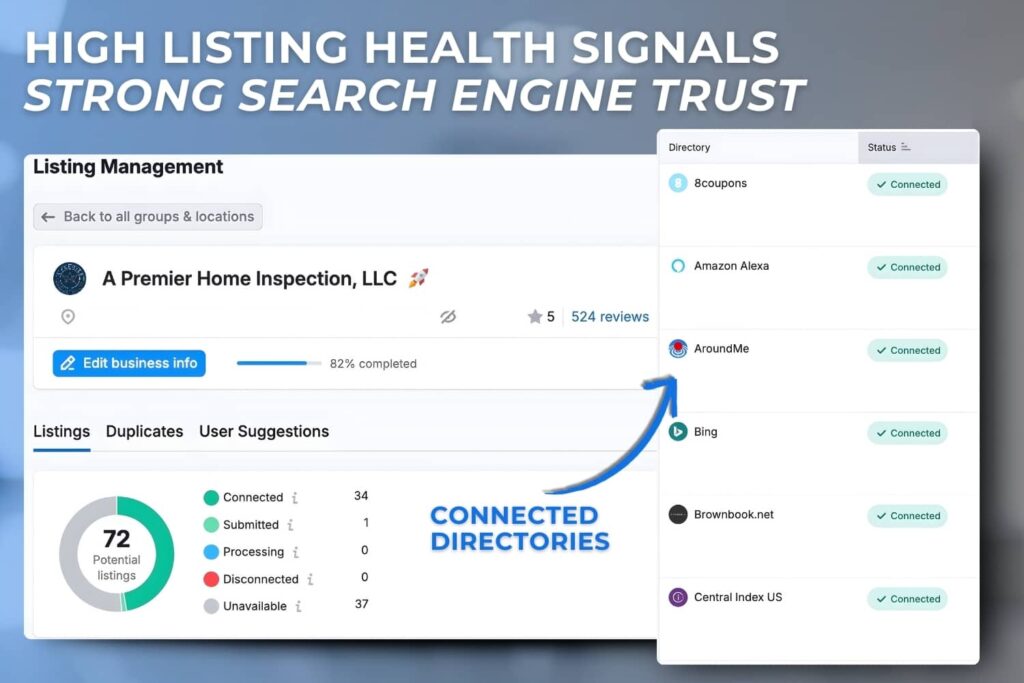
Every accurate listing acts as a confirmation of your business details. When search engines see the same name, address, and phone number repeated across reputable online directories, trust increases, which is a key component of how rankings are earned.
This trust supports higher rankings because search engines feel more confident sending users to your business.
Prevents Ranking Problems Caused by Conflicting Data
Duplicate listings, old phone numbers, or outdated addresses can split ranking signals. Instead of supporting one strong profile, the data becomes fragmented.
Proper listing management cleans up these conflicts, so your local SEO signals stay focused and clear.
The Core Pillars of Effective Listing Management
Listing management works best when it follows a few core principles. These pillars explain how search engines evaluate your business information and why consistency matters for local SEO.
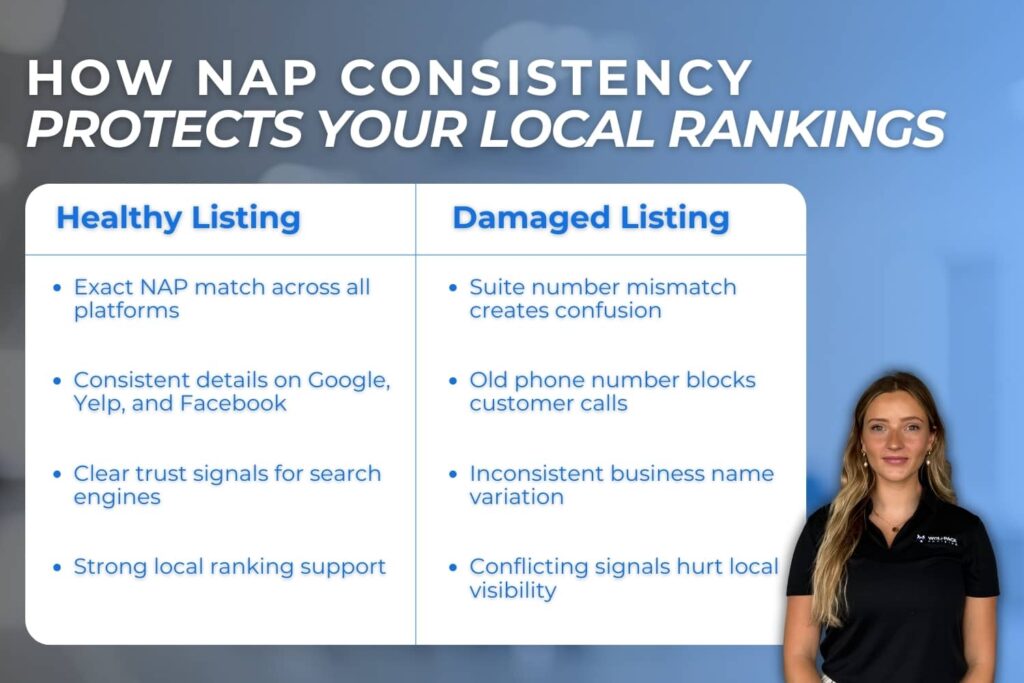
When details like suite numbers, phone numbers, or hours differ across platforms, search engines can become unsure which information is correct. That confusion can lower rankings and frustrate potential customers.
Core Listing Management Pillars
| Core Pillar | What It Covers | Why It Matters |
|---|---|---|
| NAP Consistency | Your business name, address, and phone number match exactly across all platforms | Conflicting details can confuse search engines, weaken local rankings, and reduce customer trust |
| Platform Coverage | Accurate listings on major platforms and relevant niche directories | Broad, consistent coverage helps search engines verify your business and improves visibility |
| Review Monitoring | Tracking and responding to customer reviews across multiple platforms | Active engagement builds trust and supports stronger local ranking signals |
| Data Accuracy | Keeping hours, services, photos, and updates current everywhere | Outdated information frustrates customers and creates ranking conflicts |
These pillars help search engines clearly understand your business and help customers contact you without friction. When even one pillar breaks down, local visibility and trust can suffer.
Maintaining these fundamentals over time allows listing management to support strong, consistent local SEO results.
Common Listing Issues That Hurt Local SEO Performance
Many local businesses lose rankings because of issues they do not even know exist.
Here are some of the most common problems:
- Different phone numbers are listed on different platforms
- Old addresses from previous locations
- Duplicate listings created automatically by directories
- Incorrect business categories
- Outdated business hours
Even one incorrect listing can confuse customers and search engines alike, weakening the impact of on-page local SEO work.
How Listing Management Affects Home Service Businesses
Home service businesses depend on local search visibility, especially on mobile devices, where customers need fast answers. In urgent situations, people rarely compare options for long. They usually contact the first business that looks accurate, available, and trustworthy.
Listing accuracy directly influences:
- Emergency and same-day service searches where speed matters
- Calls and direction requests from Google Maps and local listings
- Customer trust before any phone call or visit happens
- Conversion rates from mobile users who act quickly
Even small errors like a wrong phone number, outdated hours, or missing service details can lead to missed calls and lost jobs without you ever realizing it.
How Effective Listing Management Is Typically Done
Strong listing management follows a clear and repeatable process.

Step 1: Audit Existing Listings
Start by reviewing where your business appears online. Similar to a local SEO audit, this helps you identify inconsistent or missing profiles.
- Inconsistent information
- Duplicate listings
- Missing or incomplete profiles
Step 2: Correct and Standardize Information
Once issues are identified, business information is corrected and standardized across platforms. This includes making sure your name, address, phone number, and categories match everywhere.
Step 3: Monitor Listings Over Time
Listings can change without warning. Some directories pull data from third-party sources, which can reintroduce errors.
Ongoing monitoring helps catch problems early and keeps information accurate long term.
Consistency over time is what builds trust and supports lasting SEO results.
Manual vs Professional Listing Management
Some business owners manage their listings themselves, especially when they operate in only one location. This can work at first, but it becomes difficult as platforms increase.
Manual Management Challenges
- Dozens of directories to track
- Limited visibility into duplicate listings
- No alerts when data changes
- Time-intensive upkeep
Professional Management Advantages
- Centralized control
- Faster corrections
- Ongoing monitoring
- Better consistency at scale
This aligns with broader SEO efforts like the SEO services offered by specialists, which aim to improve both visibility and organic performance.
How Listing Management Fits Into a Complete Local SEO Strategy
Listing management supports local SEO, but it does not work on its own. It functions as the foundation that allows other optimization efforts to perform as expected.
A well-rounded local SEO strategy typically includes:
- Google Business Profile optimization to improve map visibility
- On-page local SEO to help search engines understand services and locations
- Review management to build trust and engagement
- Local content creation to answer searcher questions and capture search intent
When listings are accurate and aligned with broader search tactics, these efforts reinforce each other and deliver stronger, more consistent results over time.
How Listing Management Supports AI Search and Voice Visibility
Search is no longer limited to blue links and maps. AI-powered tools and voice assistants now pull business information from the same sources used for local listings.
AI search experiences rely on structured, consistent data to answer questions like who to call, where a business is located, and whether it is open right now. When listings are accurate across platforms, AI systems can confidently surface your business in responses.
Well-managed listings help with:
- AI search summaries that recommend local businesses
- Voice search results from assistants like Google Assistant and Siri
- Map-based AI results that pull real-time business data
- Reduced risk of being excluded due to conflicting information
When the data is inconsistent, AI systems may skip your business entirely or surface incorrect details. Consistent listings increase the likelihood that AI tools recognize your business as reliable and relevant.
Signs Your Business Needs Listing Management Support
You may need listing management support if you start noticing any of the following issues. These are often early warning signs that your business information is inconsistent or outdated across the web.
1) A Drop in Local Rankings
Your business appears lower in Google Maps or local search results, even though nothing has changed on your website. This can happen when listings become inconsistent or new duplicates appear.
2) Fewer calls or form submissions
A decline in phone calls or leads may point to incorrect contact details, outdated hours, or missing listings that prevent customers from reaching you.
3) Customers are reporting incorrect information
When customers mention wrong hours, addresses, or phone numbers, it is often a sign that directories are displaying conflicting data.
4) Duplicate listings appearing
Multiple versions of your business on the same platform can split ranking signals and confuse both search engines and customers.
5) A recent move or phone number change
Address or contact changes can leave old listings behind, which may continue to surface in search results if not corrected.
Fixing listing issues early helps protect visibility, reduce customer frustration, and prevent larger local SEO problems over time.
Helpful Data Points and Real-World Impact
Industry research consistently shows that inaccurate listings hurt performance.
For example, about 46% of Google searches have local intent, meaning someone nearby is looking for services like yours.
In internal audits, it is common to see multiple versions of the same business listing across directories, each with slightly different information. Cleaning these up often improves map visibility and results in more consistent call volume over time.
Related Questions
Does listing management help Google Maps rankings?
Listing management supports Google Maps rankings by reinforcing the accuracy of your business information across the web. When listings align with your Google Business Profile, it reduces data conflicts and strengthens trust signals that influence map visibility.
How often should business listings be updated?
Business listings should be reviewed regularly and updated anytime key details change. Even without changes, periodic checks help catch errors introduced by third-party data sources or automated directory updates.
Can incorrect listings hurt local SEO?
Incorrect or conflicting listings can weaken local SEO by creating uncertainty about your business details. This confusion can reduce search engine confidence and negatively affect both rankings and user engagement, especially when citations are inconsistent across major platforms.
Is Google Business Profile enough on its own?
Google Business Profile is essential, but it works best when supported by accurate listings on other trusted platforms. Additional listings help validate your business information and provide broader confirmation signals across the web, including placement in a local business directory.
How long does listing management take to impact rankings?
Some listing corrections can lead to noticeable improvements within a few weeks. Long-term ranking stability and visibility typically come from maintaining consistent data over time rather than one-time updates, which is easier to track when you know how to know your SEO is working.
Conclusion
Listing management is a key part of local SEO because it helps search engines trust your business information and helps customers find accurate details when they need them. Consistent listings support stronger visibility, more reliable rankings, and better performance in local search over time.
WolfPack Advising works with businesses to audit listings, resolve inconsistencies, and maintain accurate data as part of a broader local SEO approach. Contact WolfPack Advising to discuss listing cleanup and ongoing local SEO support.