
Last updated on June 23rd, 2026 at 01:40 pm
This guide covers specific newsletter strategies that drive repeat business and referrals without being pushy or salesy.
Sending a newsletter can feel like shouting into the void sometimes. You craft the perfect email, hit send, and wonder if anyone actually reads it.
Here’s what most service business owners miss: newsletters aren’t designed to generate new leads.
They keep past clients thinking about you when they need your services again or when someone asks for a recommendation.
Why Newsletters Work for Client Retention and Referrals
Newsletters maintain relationships with people who already know and trust you. When someone needs your services six months from now, your newsletter keeps you top of mind.
When their neighbor asks for a recommendation, your name comes up first.
Think of it this way: direct marketing asks for action now. Nurture marketing builds the relationship so clients choose you later.
According to HubSpot research, nurtured leads make 47% larger purchases than non-nurtured leads. For service businesses, that means clients who book premium services and refer multiple times.
What Makes People Refer Your Business?
Referrals happen when three conditions align:
- Trust from consistent delivery and helpful newsletter content
- Easy recall when your name surfaces automatically for your service category
- Connection beyond the transaction that makes people feel good about recommending you
Emotionally connected customers are more valuable than satisfied customers who lack that bond with your brand.
What Should You Actually Put in Your Newsletter?
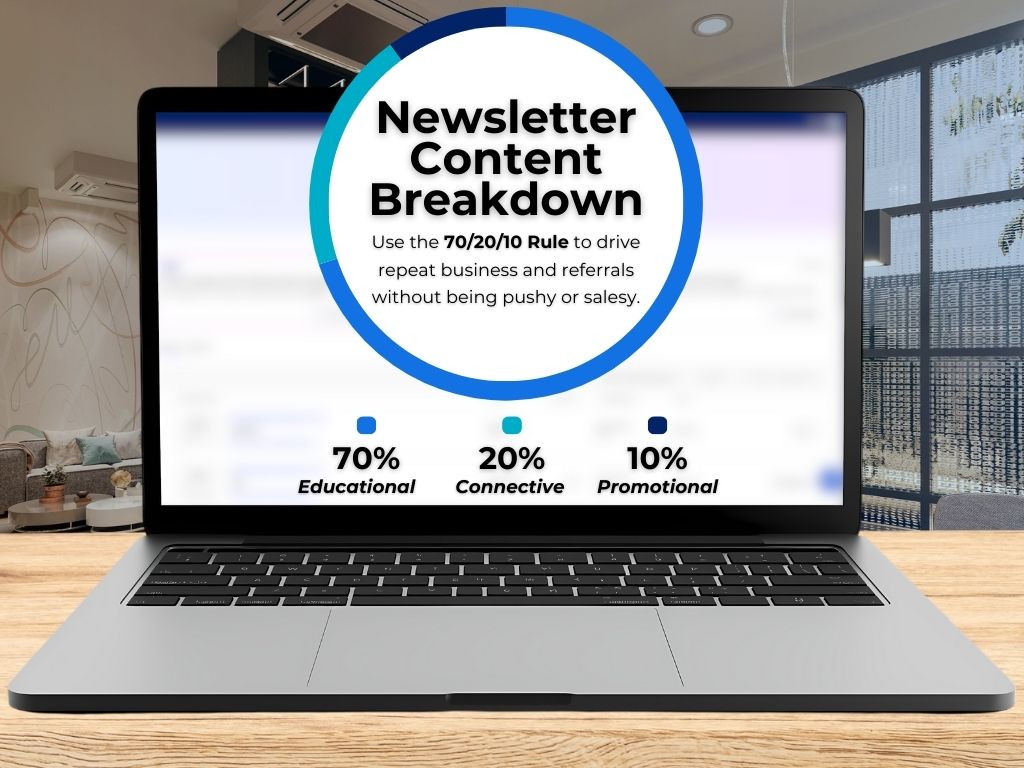
Your newsletter needs three content types in this ratio:
| Content Type | Percentage | Examples |
|---|---|---|
| Educational value | 70% | Seasonal maintenance checklists, warning signs, how-to guides |
| Personal connection | 20% | Team updates, behind-the-scenes, project photos |
| Promotional | 10% | One clear offer or call to action |
- Educational content solves immediate problems or prevents future ones. For home inspectors, this might include “5 Things to Check Before Winter” or “What That Water Stain Really Means.” Make every piece immediately useful, not theoretical.
- Personal content humanizes your business. A simple “Meet Our New Technician” section or “Why We Started This Business” story builds a connection without elaborate production.
- Promotional content belongs in newsletters, but sparingly. When you do promote, tie it to genuine value: “Spring maintenance discount plus our checklist of 15 things to inspect yourself” beats “20% off this week only.”
How Often Should You Send?
Consistency matters more than frequency. A monthly newsletter you maintain for years outperforms weekly emails you abandon after three months.
For most service businesses, monthly or bi-monthly works best. Industry data shows that monthly newsletters have the highest engagement rates across industries, with average open rates of 23.4% compared to 19.7% for weekly sends.
That means that, no matter your industry or what you’re selling, don’t stress if you can’t spare the time for weekly emails to your contact list. Just put more strategy into biweekly or monthly sends.
Watch These Metrics to Gauge Frequency
- Declining open rates or rising unsubscribes = sending too often or not providing enough value to the recipients
- Stable or improving metrics = you’ve found your rhythm, so keep it up and keep your eyes peeled for changes
Whatever frequency you choose, stick to it. If life gets busy, send a shorter newsletter rather than skipping entirely.
The One Thing Every Newsletter Must Include
Every newsletter needs one crystal-clear call to action. Not three options. One specific next step.
Sometimes that CTA is transactional: “Schedule your annual inspection before December.”
Other times it’s relational: “Reply and tell me which topic you’d like covered next month.”
Research on choice overload shows that additional options decrease the likelihood of any decision being made. Pick the one action that matters most for this specific email and make it obvious.
Critical compliance note: Include a clear, visible unsubscribe link and your mailing address in every newsletter. The CAN-SPAM Act requires it.
Beyond compliance, making unsubscribing easy prevents spam complaints that damage your sender reputation.
Newsletter Tips That Drive Repeat Business
You’ve built trust through valuable newsletter content. Now make it effortless for clients to act on that trust when they’re ready to book.
1. Make It Easy for Clients to Book Again
Strategic timing turns newsletters into repeat business generators:
- Home inspectors: Send anniversary emails at one, three, or five years, suggesting maintenance inspections
- HVAC companies: Time newsletters to season changes with equipment check-ups
- Contractors: Follow up on completed projects when clients typically tackle the next renovation phase
- Landscapers: Reach out 30 days before spring with early-bird pricing
Include direct scheduling links, your phone number with click-to-call functionality, and clear instructions. Every extra step between “yes, I could book” and “appointment confirmed” loses potential clients.
Frame these as service to them: “Your home is approaching the three-year mark when many systems start showing wear. Here’s what to watch for and how we can help catch issues early.”
2. Share Client Success Stories
People trust businesses that deliver proven results. Anonymize client details but share specific scenarios:
“Last month, we caught foundation settling during a routine inspection that would have cost $30,000 to repair if left another year. The buyer negotiated repairs before closing.”
According to Nielsen research, 92% of consumers trust recommendations from people they know, and 70% trust consumer opinions posted online. Client stories bridge both categories.
Show the problem, your solution, and the client’s result. Even without names or photos, specific details make stories credible and compelling.
3. Create Exclusive Offers for Subscribers
Loyalty perks reward people most likely to use your services again:
- Priority scheduling during busy seasons
- Early access to new services
- Subscriber-only educational resources, like detailed guides or checklists
- Bundled service packages
- Extended warranties or guarantees
The exclusivity matters more than the discount depth. Positioning your newsletter as the gateway to your best resources encourages people to stay subscribed and engaged.
Avoid training subscribers to wait for discounts before booking. Reserve promotions for specific goals like filling slow-season gaps or launching new services.
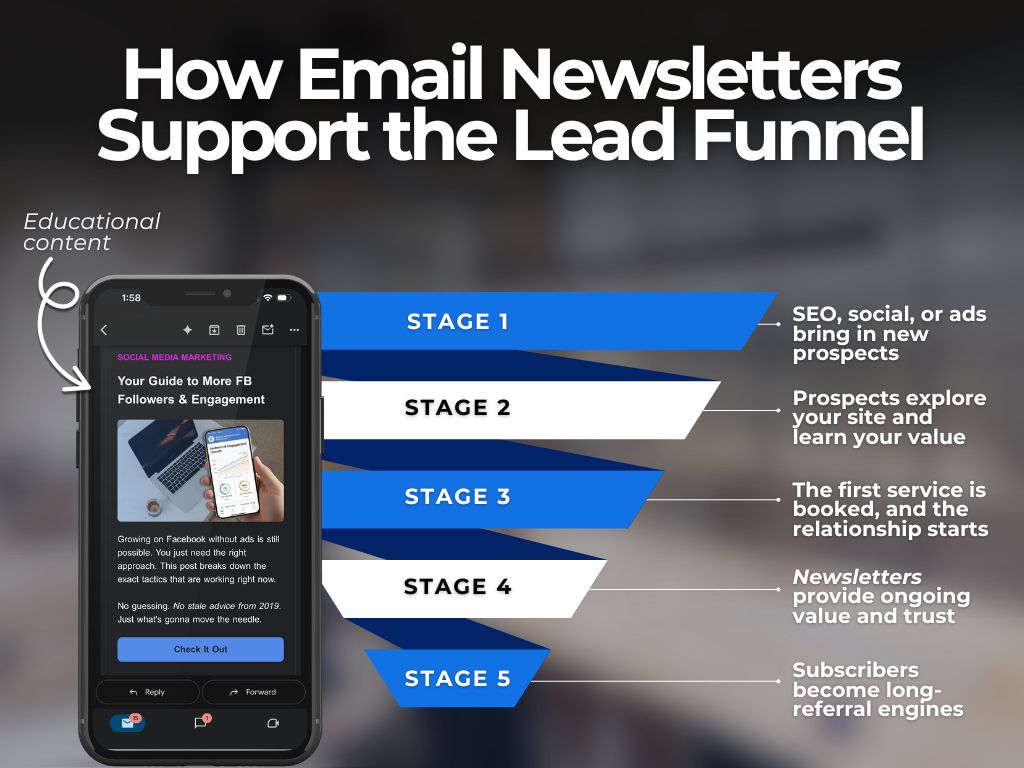
Newsletter Tips That Generate More Referrals
Referrals are the highest-quality leads you’ll ever get, but they rarely happen without a nudge. Your newsletter is the perfect low-pressure place to ask.
1. Ask for Referrals the Right Way
Most businesses never ask for referrals, assuming satisfied clients will automatically refer. They won’t without prompting.
The best time to ask: Right after delivering value in your newsletter. Include a simple request: “Know someone buying a home? Forward this email to them or share my contact info.”
Make the ask specific. “Send referrals” feels vague. “If you know someone buying a home in the next few months, send them my way” gives clear direction.
Consider light incentives: a $25 gift card, priority scheduling, service discount, or charity donation. Some businesses find that recognition alone motivates more than monetary rewards.
2. Make Your Business Easy to Refer
Friction kills referrals. Include shareable elements in every newsletter:
- Direct booking links
- Your phone number with click-to-call functionality
- One-sentence description clients can copy/paste: “We’re the inspectors who explain everything in plain English and help you understand what actually matters.”
- Your service area is clearly stated
- Links to your Google Business profile for easy review access
Create referral-worthy newsletter content people naturally want to forward. When someone forwards your “10 Things to Check Before Winter” email to their neighbor, your business comes along for the ride.
3. Recognize and Thank Referral Sources
People who refer you once will likely refer again if they know their referral mattered.
Personal thank-you notes or calls work best. A handwritten note acknowledging a referral stands out in the digital noise.
Public recognition (with permission) amplifies appreciation: “Thanks to Sarah K. for connecting us with three new clients this quarter.” This shows your existing network that referrals are noticed and valued.
Technical Tactics for Better Results
Great newsletter content deserves to be seen. Small technical decisions about subject lines, design, and tracking make the difference between newsletters that perform and ones that get deleted.
1. Write Subject Lines That Get Opened
Sounds obvious, but it’s not always so simple.
Invesp research shows 47% of email recipients open emails based solely on the subject line, and 69% report emails as spam based on subject lines alone.
Strong subject line formulas:
- Question format: “Is your furnace ready for winter?”
- Benefit-first: “3 ways to avoid emergency repairs this season”
- Timely urgency: “Last chance for fall inspection discounts.”
- Specific value: “The $200 mistake most homeowners make.”
- Personal relevance: “For homeowners in their first 5 years.”
Keep subject lines under 45 characters.
Mobile devices and some email providers cut off longer lines.
Avoid spam triggers: excessive punctuation (!!!), all caps, words like “free,” “guarantee,” or “limited time.”
2. Design for Mobile Readers First
A lot of email opens (like, a lot) happen on mobile devices.
Mobile-friendly checklist:
- Single-column layouts that stack vertically
- Body copy at least 14-16px
- Headlines at least 20px
- Button CTAs at least 44×44 pixels for easy tapping
- Alt text for every image so your message makes sense even when images don’t load
Your newsletter should communicate value even when images don’t display. Keep the total email file size reasonable so loading doesn’t take more than a few seconds.
3. Track What Matters Most
Most email service providers bombard you with dozens of metrics. Focus on these ones to start, since they actually tell you whether your newsletters are working:
| Metric | Home Service Goal | What It Tells You |
|---|---|---|
| Open rates | 22% | Whether subject lines work and subscribers recognize your sender name |
| Click-through rates | 2.2% | Whether newsletter content resonates enough to drive action |
| Reply rates | Varies | Real relationship strength (often matters most for service businesses) |
| Unsubscribe rates | <0.5% per send | Content-audience fit (sudden spikes warrant attention) |
What good performance generally looks like:
- Open rates above 25% mean your subject lines are working, and subscribers want to hear from you
- Click rates above 2.5% indicate your newsletter content drives action beyond just reading
- Any reply rate matters more than clicks for service businesses. When subscribers hit reply to ask questions or share feedback, you’re building connections that lead to repeat business and referrals
- Unsubscribe rates below 0.5% per send show you’re maintaining relevance
How to use this data:
Don’t obsess over every fluctuation. One email with lower opens might just mean bad timing or subject line testing.
Look for trends over 3-6 months. Consistent decline signals real problems worth addressing.
- If open rates drop steadily, test new subject line approaches.
- Let’s say click rates fall; you should revisit your newsletter’s content mix or CTA clarity.
- If the unsubscribe rate spikes suddenly, you’re either sending too often or missing the mark on relevance.
Common Newsletter Mistakes That Cost You
Certain patterns and habits will kill performance. Recognize them early, and you’ll save months of declining engagement (and confusion).
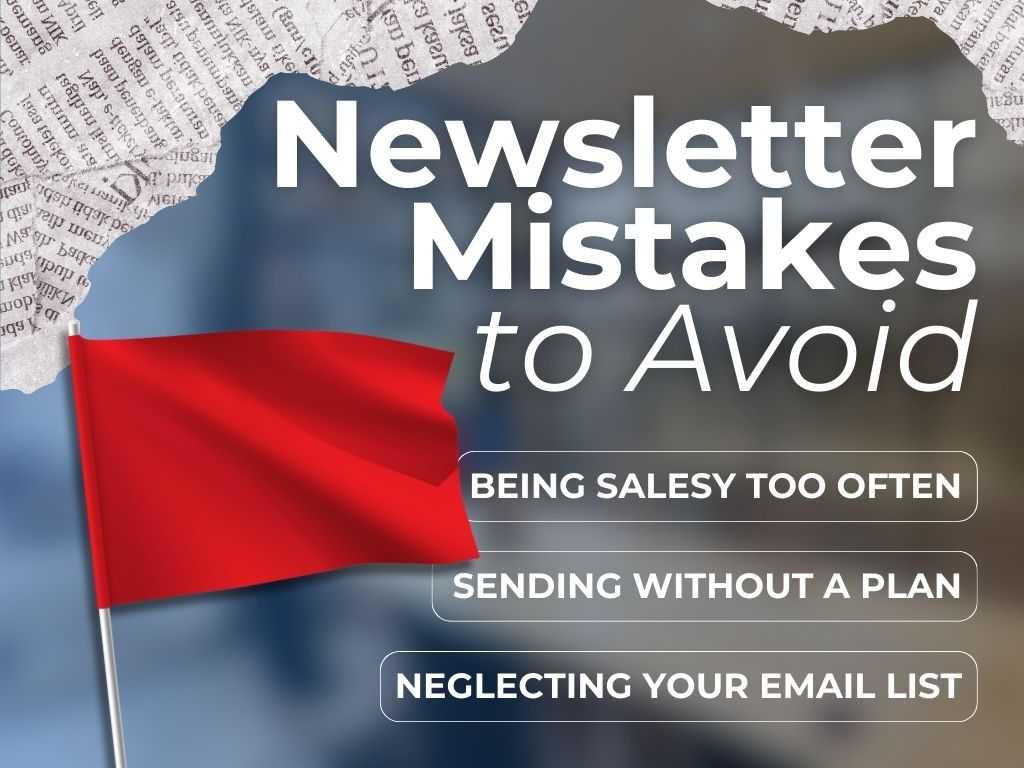
Being Too Salesy Too Often
Every email that just screams “buy now” erodes trust. Convince & Convert found that brands focusing on value rather than pushing sales see 4-5x higher engagement rates.
The right promotional balance: If you send monthly, only make 2-4 emails per year primarily promotional. The rest should deliver value with clear CTAs.
Replace “Buy now” and “Limited time” with “How we can help” and “Click here when you’re ready”. The tone shift makes promotions feel like service rather than pressure.
Sending Newsletters Without Strategy
Random newsletter content, just sent whenever, with no clear plan or purpose, creates confused subscribers who can’t develop habits or expectations around your emails.
Map out topics quarterly based on seasons and common client questions. Knowing that February covers winter damage signs and September focuses on fall preparation creates consistency that clients can anticipate.
Align newsletter themes with your business cycles. For example, if summer is coming, your June newsletter might offer educational content that subtly highlights your slower summer services and provides timely value.
Not Cleaning Your Email List
Large lists full of disengaged subscribers damage deliverability. When significant portions of your list never open emails, email service providers increasingly filter messages to spam folders.
Clean your list every 6-12 months. Remove subscribers who haven’t opened in 6+ months. Before removing them, send a re-engagement campaign: “We haven’t connected in a while. Want to keep hearing from me? Click here to stay subscribed.”
A smaller, engaged list outperforms a large, dead list every time. 500 subscribers with 30% open rates deliver more value than 5,000 subscribers with 5% open rates.
Related Questions
Here are answers to some FAQs we hear around this topic from other business owners:
How do I grow my newsletter list without buying contacts?
Never buy email lists. Add signup forms to your website homepage, contact page, and blog post. Keep forms simple: name and email only. Each additional field decreases completion by roughly 11% according to Formstack.
Collect emails during service delivery and create a valuable lead magnet, like a comprehensive guide requiring email signup.
What email platform is best for service businesses?
HubSpot offers robust free plans with excellent automation. Mailchimp provides intuitive interfaces and strong newsletter templates. Consider integration needs with your existing tools and start simple.
Should I segment my email list?
Basic segmentation makes sense at 500+ subscribers with clear audience divisions. Start with 2-3 logical divisions and test whether segmented emails outperform generic sends.
Many small service businesses succeed without segmentation.
Conclusion
Newsletters won’t fill your calendar tomorrow. They build relationships that keep clients coming back next month, next year, and every time they think about your industry.
Start simple. Decide on a frequency you can maintain, create newsletter content your past clients will find useful, and send consistently.
Need help building a strategy that keeps clients coming back? WolfPack Advising works with businesses like yours every day. From email campaigns to SEO content strategy and automation, we handle the marketing so you can focus on anything else.