


A strong Google Local Service Ads strategy focuses on lead quality, not just lead volume. When set up and managed correctly, Google Local Service Ads can drive calls from homeowners who are ready to book, not just from people comparing prices. The difference comes down to strategy, targeting, and ongoing optimization.
Google Local Service Ads promise something every home service business wants: more phone calls from local customers. And they can deliver that visibility quickly. But many business owners soon notice a problem. Some calls turn into real jobs, while others waste time, staff energy, and budget.
Without a clear strategy, Google Local Service Ads can feel expensive and unpredictable. With the right approach, they can become one of the most reliable sources of high-quality local leads. This guide explains how to build that strategy, why lead quality often breaks down, and what actually improves results over time.
Contents
What Google Local Service Ads Are and How They Work
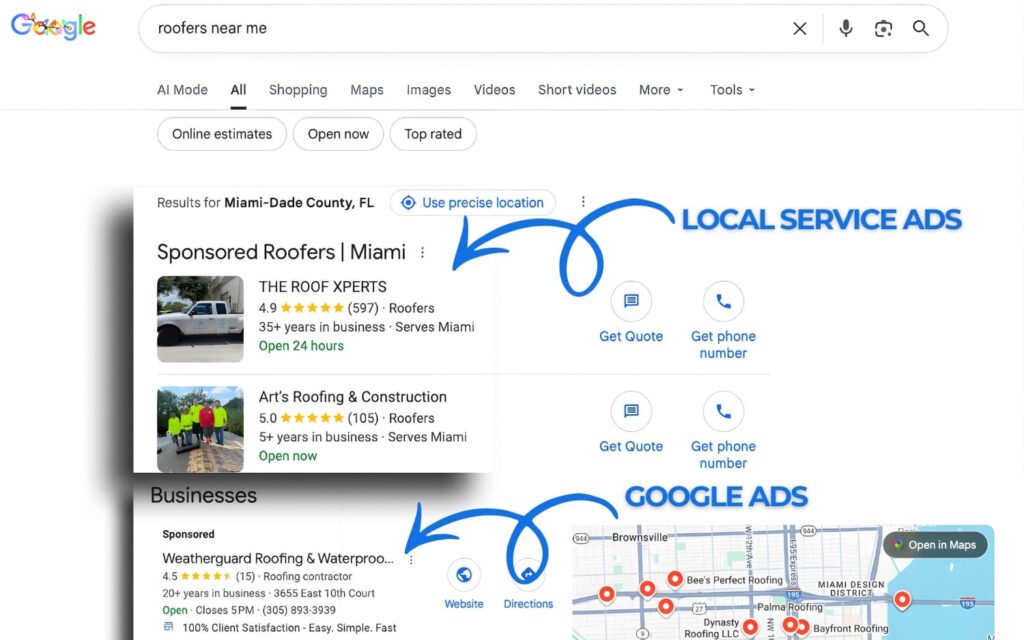
Google Local Service Ads help local service businesses connect with homeowners who are actively looking to hire. Unlike traditional ads that focus on clicks, these ads are built around trust, location, and intent, which is why they appear at the very top of local search results.
Industry sources, including Google and WordStream, note that Local Service Ads often show above standard Google Ads and organic listings, especially on mobile, where most local service searches happen.
- They are designed for service-based businesses operating within defined geographic areas.
- Businesses pay per lead, not per click.
- A lead is generated when a homeowner calls or sends a message through the ad.
- Because each lead has a cost, relevance matters more than volume.
- Local Service Ads highlight trust signals immediately.
- Homeowners see reviews, business details, and often a Google Guaranteed or Google Screened badge.
- These signals help homeowners feel confident contacting a business.
Google decides which businesses appear based on trust and relevance. Profile accuracy, review quality, responsiveness, and customer engagement all influence visibility and lead quality. Consistent lead handling plays a role in how often your ads appear and the type of leads you receive.
Understanding the Difference Between Google Local Service Ads and Google Ads
Google Local Service Ads and Google Ads are often confused, but they work very differently. Knowing how each platform functions helps set clear expectations for lead quality, cost, and the level of control you have over your advertising strategy.
| Feature | Google Local Service Ads | Google Ads |
|---|---|---|
| Ad placement | Top of local search results | Below LSAs or within search results |
| Pricing model | Pay per lead | Pay per click |
| Primary action | Phone calls and messages | Website visits |
| Trust signals | Reviews and verification badges | Not shown in ads |
| Control level | Limited | High |
Local Service Ads tend to attract homeowners who are ready to hire, while Google Ads support broader visibility and education. For many local service businesses, using both channels together helps balance lead quality with long-term growth.
Why Google Local Service Ads Often Produce Low Quality Leads
Low-quality leads rarely happen by accident. They are usually the result of unclear signals.
One common issue is selecting overly broad service categories. When a business chooses every available option, Google casts too wide a net. That net often catches homeowners who are not a good fit.
Another issue is service area sprawl. Expanding too far beyond your core market can bring in leads that are inconvenient, unprofitable, or unlikely to convert.
Reviews also play a major role. Businesses with low review counts or inconsistent ratings may attract price shoppers rather than serious buyers. Response time compounds the problem. Missed calls and slow follow-ups can quickly turn good leads into poor outcomes.
Google Local Service Ads Lead Credits and Optimization
One often overlooked benefit of Google Local Service Ads is Google’s lead crediting system, which provides a layer of protection for advertisers and an opportunity to improve lead quality over time.
If a lead is clearly invalid, such as spam calls, wrong service requests, duplicate leads, or inquiries outside your defined offerings, businesses can dispute the lead directly in the Local Services dashboard. When approved, Google credits the cost back to your account.
While credits offer peace of mind, the real value comes from how this process helps train Google’s algorithm.
Every disputed, credited, or accepted lead sends a signal. Over time, these signals help Google better understand:
- Which job types are actually relevant to your business
- Which services should trigger your ads
- What a legitimate, high-quality local lead looks like
Businesses that actively review leads, refine job types, and provide consistent feedback tend to see fewer low-quality inquiries over time. This ongoing feedback loop teaches the system to prioritize homeowners who are more likely to convert into real jobs rather than casual price shoppers.
In short, Google Local Service Ads perform best when they are actively managed. Auditing how leads are classified, disputing poor matches, and continuously refining service definitions help improve both lead quality and ad efficiency as the algorithm adapts to your business.
What High Quality Local Leads Actually Look Like
High-quality local leads are not just about who contacts you, but how those leads are handled after they come in. One helpful way to understand lead quality is to look at a real lead notification or email and identify the details that matter most, such as service type, location, and timing.
Before assuming leads are low quality, it is important to evaluate whether the issue is truly the lead itself or what happens next. In many cases, businesses receive solid leads but struggle to close them due to missed calls, slow follow-ups, or gaps in the sales process.
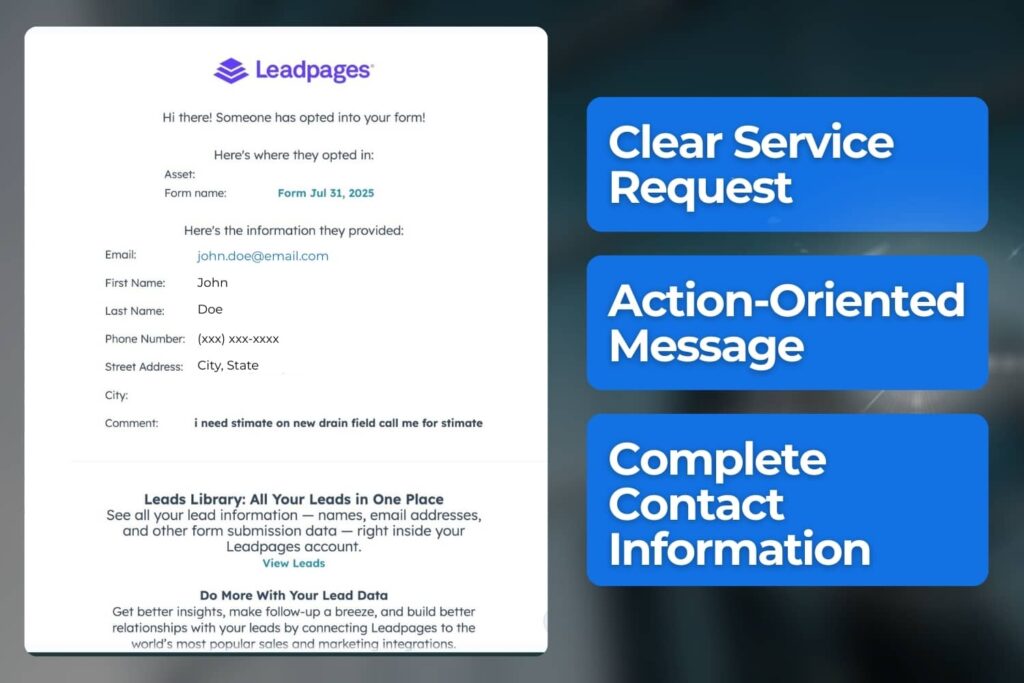
High-quality leads typically show clear intent, match your services, and come from your core service area. When those leads are not converting, it often points to an operational issue, such as call handling or scheduling, rather than a problem with the ads.
Evaluating lead quality alongside your phone system and sales process helps ensure you are solving the right problem and improving results where it matters most.
Building a Google Local Service Ads Strategy That Attracts Better Leads
Choosing the Right Primary and Secondary Categories
Categories determine when your ads appear. Choosing the wrong ones can undo the rest of your strategy.
The primary category should reflect your main service. Secondary categories should only include services you actively want more of. If a category brings in poor leads, it should be removed, even if it reduces volume.
Defining Services and Exclusions Clearly
Your service list helps Google determine which customers to send to your business. Vague or overly broad service descriptions can create confusion.
Clear service definitions help attract homeowners who already understand what you offer. Exclusions are just as important. Removing unwanted services protects lead quality and reduces wasted spend.
Setting Service Areas That Match Capacity and Profitability
Larger service areas increase exposure, but they often reduce efficiency. Travel time, scheduling conflicts, and lower close rates can follow.
Tighter service areas usually produce stronger results. They align more closely with staffing levels, response times, and customer expectations.
How Reviews and Reputation Shape Lead Quality in Google Local Service Ads
Reviews are one of the strongest trust signals in Local Service Ads. They influence both visibility and homeowner behavior.
Homeowners read reviews before calling. They look for consistency, recent feedback, and relevance to their situation. A strong rating with steady review activity attracts serious inquiries.
Google also rewards businesses that maintain a healthy review profile. Review velocity matters, not just total count. Regular feedback signals reliability and engagement.
Integrating review generation into your broader marketing strategy supports better LSA performance and long-term local visibility.
Budgeting Google Local Service Ads for Sustainable Lead Quality
Budget decisions for Google Local Service Ads affect lead quality, ad consistency, and overall performance.
| Budget Factor | What It Affects | Impact on Lead Quality |
|---|---|---|
| Higher budgets | Increased exposure and lead volume | Can attract less qualified leads if targeting is too broad |
| Lower budgets | Reduced lead volume | Often improves relevance and attracts more serious inquiries |
| Targeting accuracy | Who sees your ads | Refined targeting improves lead quality at any budget level |
| Seasonality | Competition and homeowner urgency | Peak seasons increase demand and competition |
| Staffing capacity | Ability to answer and convert leads | Mismatched capacity leads to missed calls and wasted spend |
| Conversion readiness | Booking and follow-up efficiency | Strong processes improve return on each lead |
Spending more only makes sense when your team can answer calls, schedule quickly, and convert leads into booked jobs. Sustainable lead quality depends on aligning your budget with operational capacity and seasonal demand rather than increasing spend solely for visibility.
Why Response Time and Lead Handling Matter More Than Most Businesses Expect
Response time influences both lead outcomes and future performance.
Homeowners contacting Local Service Ads often reach out to multiple businesses. The first company to respond professionally has a strong advantage.
Missed calls and delayed follow-ups reduce trust. They also signal to Google that leads are not being handled well, which can affect visibility.
Strong Local Service Ads performance requires coordination between marketing and operations. Call handling, scripts, and follow-up processes all play a role in converting leads into booked jobs.
How to Measure Lead Quality Beyond Google’s Dashboard
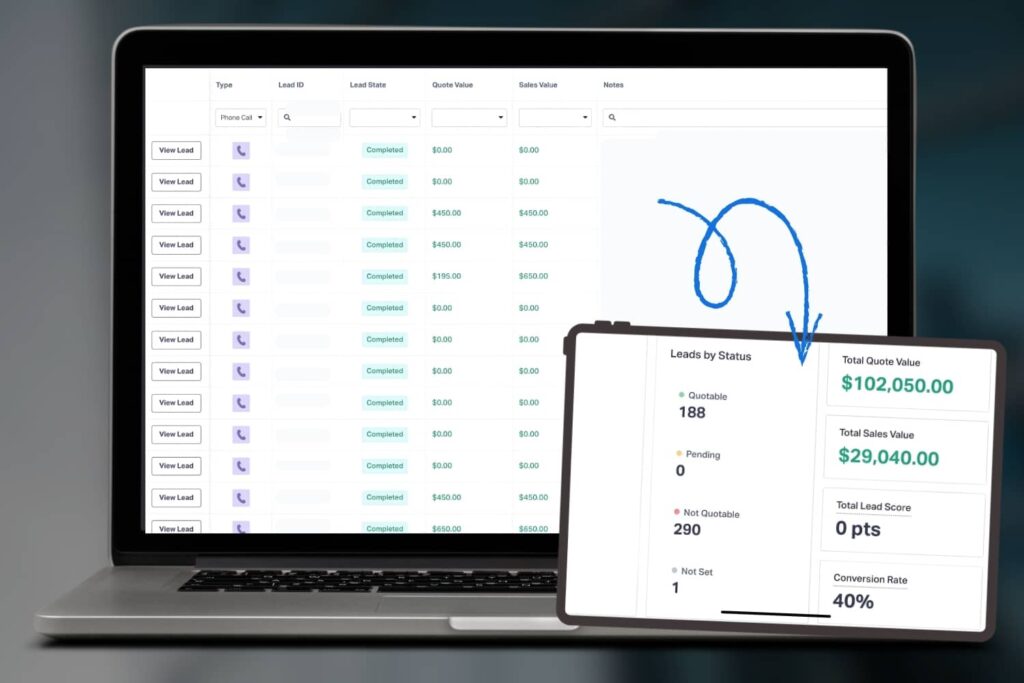
Google’s dashboard shows lead volume and cost, but it does not tell the full story.
True performance measurement looks at outcomes. Businesses should track which leads convert into booked jobs, the revenue those jobs generate, and how frequently similar leads occur.
Patterns reveal more than totals. Repeated low-quality calls from the same category or area indicate targeting issues. Strong close rates point to healthy alignment.
How Google Local Service Ads Fit Into a Complete Local Marketing Strategy
Google Local Service Ads work best as part of a larger system.
They capture high-intent demand, but rely on trust built through other channels. Local SEO, Google Business Profile optimization, and review generation all contribute to stronger Local Service Ads performance.
Content marketing and organic visibility help educate homeowners before they search. Paid search and remarketing can support longer decision cycles.
Together, these channels create consistent visibility and credibility across the customer journey.
Situations Where Google Local Service Ads May Not Be the Best Option
Local Service Ads are not always the right starting point.
Businesses without reviews or credentials may struggle to compete. Highly saturated markets can drive costs up quickly. Companies with thin margins may find pay-per-lead pricing challenging.
In these cases, building organic visibility or referral systems first may deliver better returns. LSAs perform best when the foundation is already in place.
Related Questions
Are Google Local Service Ads worth it for home service businesses?
Google Local Service Ads are often a strong fit for established home service businesses with solid reviews and reliable call handling, as they attract high-intent homeowners who are ready to hire rather than browse.
How long does it take for Google Local Service Ads to work?
Most businesses begin seeing leads within a few weeks, but lead quality typically improves over time as reviews build, targeting is refined, and performance signals strengthen.
This is especially true for local service companies using Google Local Services Ads, where consistent Google Ads management helps improve ad ranking, visibility, and the quality of incoming calls over time.
Can Google Local Service Ads replace SEO or Google Ads?
Google Local Service Ads perform best when combined with SEO and Google Ads.
Conclusion
Google Local Service Ads can be a highly effective lead source for local service businesses when supported by a clear strategy. Visibility alone does not drive results. Lead quality improves when targeting is precise, trust signals are strong, budgets are aligned with capacity, and follow-through is consistent.
A strong Google Local Service Ads strategy helps ensure incoming calls are relevant, timely, and more likely to convert into booked jobs. Without that structure, even top placement can fall short of expectations.
This helps businesses improve lead quality and identify performance issues. WolfPack Advising helps local service companies develop and optimize Google Local Service Ads strategies focused on sustainable growth, not just lead volume. Working with a team that understands both marketing and operations can reveal opportunities that lead to stronger, more consistent results.