Last updated on June 23rd, 2026 at 01:40 pm
A lot of the calls and forms blowing up your phone will never turn into jobs. Some are price shoppers. Some are out of your area. Many are just looking. If you have ever wondered how to qualify a lead without burning your whole morning, this is for you.
Qualifying a lead means checking fast whether someone is a real, ready, reachable customer before you spend time on them. For a home service business, it comes down to a few things. Are they in your area? Do you do what they need? Do they have the power to say yes? Can they pay?
Below is a simple way to do it by hand, plus how to put the whole thing on autopilot.
What Does It Mean to Qualify a Lead?
To qualify a lead is to figure out whether it’s worth your time before you chase it. You look at a few basic facts and make a quick call: real job, or dead end?
You are not trying to close the sale yet; just sorting. Think of it like sorting mail. Some goes in the “deal with now” pile. Some goes in the trash. Qualifying leads keeps your good prospects out of the trash and your time off the junk.
What’s the Difference Between a Lead and a Qualified Lead?
A lead is anyone who reaches out. A qualified lead is someone who fits what you do and can actually hire you.
Here is the difference in plain terms. A homeowner down the road who needs a roof replaced this month is a qualified lead. A renter three counties away who is just collecting prices for their landlord is not.
Both filled out your form, but only one is worth a callback.
Why Bad Leads Cost You More Than You Think
Bad leads are not free. They cost you the one thing you cannot get back, which is time. Every minute your team spends on a tire kicker is a minute they are not spending on a real job.
It gets worse. While you chase a dead end, a good lead sits waiting. By the time you get to them, they have already booked your competitor.
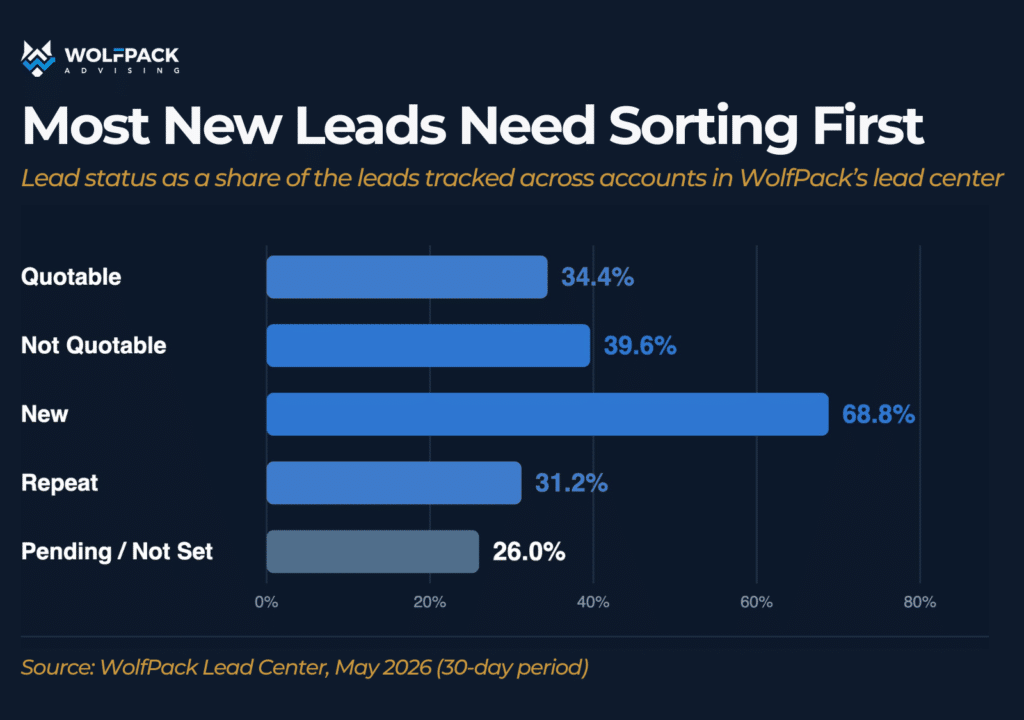
The size of the problem surprises most owners. Across the accounts in our own Lead Center, more than a third of incoming leads come in not quotable, meaning there was no job there to quote. Another chunk, around one third, are repeat contacts rather than new leads. That is a lot of noise to sort through by hand.
The leads that show on your report are not always certain to pay. A flood of cheap leads can feel like a win and still leave you with an empty schedule.
How to Qualify a Lead in 5 Quick Checks
Here is how to qualify a lead in about a minute. Run a new lead through these five checks before you invest real time.
- Are They in Your Service Area? Start here, because nothing else matters if you cannot get to them. Check the address or ZIP first. If they are outside your range, you are done.
- Do They Actually Need What You Do? Match the job to your services. A pest control call about a wasp nest is a fit. A call about a leaking roof is not. Be honest about what you take on.
- Can They Say Yes? Find out if you are talking to the person who makes the call. A homeowner can hire you. A renter usually cannot. Neither can someone “just asking for a friend.”
- How Soon Do They Need It? Timeline tells you everything about how serious they are. “This week” is hot. “Sometime this year” can wait. “Just curious” is a maybe at best.
- Can They Pay, and Are Their Expectations Realistic? You do not need their bank account. You need a quick read on budget. If someone wants a full system for the price of a service call, that gap will not close.
The Best Questions to Ask a New Lead
The fastest way to qualify a lead is to ask a few smart questions up front. Here is a simple script your office can use on the first call or text.
- What is the address where you need the work done?
- What problem are you trying to solve?
- How soon do you need it handled?
- Have you had this looked at before?
- Do you own the home or rent it?
- Are you still getting other quotes?
- What is the best number and time to reach you?
You do not need all seven every time. Even the first three will tell you most of what you need to know.
Red Flags That Signal a Dead-End Lead
Some leads wave a flag before they waste your day. Learn to spot them, and you will skip a lot of dead ends.
| Red Flag | What It Usually Means | What to Do |
|---|---|---|
| Will not share an address | Out of area or not serious | Ask once, then move on |
| Only ever asks about price | Shopping for the cheapest, not the best | Give a range, watch the reaction |
| Vague on timeline | No real urgency yet | Tag as a follow-up, not a priority |
| Wants a quote with no details | Fishing or comparing, not buying | Hold the quote until they share specifics |
| Goes quiet after one reply | Low intent or already booked | One more nudge, then let it go |
None of these mean “never call back.” They just mean “do not prioritize this.”
Where Doing It By Hand Falls Apart
Qualifying leads by hand works fine until it does not. The problem is not the method. The problem is doing it the same way every single time, all day, without dropping the ball.
Here is where it breaks down:
- It is slow: A lead comes in while you are on a roof or under a house. By the time you call back, they are gone.
- It is not consistent: The way you sort a lead is not the way the new hire at the front desk sorts it. Good leads slip through the cracks.
- The data just decays: You learn a lead was junk, you hang up, and that lesson leads nowhere. It never makes your marketing smarter.
That last one is the real killer. Every lead you qualify should teach you something about where your customers come from. It should inform future lead qualifications and help you target better leads with more accuracy.
If that lesson stays in your head or a notebook, or nowhere, you are leaving revenue on the table.
How an Automated Lead Qualification System Works
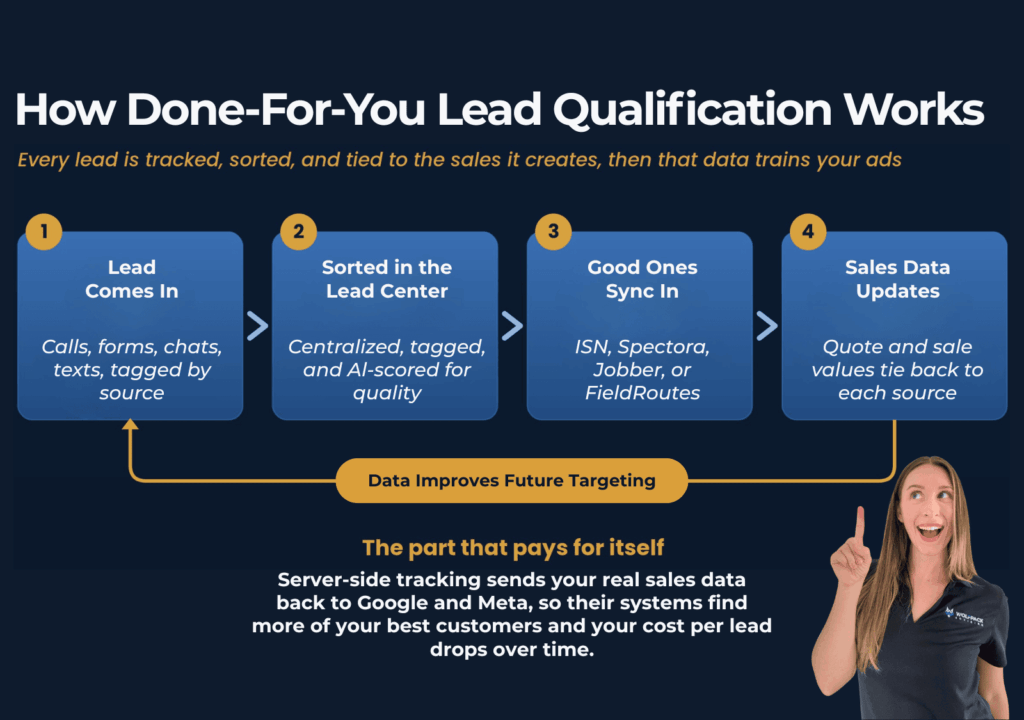
A lead qualification system does the sorting for you, every time, in seconds. Here is how it actually works, step by step.
- Every Lead Gets Tracked. Calls, forms, chats, and texts all land in one place, tagged by where they came from. Nothing falls through.
- AI Listens and Scores Each Lead. Every call gets recorded and read by AI. It scores the lead for quality, flags the ones worth a quote, and marks the obvious spam so it never wastes your time.
- Good Leads Sync Into Your Schedule. Qualified leads flow straight into the tools home service pros already run, like ISN, Spectora, Jobber, or FieldRoutes. Your team sees the full picture without retyping anything. This pairs well with solid CRM management so nothing gets lost between systems.
- Your Numbers Update Themselves. Quote values and sale values update as deals move, so your return on investment by source stays current without a spreadsheet.
- Your Best Lead Data Trains Your Campaigns. This is the part that pays for itself, and it is next.
The Part Most Owners Miss
Here is the move almost nobody outside of marketing knows about. Your qualified lead data can make your ads cheaper.
When you send real sales data back to Google and Meta, their systems learn what your best customers look like and go find more people just like them.
That is the idea behind value-based bidding, where the platforms optimize toward the leads that actually turn into revenue. It lowers your cost per lead over time. WolfPack uses server-side tracking to make sure that data gets through, even with ad blockers and browser limits in the way.
Many marketers also believe the platforms give a quiet edge to accounts that share this data back, which can mean lower costs and more leads.
In short, qualifying leads is not just about saying no to junk. It is about teaching your advertising to bring you better leads on its own.
Which Marketing Sends Your Best Leads?
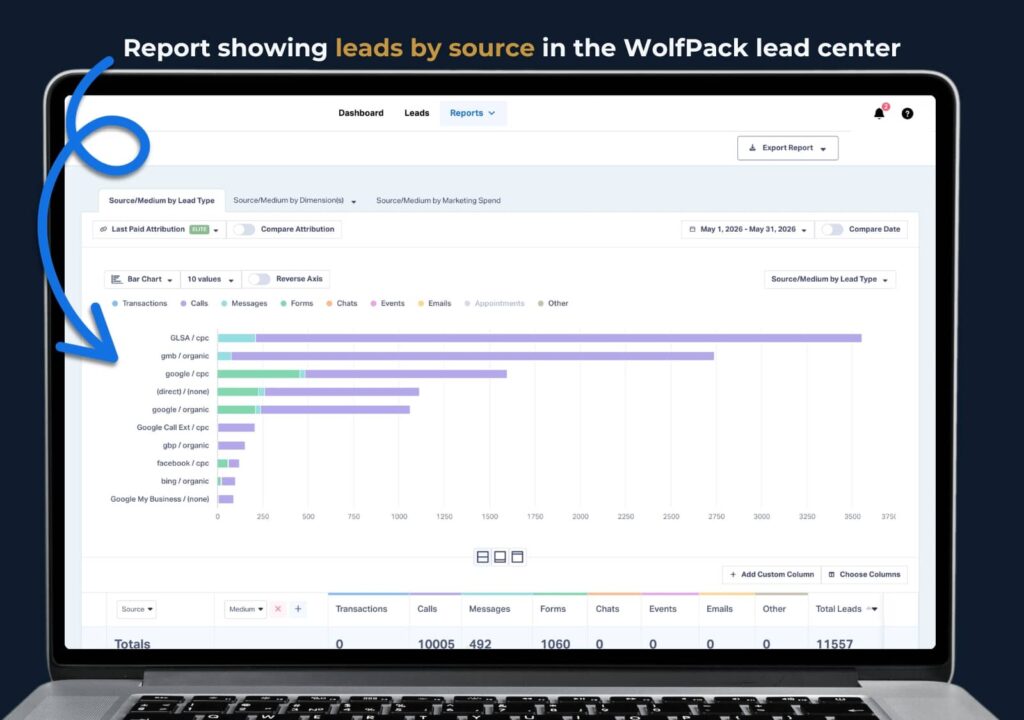
Once you qualify your leads, you can finally see which marketing actually brings in paying customers. Then you put more money there and get more of them. Qualifying is not just a filter. It is a map.
To read that map, you watch a few places:
- WolfPack Lead Center. Every call, form, and chat gets tagged by source, so you can see whether Google Ads, organic search, social, or a referral sent it.
- Google Analytics. This shows what people do on your site before they reach out, including the folks who visit a few times before they call.
- Your CRM or scheduler. This is the real scoreboard. It shows which leads booked and which ones closed.
Double down on the sources sending qualified, closing leads, and cut the ones that only send noise. If you are weighing where to put your budget, our breakdown of SEO vs PPC is a good place to start.
And if organic and local search are quietly sending your best jobs, that is your cue to invest more there. Our lead tracking and ROI reporting pull all of it into one dashboard so the answer is easy to see.
Do It Yourself or Let a System Handle It?
You can qualify leads by hand, run a tracking tool, or have a team handle the whole thing for you. Here is how those options stack up.
| Capability | By Hand | Lead Center | Lead Qualification |
|---|---|---|---|
| Tracks every call, form, and chat | — | ✓ | ✓ |
| Alerts you to new leads | — | ✓ | ✓ |
| AI scores and qualifies each lead | — | — | ✓ |
| Marks spam automatically | — | — | ✓ |
| Syncs leads into your CRM or scheduler | — | — | ✓ |
| Updates ROI by marketing source | manual | ✓ | ✓ |
| Feeds your best data back to your ads | — | — | ✓ |
| A trained expert does it for you | — | — | ✓ |
Both plans run month to month, so you are not locked into anything long term. You can see the full breakdown on our lead qualification pricing article.
And if you already have a CRM in place, our guide to the best CRM for a service business can help you make the most of it.
Related Questions to Explore
What’s the Difference Between a Lead and a Qualified Lead?
A lead is anyone who contacts you. A qualified lead is one who fits your service, is in your area, and can actually hire you. Qualifying is the quick step in between that tells the two apart.
How Does AI Qualify a Lead From a Phone Call?
The call is recorded and sent to an AI that reads the conversation. It scores the lead for quality, marks it as spam if it is junk, and notes whether a quote was given or a sale was made. The good leads rise to the top automatically.
How Fast Should You Respond to a New Lead?
As fast as you can, ideally within a few minutes. Research from Harvard Business Review found that businesses reaching out within an hour were nearly seven times more likely to qualify a lead than those that waited even an hour longer. Speed often beats everything else.
Can Qualifying Leads Really Lower Your Ad Costs?
It can. When you send real sales data back to Google and Meta, their systems learn what your best customers look like and find more of them. Over time, that can lower your cost per lead and bring in better prospects.
Do You Need Software to Qualify Leads?
No. You can start today with the five checks. Software helps when the volume gets high, or you want it handled for you, so nothing slips through the cracks, and the data feeds your marketing instead of dying in a drawer.
Conclusion and Next Step
Qualifying leads is how you stop trading your time for dead ends. Start with the five checks today. Ask the right questions up front, watch for the red flags, and protect your hours for the jobs that actually pay.
When doing it by hand stops keeping up, a system can take it off your plate. It tracks every lead, qualifies each one, syncs the good ones into your schedule, and uses your wins to make your ads smarter.
If you are ready to see what your marketing is really producing, learn more about our lead tracking and ROI reporting, or grab a quick call to map it out.