


If you’ve ever asked “how many keywords for SEO should I use on one page?”, you’re not alone. This question comes up again and again because many business owners want better rankings without hurting performance or over-optimizing their content.
The short answer is that healthy SEO prioritizes clarity and search intent, not cramming as many keywords as possible into the content.
For most websites, each page should focus on one primary keyword supported by a small set of closely related phrases. Many pages rank for dozens of related searches even when optimized around a single topic, which is where keyword clarity often makes the difference.
Contents
Why Keyword Quantity Still Confuses Business Owners
SEO advice has undergone significant changes over the years. Older strategies rewarded repeating keywords frequently in hopes of ranking higher. Today, that approach often backfires, as search engines now prioritize relevance, intent, and overall user experience.
In fact, recent SEO studies show that nearly all pages ranking on Google’s first page include their primary keyword in a prominent position, such as the title or a main heading, highlighting that where keywords are used matters more than how many are added.
Many business owners still wonder:
- Should I add more keywords to rank higher
- Am I missing important keywords
- Is repeating keywords hurting my site
These questions all stem from a misunderstanding of how modern search engines evaluate content. Understanding how many keywords for SEO truly matter and how to use them correctly helps remove that confusion and leads to healthier long-term rankings.
What Healthy SEO Means in Terms of Keywords
Healthy SEO is about using keywords in a way that feels natural to real people, not written solely for search engines. Keywords should support the message of the page, not distract from it or make the content harder to read.
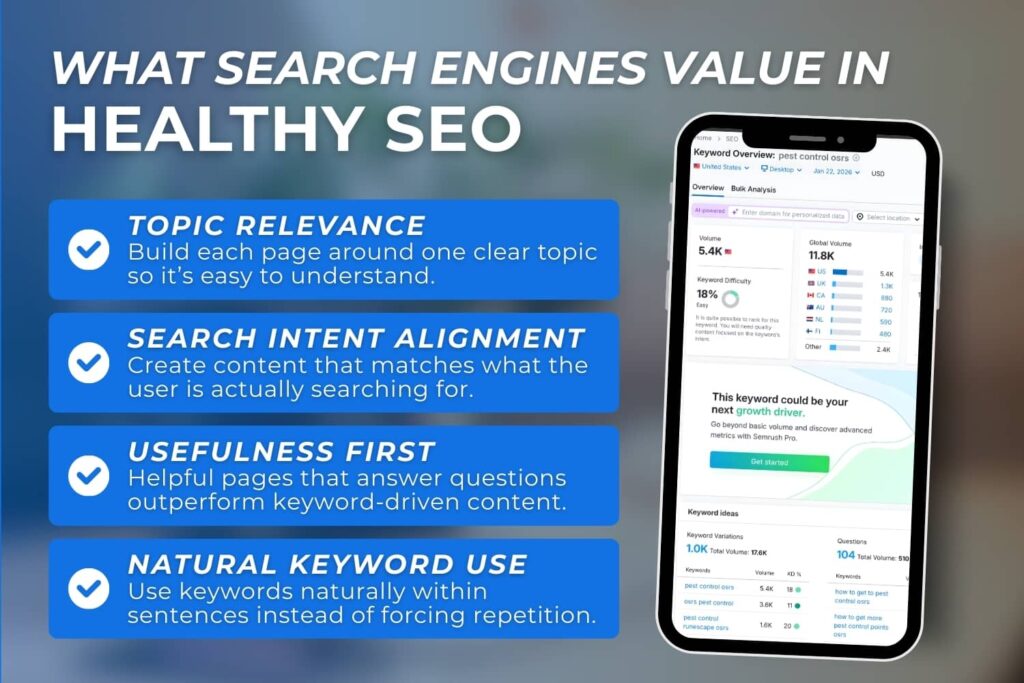
Today, search engines place the most value on:
- Topic relevance, meaning the page clearly focuses on one main subject
- Search intent alignment, meaning the content matches what the user is actually looking for
- Overall usefulness, meaning the page provides clear, helpful answers
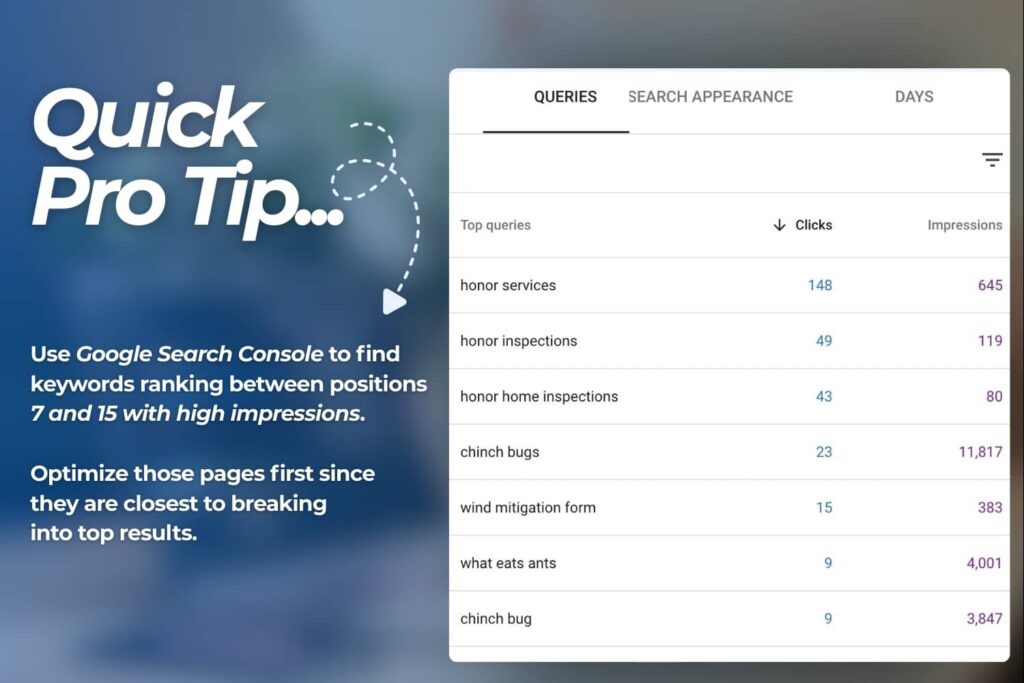
Instead of counting how many times a keyword appears, ask: “Does this page clearly answer the question the user asked?” If not, even a high keyword count won’t help you rank. You can also use tactics like creating content that links well internally to other helpful topics — for example, building connections to classic content like a guide on how to blog for SEO
A healthy keyword strategy:
- Uses keywords naturally within sentences and headings
- Avoids forced repetition or awkward phrasing
- Keeps content easy to read and easy to understand
When keywords support clarity instead of controlling it, SEO performance and user trust both improve.
How Many Keywords Should You Rank For Overall
A website can rank for many keywords without intentionally optimizing for every single one. When content is well written and focused, search engines naturally associate it with related searches.
| Keyword Type | What It Means | Why It Helps Rankings |
|---|---|---|
| Keyword variations | Slight changes of the main keyword using different wording | Helps your page appear for similar searches without repeating the same phrase |
| Long-tail searches | Longer, more specific search phrases | Brings in higher-intent traffic and often converts better |
| Related questions | Questions users commonly ask about the topic | Signals topical depth and improves visibility in search features |
This is why a single strong page can rank for dozens of terms organically, even when it is optimized around one main topic. It also helps clarify how many keywords for seo matter at the site level versus how many you should actively target on an individual page.
In short, ranking breadth comes from content quality and clarity, not keyword overload.
How Many Keywords to Focus on Per Page
For most pages, especially service pages and blog posts, the best approach is to keep keyword targeting focused and intentional. Each page should have a clear purpose, and the keywords you use should support that single goal.
What this looks like in practice:
- One primary keyword
This is the main search term the page is built around. It represents the core topic and should appear naturally in key areas like the page title, main heading, and introductory content. - Two to five closely related supporting keywords
These are variations or related phrases that help clarify the topic. They should share the same meaning and intent as the primary keyword, not introduce new services, locations, or ideas.
Supporting phrases should be tightly connected to the main topic and not spread across unrelated ideas. If a phrase really points to a different topic, it probably deserves its own page instead of being forced in here. For more ideas on building content that supports topical authority, see our article on how blogging helps SEO generate leads
A simple test is to read the content out loud. If it sounds repetitive, forced, or awkward, that is usually a sign that the page is trying to target too many keywords at once. Keeping keyword focus tight helps both search engines and visitors understand exactly what the page is about.
How Many Keywords Are Too Many on One Page
Keywords become a problem when they stop supporting the message of the page and start getting in the way of clarity. Adding more keywords does not improve rankings if it makes the content harder to read or understand.
Keywords are often excessive when they:
- Interrupt natural sentence flow, making content sound forced or repetitive
- Compete with each other, sending mixed signals about what the page is actually about
- Dilute the main topic, causing search engines to struggle with relevance
There are also clear warning signs that a page is over-optimized:
- The same keyword or phrase appears in nearly every paragraph
- Headings sound stiff, repetitive, or written for algorithms instead of people
- One page tries to rank for multiple unrelated services, locations, or topics
At this point, performance usually suffers. Rankings may stall, engagement drops, and conversions decline. This is often when businesses realize that how many keywords for seo matters far less than how clearly a page is focused on one topic and one audience.
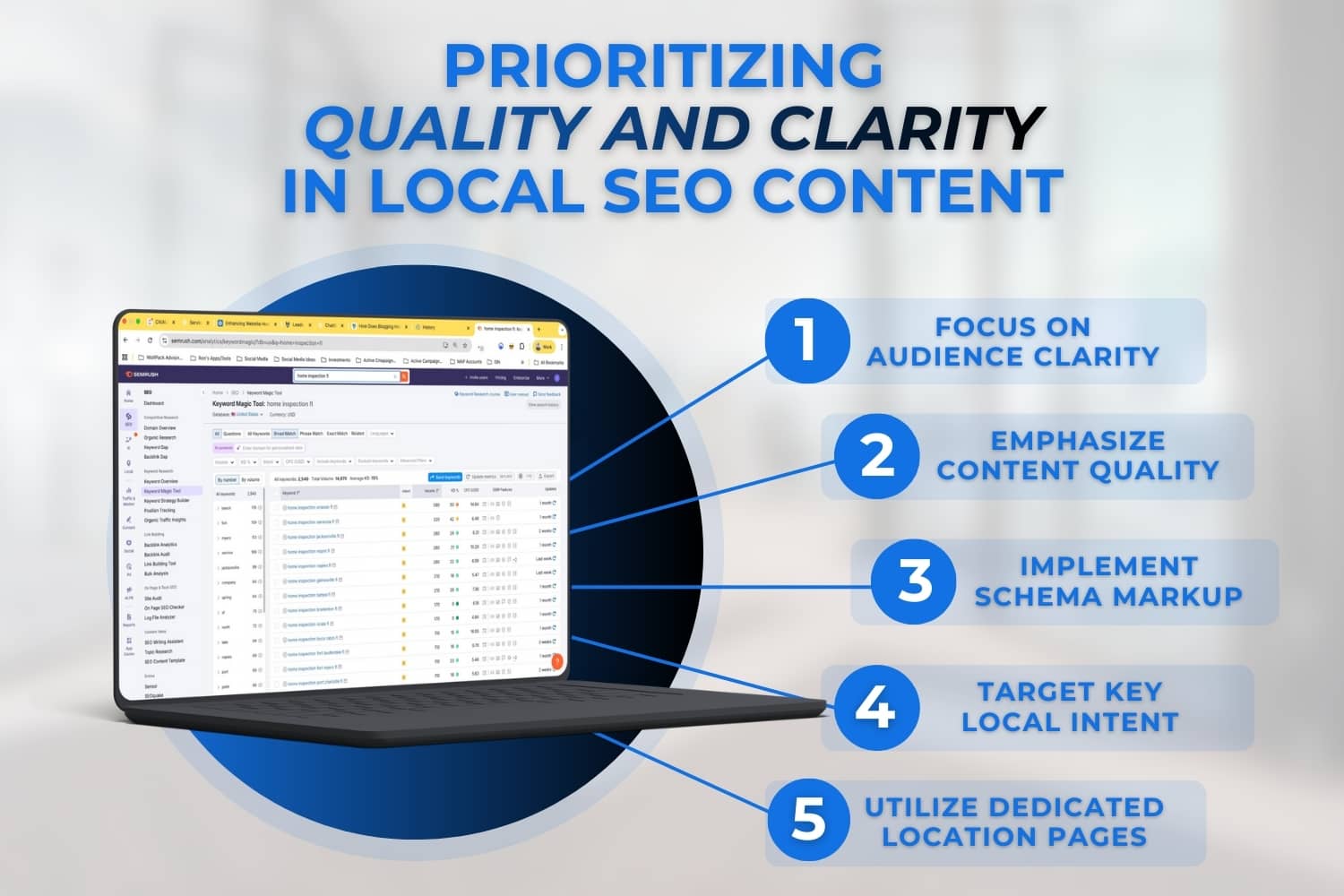
Keeping keyword usage intentional and restrained helps both users and search engines understand the page faster and more accurately.
Why Keyword Stuffing Hurts Rankings and Trust
Keyword stuffing does more harm than good because it makes content feel unnatural to read. When keywords are repeated too often, pages stop sounding helpful and start sounding forced, which turns visitors away.
Pages overloaded with keywords often experience:
- Higher bounce rates
Visitors leave quickly because the content feels awkward, repetitive, or hard to follow. - Lower engagement
People are less likely to scroll, read, or take action when the writing does not sound natural. - Fewer conversions
When visitors lose trust in the content, they are less likely to call, fill out a form, or request a service.
Search engines pay close attention to how users behave on a page. If visitors leave quickly or do not interact with the content, it signals that the page is not meeting their needs. Over time, this can lead to lower rankings.
Clear, natural writing almost always performs better than keyword-heavy content because it builds trust, keeps readers engaged, and makes it easier for search engines to understand the page’s purpose.
How Search Intent Determines Keyword Quantity
Search intent is simply the reason someone is typing a query into Google. Understanding that reason helps determine how many keywords a page actually needs and how they should be used.
For example, a page meant to answer a question or explain a topic should focus on clear explanations, while a page designed to promote a service should stay centered on that service.
A local page should clearly connect the service to a specific location rather than trying to cover every possible variation.
This fits cleanly into broader content planning strategies you might already be thinking about — such as a content marketing strategy for small businesses
How Many Keywords Should Home Service Pages Target
Home service pages perform best when they stay tightly focused. Each page should clearly match one service and, when needed, one location.
A strong service page typically includes:
- One core service keyword that clearly defines the main service offered
- One relevant location modifier to connect the service to where you operate
- A few natural variations that support the same service without changing the topic
Trying to target every service or city on a single page usually leads to weaker rankings and confused visitors.
How to Choose Keywords Without Overloading Content
Modern SEO prioritizes topical authority over word frequency. Instead of repeating a single phrase, focus on satisfying a user’s search intent through a focused content structure:
- Stick to One Main Topic: Give every page a single focus. This prevents confusion and tells Google exactly what that page is about.
- Use Natural Language: Instead of repeating one phrase, use related words you’d use in a normal conversation. It’s easier to read and helps search engines understand your context.
- Link to Extra Details: If you have more to say on a side topic, don’t clutter the current page. Link to a separate post instead to keep your content clean and organized.
The Result: A clear hierarchy that builds search engine trust and improves the user experience by keeping content concise and relevant.
Red Flags That Your Website Is Over-Optimized
When keyword usage matters more than helping your readers, rankings and conversions usually suffer. The warning signs below often show up together.
| Warning Sign | What It Means |
|---|---|
| Internal competition | Multiple pages target the same keyword, causing them to compete with each other and often rank lower overall. |
| Unstable rankings | Pages that constantly move up and down in search results may be confusing search engines due to over-stuffed or unfocused content. |
| Repetitive writing | Content that sounds robotic or repeats the same phrase too often frustrates readers and weakens trust. |
| Low conversions | Visitors arrive but leave without taking action because the content feels unhelpful or hard to read. |
| Outdated tactics | Using hidden keywords, footer stuffing, or invisible text can trigger penalties and harm long-term visibility. |
The Blueprint of a Healthy Keyword Strategy
A healthy keyword strategy is about clarity, not counts. Start by understanding what users are searching for and match that with content that clearly answers those needs. Use one primary keyword supported by a handful of natural variations, and avoid cramming in unrelated ideas.
Start by matching keywords to what users are actually looking for. Use one primary keyword as the focus, supported by a few related phrases, and place them where they matter most. Well-structured pages that answer questions clearly tend to rank for many variations naturally.
For guidance on professional implementation, our content writing services can help align your keyword use with modern ranking factors
Related Questions
How many keywords should a blog post target?
Focus on one primary keyword and 3–5 closely related sub-topics to keep your content sharp. This approach aligns well with a structured SEO content strategy that builds topical authority over time.
Is keyword density still important?
No. Fixed keyword density percentages are outdated. Google’s AI understands synonyms and related terms, which is why writing clearly for humans consistently outperforms formula-based optimization methods outlined in older keyword density best practices
Can too many keywords hurt local SEO?
Yes. Stuffing city names or services can make a site look spammy to search engines and confuse users. This often results in weaker local rankings or reduced visibility in map results. Clean, focused pages perform better when supported by a clear local SEO structure
How often should keywords be reviewed?
A review every 3 to 6 months helps keep content aligned with changing search behavior. If traffic starts to dip or rankings become unstable, it’s often a sign that the page no longer matches what users are searching for, something a routine SEO performance review can uncover early.
Should every page target a keyword?
Yes. Every page should have a clear purpose, even simple ones like an About page. Brand-focused optimization helps users and search engines connect your business name with your services, reinforcing trust and visibility as part of a consistent content marketing strategy
Conclusion
Healthy SEO is not about adding more keywords to a page. It is about creating focused, helpful content that clearly answers real questions and supports a better experience for both search engines and visitors.
If you are unsure whether your pages are over-optimized, competing with each other, or missing ranking opportunities, a professional SEO audit can help.
Need help fixing keyword issues, improving site structure, and building an SEO strategy that drives long-term growth? WolfPack Advising offers SEO services designed for sustainable results.