

Understanding the difference between web hosting and domains is essential to building a website that actually supports your business. Your domain helps people find and recognize your brand, while your web hosting ensures your site loads quickly, stays online, and runs smoothly. When both are set up correctly, they create a strong foundation for visibility, user experience, and growth.
If your website is part of your marketing strategy, knowing the difference between web hosting vs domain helps you avoid common setup mistakes and build a site that performs the way your business needs it to.
Contents
Why Domains and Web Hosting Matter for Business Websites
For most businesses, your website is the first real interaction someone has with your brand. Before a visitor calls, books a service, or fills out a form, they check your website to decide if you are credible and worth their time.
If a site loads slowly, goes offline, or appears unreliable, people tend to leave almost immediately.
According to Google Data, over 50% of users abandon a website if it takes longer than three seconds to load.
For business owners running ads or investing in SEO, that delay often means wasted marketing spend and missed leads.
Your domain and web hosting play a major role in how visitors experience your site. A clear, professional domain helps people trust your brand and remember it. Quality web hosting affects how fast your pages load, how often your site stays online, and how secure your website feels.
Domains and web hosting may sound like technical setup details, but they directly impact:
- First impressions and brand credibility
- Website speed and reliability
- Search visibility and SEO performance
- Customer trust and lead conversion
When business owners understand how these elements support marketing efforts, they are better equipped to make decisions that protect their budget, improve performance, and support long-term growth.
A Simple Way to Think About Domains and Web Hosting
Domains and web hosting are often confused because they are commonly sold together, but they serve different roles.
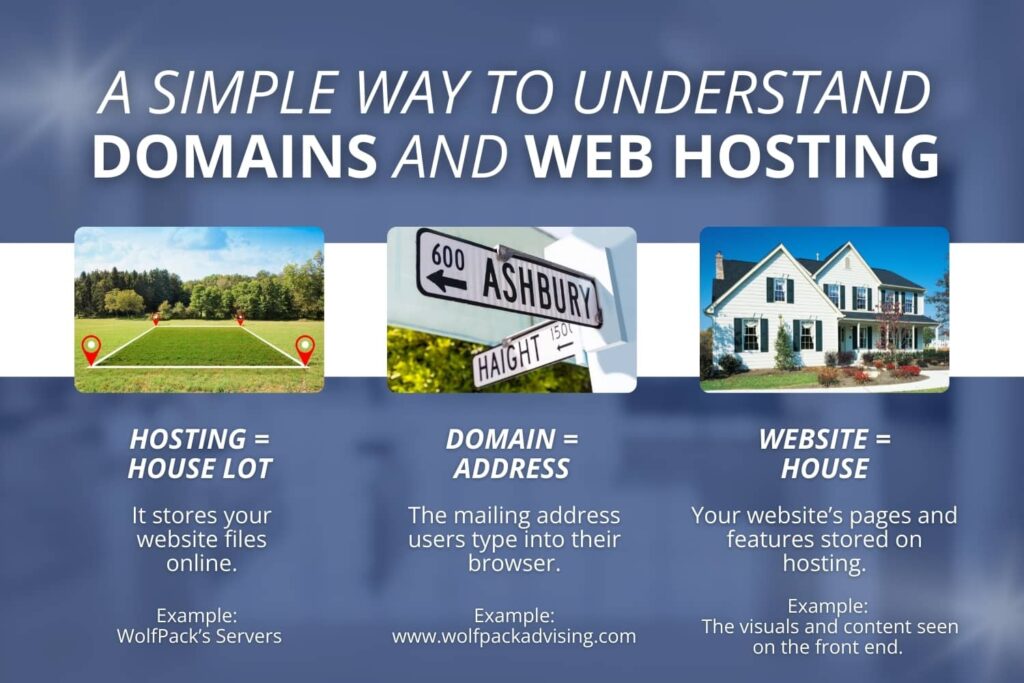
Your domain is your website’s name or address. It is how people find and remember your business.
Your web hosting is where your website lives. It stores your content and makes your site load when someone visits.
You need both for a working website.
A simple way to think about it:
- The domain tells people where to go
- The hosting makes sure something is there when they arrive
It can also help to know that one website can use more than one domain. A business may own multiple domain names that all point to the same website. This means visitors can reach the same site using different addresses, while the web hosting stays the same behind the scenes.
Together, domains and hosting support visibility, performance, and a better experience for potential customers.
To make this more concrete, it helps to look at a real example.
What Is a Domain and Why Does It Matter
Your domain is your website’s name and online identity. It is what people type into their browser to find your business, and it is often the first brand signal they see.
Research shows that 77% of consumers consider domain names important when evaluating a brand online.
A clear, professional domain helps build trust, makes your business easier to remember, and keeps your branding consistent across your website, email, and marketing campaigns. In many cases, visitors decide whether they trust a business based on the domain name alone.
Beyond visibility, a domain is a long-term business asset. It supports brand recognition, strengthens email credibility, and provides consistency as your marketing grows. Choosing the right domain and managing it properly helps protect your brand and promotes long-term website success.
What Is Web Hosting and Why Does It Affect Performance
Web hosting is the service that stores your website and makes it visible to visitors. Every page, image, and form on your site lives on a hosting server. When someone visits your domain, hosting is what allows your website to load.
If hosting is weak, your website can feel slow or unreliable, no matter how well it is designed.
Why Hosting Quality Matters for Business Owners
Strong web hosting helps:
- Pages load faster, which keeps visitors from bouncing before they read your content or see your calls to action. This supports all the SEO tweaks you’re making around site speed and mobile performance.
- Websites stay online consistently, so your high-intent visitors can actually convert when they search for “near me” or emergency services and land on your site at odd hours.
- Visitors feel confident using your site because a stable, secure experience reinforces the trust you’re building with helpful content, reviews, and local SEO.
- Strong hosting also makes it easier to roll out updates, publish new content, and support tools like forms, chat, and booking, everything that turns traffic into qualified leads.
Industry standards show that 99.9% uptime means approximately 43 minutes of downtime per month, while 99.99% reduces this to just 4 minutes.
In many website audits, hosting issues are the hidden reason a website struggles with speed, reliability, and conversions.
Domains and Web Hosting Working Together
When it comes to web hosting vs domain, these are not competing choices. They work together to make your website accessible to potential customers. When both are set up correctly, visitors experience a fast, reliable site. When one is misconfigured or underperforming, the entire website experience can suffer.
What to Look For in Business Web Hosting
| Key Feature | Typical Hosting (GoDaddy & Bluehost) | WolfPack Advising Website Hosting |
|---|---|---|
| Speed | Varies by plan and traffic | Performance-reviewed and optimized |
| Uptime | Industry-standard reliability | Ongoing monitoring focus |
| Security & Backups | Basic features by plan | Enhanced security with regular backups |
| Support | General 24/7 support | Coordinated, business-focused support |
| Scalability | Requires plan upgrades | Scales with growth and marketing needs |
| Marketing Fit | General hosting setup | Aligned with SEO |
Here is what happens when someone visits your website:
- They type your domain into their browser. This is the moment your brand is tested. Visitors expect a real, professional website to load quickly. Your domain is the entry point that signals whether your business feels trustworthy and established.
- The domain directs them to your hosting. Behind the scenes, the domain tells the browser where your website lives. If this connection is misconfigured or outdated, visitors may see errors, delays, or nothing at all.
- The hosting delivers your website content. Your hosting server sends your pages, images, and forms to the visitor’s screen. The quality of your hosting determines how fast the site loads, how stable it feels, and whether visitors stay or leave.
If any part of this process breaks, the visitor experience breaks with it. Pages may load slowly, display errors, or fail.
That is why domains and web hosting must be set up and maintained properly. Together, they support website speed, reliability, and trust, all of which are essential for long-term website success and effective marketing.
Web Hosting vs Domain and Why Both Matter
When setting up a website, it is easy to assume that buying a domain or hosting alone is enough. In reality, each one serves a different purpose, and missing either can prevent your website from functioning properly.
A real, effective website requires both a domain and reliable web hosting. When they work together, they create a strong foundation that supports visibility, credibility, and business growth.
| Scenario | What Happens | Why It Hurts Your Business |
|---|---|---|
| Domain without hosting | The site shows a placeholder page or no content | Visitors cannot see your services or offers, leading to lost traffic and missed leads |
| Hosting without a domain | The site exists but is difficult to access or share | The site exists, but is difficult to access or share |
| Domain and hosting together | A complete website loads correctly for visitors | Customers can easily find you, trust your brand, and take action |
How to Choose a Domain That Supports Growth
Your domain sets the tone for your brand and affects how easily potential leads can find and remember you.
- A clear, simple domain complements your keyword and content strategy by making it obvious what you do, even before someone clicks.
- Avoid confusing spellings, hyphens, or clever phrases that are hard to say out loud; friction here can cost you branded searches and referrals over time.
Focus on Clarity and Simplicity
Domains that are easy to say and type make it easier for visitors to return, recommend you, and search for you directly.
- Easy to spell and easy to remember means people who discover you via SEO can find you again later without hunting through search results.
- Aligning with your brand keeps your messaging consistent across your website, Google Business Profile, and local listings, which reinforces trust.
- Clear branding usually performs better long-term than stuffing in keywords, especially as you build authority with content and reviews.
Avoid overthinking keywords or trends. Clear branding usually performs better long-term.
Think Beyond Today
Choose a domain that still fits as your marketing and services evolve.
- If you might expand beyond a single city or service, avoid overly narrow domains that lock you into one location or offering.
- Future-ready naming saves you from migrations and redirects later, which can disrupt SEO gains and confuse returning visitors.
This prevents rebranding headaches later, like having to change your domain on your website, email, print materials, and local listings because each change risks confusing customers and temporarily hurting your SEO performance.
How to Choose Web Hosting That Helps Your Marketing
From a lead-generation standpoint, hosting is part of your marketing infrastructure, not just a technical choice.
- Look for providers that highlight performance, uptime, and scalability so your campaigns and SEO traffic are fully supported as you grow.
Speed and Reliability Matter Most
Fast, reliable hosting underpins the UX and SEO improvements discussed in the article.
- Website speed affects how long visitors stay, how many pages they view, and whether they reach your forms, calendars, or phone number.
- Search rankings increasingly factor in page experience, so better hosting can support higher positions for your high-intent keywords.
- Reliable uptime ensures your site is available when local, ready-to-buy users search on mobile for urgent services.
Slow sites lose visitors. Reliable hosting keeps marketing efforts working.
Support and Security Are Business Essentials
Good hosting protects both your website and the trust you’re building with leads.
- Security protections like SSL, malware scanning, and firewalls help keep forms, personal data, and inquiries safe, which is crucial for service-based businesses.
- Regular backups and responsive support reduce downtime if something breaks, so you can restore your site quickly and avoid losing traffic, rankings, or leads.
- When hosting quietly handles the technical risks, your team can stay focused on content, local SEO, and conversion optimization that actually move the revenue needle.
These features protect your website and your reputation.
Common Mistakes That Hold Websites Back
1) Choosing Based on Price Alone
Low-cost hosting may look appealing at first, but it often creates performance and reliability issues that hurt your website over time, including:
- Slow page load speeds
- Frequent downtime or outages
- Limited or difficult-to-reach support
These problems can frustrate visitors and lead to lost traffic and missed leads, often costing more than the savings from cheap hosting.
2) Ignoring Renewals and Ongoing Maintenance
With web hosting vs a domain, regular monitoring is important. When renewals or updates are overlooked, businesses may experience:
- Websites are going offline unexpectedly
- Email systems are stopping or breaking down
- Reduced trust and credibility with visitors
Regular oversight helps prevent these avoidable issues and keeps your website running smoothly.
How Domains and Hosting Support SEO and Conversions
Domains and web hosting directly affect how well your website performs in search results and how visitors behave once they arrive.
Speed and Visibility
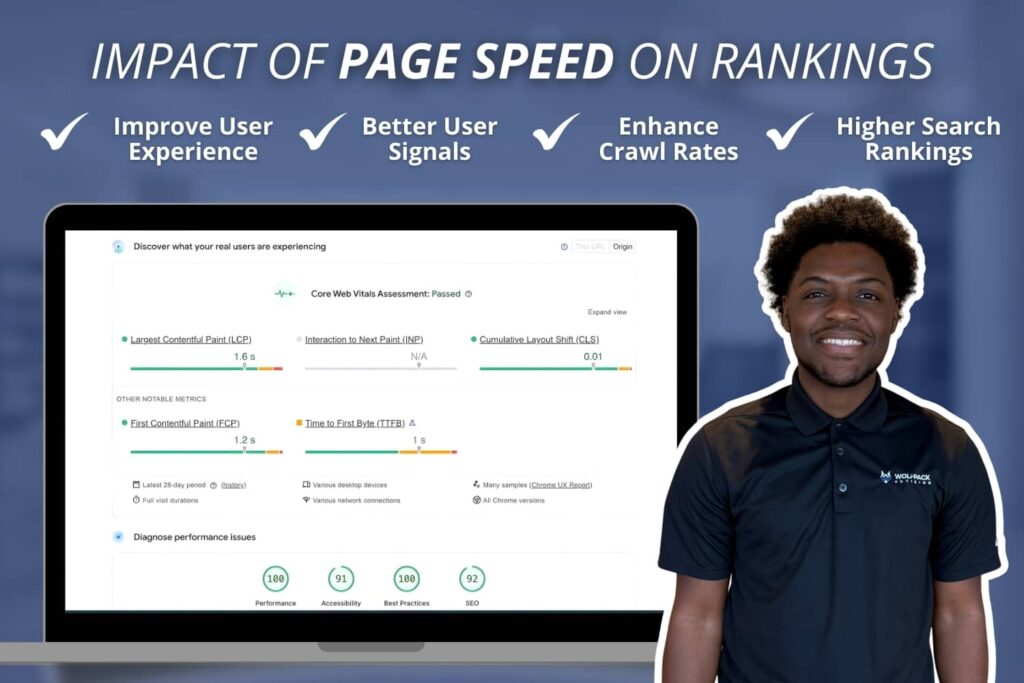
Search engines and users prefer fast websites. Quality hosting improves page speed, helps your site stay online, and supports better search visibility. Faster sites rank better, keep visitors engaged longer, and reduce bounce rates.
Trust and Conversions
Secure domains and reliable hosting build confidence. When visitors feel safe and experience a smooth, stable website, they are more likely to fill out forms, book services, or contact your business.
Together, domains and hosting support both SEO performance and conversion success.
Studies indicate that optimizing Core Web Vitals can boost conversions by up to 20% through improved user experience
When It Is Time to Reevaluate Your Setup
When your business and marketing efforts evolve, your website setup should keep pace. Domains and hosting that once worked well may no longer support your goals.
It may be time to make changes if:
- Your website feels slow or unreliable
- Traffic is increasing, and performance is slipping
- Marketing campaigns are not delivering expected results
- Your business has grown, rebranded, or expanded services
Reevaluating your domain and hosting setup is often a simple but high-impact step that can improve performance without a full website rebuild.
How Website Foundations Are Evaluated and Improved
A strong website starts with a solid foundation. Domains and web hosting should support performance, reliability, and long-term growth, not create obstacles.
A thoughtful evaluation typically includes:
- Reviewing domain configuration and hosting performance
- Identifying issues that may affect speed, stability, or visibility
- Ensuring the website setup aligns with the current business and marketing needs
When these foundational elements are reviewed and adjusted as needed, websites are better positioned to support consistent performance and more effective marketing efforts over time.
Related Questions
Can hosting affect SEO?
Yes, hosting plays a major role in SEO performance. Faster load times, reliable uptime, and stable performance help search engines crawl and rank your website more effectively. Poor hosting can lead to slow pages and downtime, which can hurt visibility.
What is the difference between domain hosting and web hosting?
Domain hosting manages your domain name, including registration, renewals, and where your domain points, but it does not store your website. Web hosting stores your website files and delivers your site to visitors when they access your domain.
Should businesses upgrade hosting as they grow?
Most businesses benefit from upgrading hosting as traffic increases and marketing efforts expand. Better hosting supports higher visitor volumes, improved speed, and more consistent performance, all of which help maintain a positive user experience.
Conclusion
Domains and web hosting are foundational to how a website performs and how visitors experience a brand. They influence speed, reliability, and overall consistency, which in turn affect how well marketing efforts such as SEO and advertising perform. A strong setup helps ensure that traffic and campaigns are not limited by avoidable technical issues.
For businesses seeking additional guidance, WolfPack Advising provides website hosting services, along with performance and infrastructure support, to help keep websites stable and aligned with ongoing marketing needs.