


Integrated digital marketing helps home inspectors get found, trusted, and booked across every place buyers, sellers, and agents search today.
It connects your website, Google Business Profile, SEO, content, reviews, ads, and follow-up into one smooth system. When everything supports one clear path, your business grows with less effort and more consistency.
Too many inspectors rely on random tactics. They post on social when they have time, boost an ad during a slow month, or publish a blog now and then. The problem is not the effort.
The problem is that these pieces are not connected. Without a system, results stay inconsistent and unpredictable. This guide explains what integrated digital marketing means for home inspectors, why it works, and how to build a simple version you can expand over time.
You can grab our free Inspector’s Digital Marketing Playbook below!
Contents
What Integrated Digital Marketing Really Means
Integrated digital marketing means all your channels work together instead of functioning separately. Most inspectors understand the individual pieces, like blogs, reviews, or ads. The real power comes from connecting them.
For example:
- A blog becomes a social clip
- The social clip sends people to your website
- Your website matches what people see on your Google listing
- Reviews confirm what your website says
- Your CRM follows up and closes the loop
Each action strengthens the next. Nothing works alone.
This matters because most buyers and agents compare several sources before booking. They expect to see the same message everywhere. Your integration gives them a clear, easy experience that builds trust from the start.
Why Inspectors Need an Integrated Approach
Inspectors do not struggle because they lack effort. They struggle because their marketing is scattered across different platforms that are not connected.
When each channel has its own message, its own timing, and its own purpose, buyers get mixed signals. Mixed signals slow everything down.
Here are common issues caused by non-integrated marketing:
- Website traffic increases, but bookings do not
- Google reviews do not grow or stay consistent
- Social posts get likes but not clicks
- Paid ads bring traffic but not conversions
- Different platforms show different service areas
- Messaging sounds different in each place
- Agents see one thing online and another thing in person
These problems are not minor. They directly affect how confident someone feels before choosing an inspector. Integrating your marketing solves these issues by aligning every channel with one shared outcome.
When your content, reviews, website, and follow-up support one another, buyers see a complete picture of who you are and why they should book with you.
This approach is backed by real consumer behavior. Statista reports that more than 70 percent of customer journeys include multiple digital touch points.
That means a buyer may visit your Google listing, your website, your social posts, and your blog before they even think about booking.
WolfPack client data shows consistent trends as well. Inspectors who connect their systems effectively tend to see:
- Higher quality leads
- More consistent rankings across multiple cities
- Better conversion rates on their booking pages
- More agent referrals that begin with online research
- Fewer missed leads due to faster CRM follow-up
Integration keeps everything moving in one direction. It creates a stable long-term growth engine instead of relying on one channel to carry all the weight.
The Main Parts of an Integrated Strategy
Start by really understanding the individual channels you market your business with. The system becomes more powerful and less intimidating when they work together.
Your Website
Your website is your home base. It is where people confirm what you do, compare your services, and decide whether to book. Every other channel should point back here.
A strong website includes:
- Clear service pages
- Fast loading structure
- Strong calls to action
- Updated service area details
- Consistent messaging and visuals
When your website matches your Google listing, social posts, and advertising, buyers feel more confident booking an inspection.
SEO and Local Search
SEO brings new visitors to your business. It works best when supported by blogs, city pages, and a complete Google Business Profile.
Important SEO pieces include:
- City-specific landing pages
- Service pages
- Helpful blogs that answer questions buyers are searching for
- Internal linking that guides readers through your website
More than 60 percent of property buyers begin their search on Google. If your SEO connects with your website, reviews, and content, you meet them exactly where they are looking.
Google Business Profile
Your Google listing builds instant trust because it is often the first impression someone sees.
A complete profile includes:
- Updated photos
- Accurate business information
- Service details
- Recent reviews
- Posts that support your website content
More than 90 percent of consumers check reviews before choosing any service provider. That makes your Google listing one of the most important pieces of your integrated system.
Social Media
Social media supports your entire system by increasing visibility. It is not meant to replace your website or SEO. Instead, it highlights the value you already created.
Use social posts to:
- Share blog clips
- Teach short inspection-related tips
- Connect with agents and prospects
- Build recognition in your market
Email and CRM
Your CRM and email tools help you stay connected with clients and agents long after the inspection is done. They also help respond quickly to new leads.
A simple CRM setup can:
- Track where leads come from
- Automate reminders
- Request reviews
- Nurture agent relationships
- Support repeat business
A strong CRM fills the gaps that business owners often miss.
Paid Ads
Paid ads help you increase visibility when you need it most. They perform best when they reinforce your organic presence rather than replacing it.
Ads work well when:
- Your reviews are strong
- Your website is clear
- Your service pages explain your value
- Your CRM follows up quickly
Ads bring attention. Integration turns attention into bookings.
How Integrated Marketing Helps You Get More Bookings
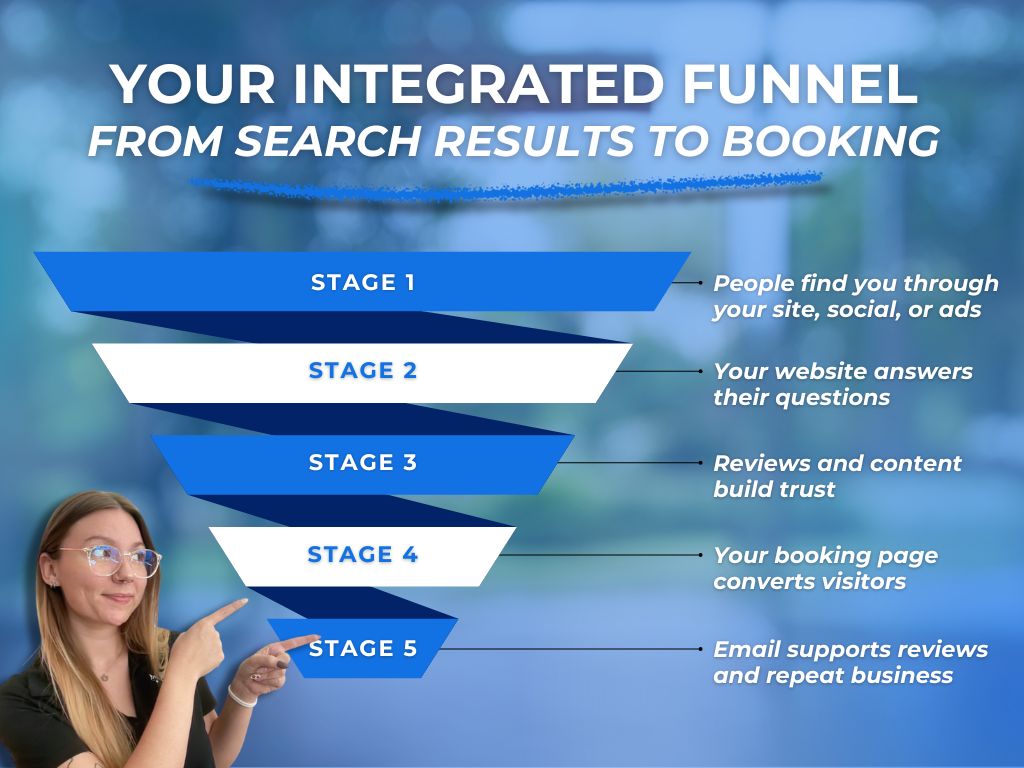
People rarely book after a single interaction. They move through a decision path that reflects how they research local services today.
A buyer or agent might:
- See your business in a search result or social feed
- Search your name
- Read several of your reviews
- Compare your website to another inspector
- Book after reviewing one or two pages
If your channels send mixed messages, each step slows down. But when everything matches, the decision feels simple.
Booking Journey Comparison
| The Step | Disconnected Marketing | Integrated Marketing |
| First impression | Random or outdated listing | Clean, consistent message |
| Review check | Mixed details from different places | Reviews confirm website promises |
| Website visit | Hard to navigate | Clear path to book |
| Decision | Low trust | High trust and faster booking |
Google research shows that consumers often interact with ten or more digital sources before booking a service. These include:
- Websites
- Google listings
- Reviews
- FAQs
- Social posts
- Blog articles
- Images
- Comparison pages
When all these pieces tell the same story, your brand becomes the obvious choice. Integration reduces friction, builds confidence, and shortens the time between discovery and booking.
What an Integrated System Looks Like in Real Life
Integrated marketing is not about doing more. It is about making each action serve multiple channels. Here is a clearer way to picture it.
How One Piece of Content Supports the Entire System
| Marketing Channel | What Happens | Value to the System |
| Website | Publish a blog or service update | Acts as the anchor for all other content |
| Google Business Profile | Share a short post linking to that content | Boosts visibility and reinforces expertise |
| Social Media | Share a quote or visual clip from the content | Drives traffic back to your website |
| Email or CRM | Highlight the same piece of content | Keeps clients and agents connected |
| Online Reviews | Request reviews after each job | Makes everything feel more credible |
| Paid Ads (optional) | Promote your service page | Makes everything people see feel more credible |
Here is a practical example that matches how inspectors actually work.
[Scenario Example] A Home Buyer Searches for Help…
- Someone planning or buy (or sell) a home searches for a common question and finds your blog.
- They click through to your service page because the blog kept their interest.
- They check your Google reviews to confirm your experience.
- They compare your pricing or services on your website.
- They book the inspection.
- Your CRM sends a confirmation and reminder.
- After the inspection, your CRM sends a review request to keep the system growing.
Several channels contributed:
- SEO brought them to your blog
- The website answered their questions
- Reviews built trust
- The booking workflow sealed the decision
- CRM follow-up closed the loop
This is how integrated digital marketing works. Each channel supports the next, making the entire experience smooth for the homeowner.
How Integration Works With Local Search and AI Visibility
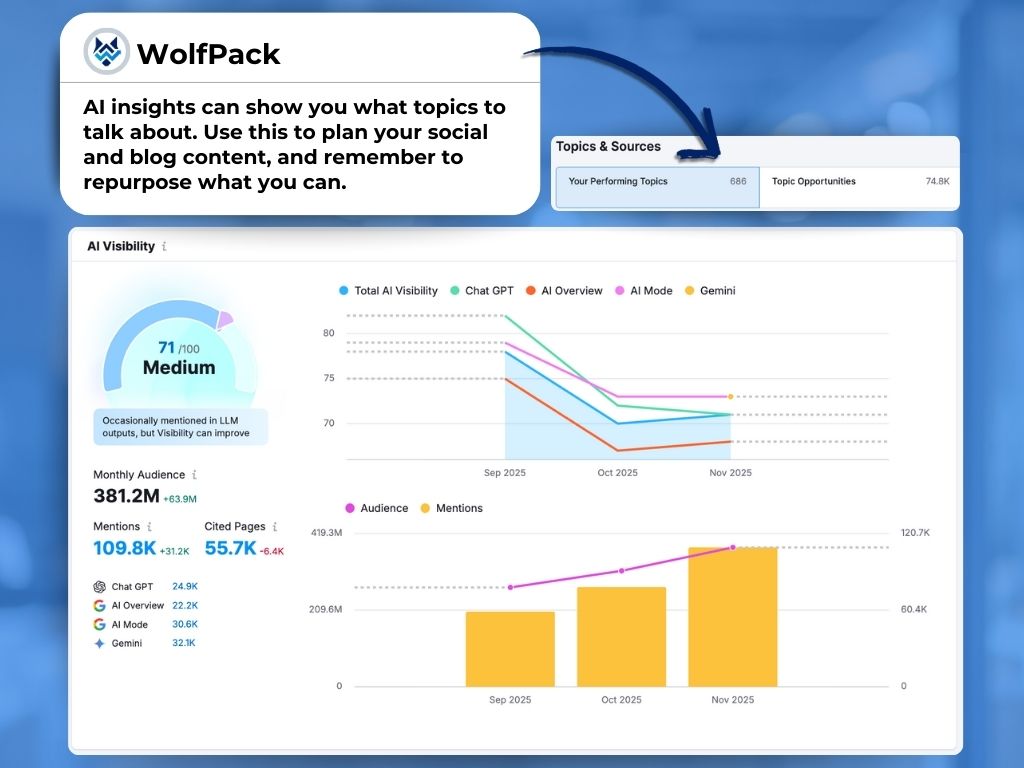
Search engines and AI tools want clear and reliable information. They reward businesses that demonstrate expertise, consistency, and relevance.
Integrated marketing strengthens your authority by ensuring that:
- Your website content matches your Google listing
- Your blogs reinforce your service pages
- Your reviews confirm your quality
- Your social posts support your message
This creates a complete picture of your business, which helps search engines:
- Understand the services you offer
- Recognize your service areas
- Connect your brand to real homeowner questions
- Feature your content in more search results
More people are using voice search and AI-generated results to find local providers. Integrated marketing increases the likelihood that your content appears as a trusted source.
AEO value grows when:
- Messaging is consistent
- Answers are simple and direct
- Your listings and content support one another
- Your brand appears frequently in helpful contexts
Integration helps search engines feel confident recommending your business.
How to Start Simple and Build Over Time
You do not need a large team or complicated setup to begin integrated marketing. Start small and make progress in stages so your system feels more manageable.
Begin with the basics:
- Update your website so everything is clear and accurate
- Complete your Google Business Profile
- Choose one content channel
- Choose one follow-up tool
Then expand gradually.
Beginner Build Path
- One blog per month
- One social post per week
- One Google post per month
- One review request per inspection (important)
Intermediate Build Path
- One blog every two weeks
- Weekly update for clients or agents
- Stronger city pages for SEO
- Automated CRM reminders
Advanced Build Path
- Weekly blogs
- Targeted Google ads or remarketing
- Seasonal content planning
- Local resource library for homeowners
- CRM sequences for agents and past clients
The free digital marketing playbook can help you choose the path that fits your goals and create a full plan.
Related Questions
What should a home inspector focus on first in digital marketing?
Start with your website and Google Business Profile. These shape the first impression.
How much work does integrated marketing take?
Start with one consistent content effort per week and let integration multiply the impact.
Can integrated marketing work for solo inspectors?
Yes. Integration reduces manual tasks and helps you save time while staying visible.
What is the difference between integrated marketing and multichannel marketing?
Multichannel means you show up in several places. Integrated marketing means that those places work together.
Final Thoughts
Integrated digital marketing is the simplest and strongest way to grow your inspection business without wasting time on tactics that don’t even support each other.
When your channels communicate and follow a shared path, your visibility increases, your trust grows, and your bookings rise.
Start small, keep your message consistent, and build a system that supports your business even when you are busy in the field.
You can download the free playbook above for a step-by-step guide to each part of your strategy. If you want a full strategy tailored to your service area, you can schedule a strategy call with WolfPack to explore your next steps.