
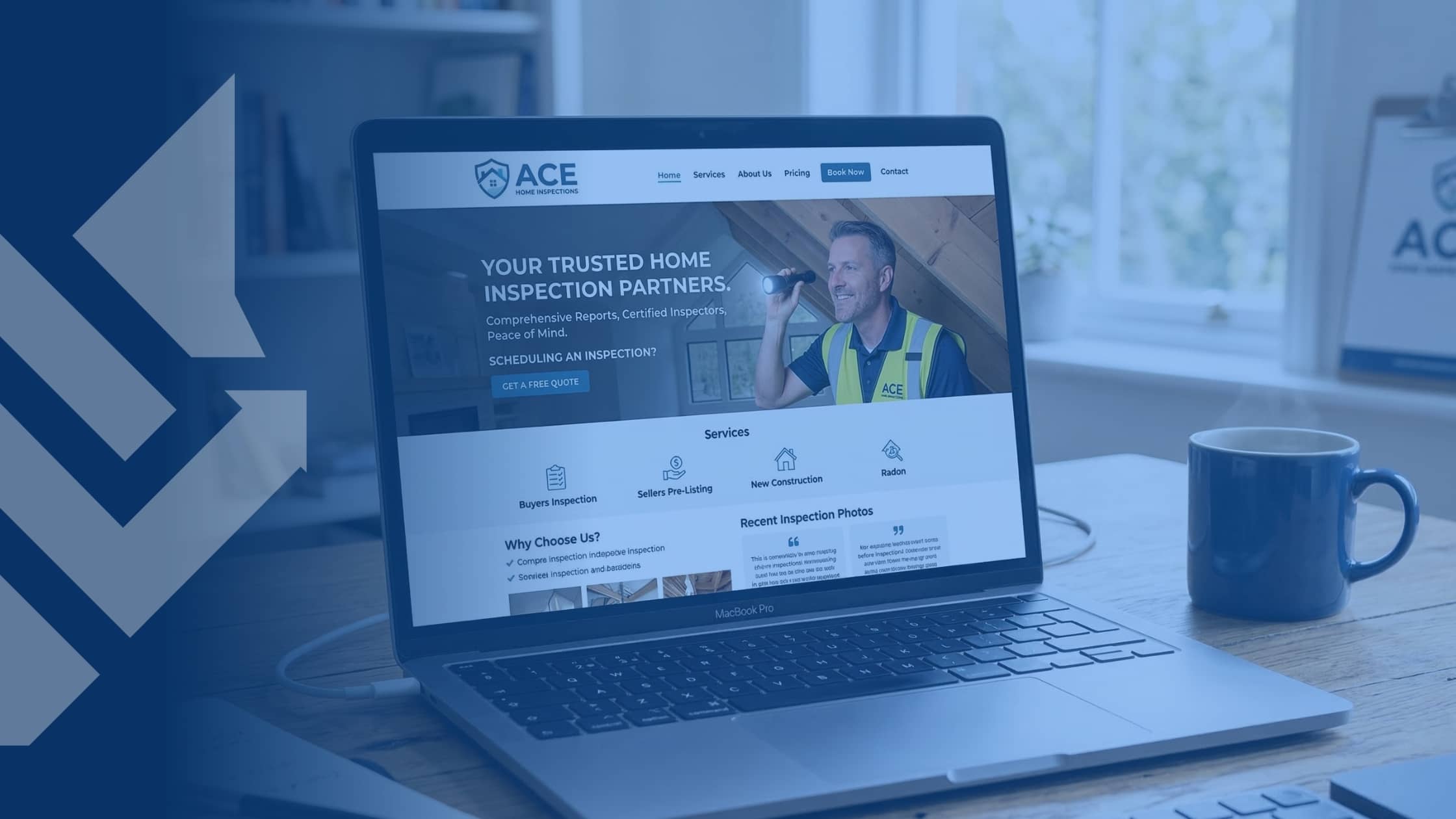
If your website looks great but your phone is not ringing, your design and SEO are probably not working together.
Most home service businesses make the same mistake. They hire one company to build their website and a different company to handle SEO. On paper, it seems logical. In practice, it creates a gap that quietly costs them traffic, leads, and booked jobs every single month.
SEO and website design are not two separate decisions. They are one. When they are built and managed together, the results compound in your favor. When they are treated as separate projects, however, each one limits what the other can do.
This post breaks down why that matters, what the data shows, and what it looks like when both are done right from the start.
What Happens When SEO and Website Design Are Separated
The Vendor Gap Problem
When your website was built by one team and your SEO is managed by another, those two strategies rarely align. The design team optimizes for how the site looks. Meanwhile, the SEO team tries to work around whatever structure they inherited.
The result is a site that may look professional on the surface but underperforms in search. The SEO team cannot fix what the design team built. And the design team, in turn, did not build with search performance in mind.
This is one of the most common and most expensive problems we see in home service marketing.
The Hidden Technical Costs
Poor technical foundations are hard to see from the outside. Google, however, sees them clearly.
Sites built without SEO integration often have slow load times, missing schema markup, broken mobile layouts, uncompressed images, and messy URL structures. Each of those issues sends a negative signal to search engines and, as a result, limits how well your content can rank.
No amount of keyword strategy or content work can fully overcome a weak technical foundation. Because of this, you end up fighting your own website every step of the way.
How Website Design Directly Affects Your SEO
Page Speed and Core Web Vitals
Google measures page performance using three scores called Core Web Vitals. Specifically, they track how fast your main content loads, whether the page shifts around while loading, and how quickly the page responds when someone taps or clicks.
A poorly built site fails at least one of these. And those failures, consequently, directly affect your position in search results.
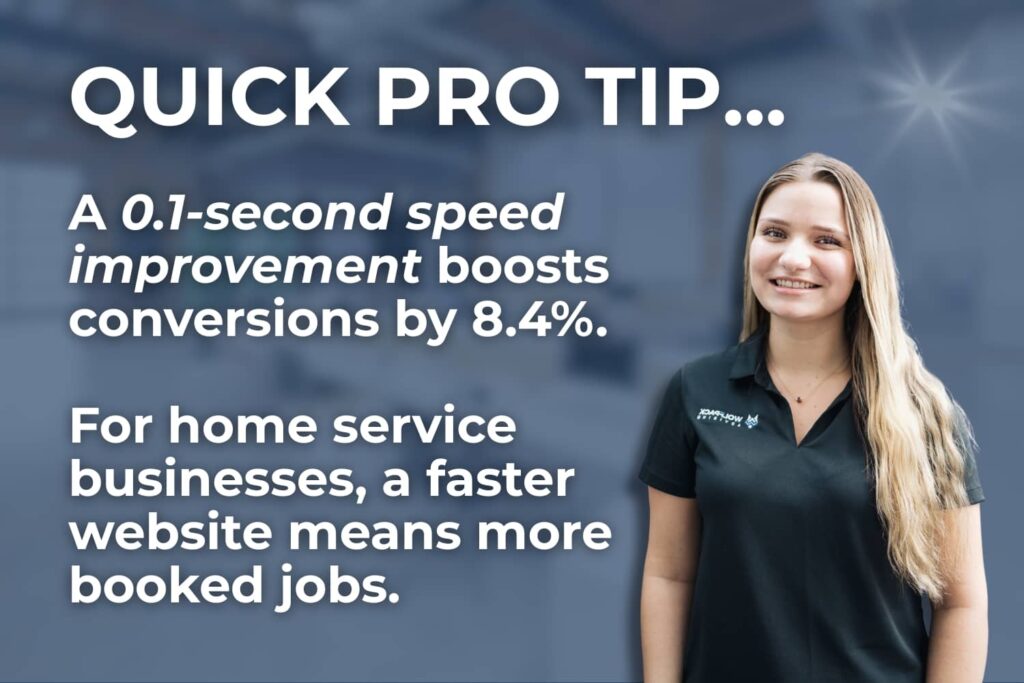
The numbers make the cost clear. Google’s own data shows that when load time increases from one second to three seconds, the bounce rate jumps by 32%. At six seconds, it spikes by 106 percent.
For a home service business where a single booked job can be worth hundreds of dollars, those numbers translate directly to lost revenue.
Mobile-First Indexing
As of July 2024, Google stopped indexing websites that are not mobile-friendly. That is not a warning. It is a cutoff.
Mobile devices, furthermore, account for more than 62 percent of global organic search traffic. In-home services, that number is likely even higher. Customers searching for a plumber, roofer, or HVAC technician are almost always on their phones.
If your site does not work well on mobile, Google will not rank it. And even if a visitor finds it, they are likely to leave before they call.
Site Structure and Internal Linking
How your site is organized is both a design decision and an SEO decision.
Clean URL structures, logical navigation, and strategic internal linking all influence how Google crawls your pages and understands what your business does. Importantly, these are not settings you can adjust after the fact. They are baked into how the site is built.
A site with poor structure forces Google to work harder to understand your content. A site with clear architecture, on the other hand, makes it easy.
Trust Signals and User Behavior
When someone lands on your website and leaves quickly without clicking anything, Google notices. High exit rates and low time-on-page signal that your site did not give the visitor what they were looking for.
Over time, those behavioral signals pull your rankings down.
Good design keeps people on your site. For example, easy navigation, clear information, fast load times, and a layout that works on any screen all contribute to a better experience. And a better experience, as a result, feeds directly back into your search performance.
What a Combined SEO and Website Design Strategy Looks Like
Built for Search From Day One
When SEO is integrated into the build from the start, every design decision supports search performance. Header hierarchy, schema markup, image compression, page speed optimization, and URL structure are not added later. Instead, they are built in.
This matters because retrofitting SEO onto a site that was not designed for it has real limits. You can improve it, but you will never get the same results as a site built correctly from launch.
One Team, One Strategy
When the same team handles both design and SEO, there is no gap between what the site says and how it is structured for search. As a result, content strategy, keyword placement, and visual layout work together instead of against each other.
You also eliminate the finger-pointing problem. When results are slow, each vendor blames the other. When one team owns both, however, there is one clear line of accountability.
AI Search Readiness
Search behavior is changing. A growing number of searches are now answered directly by AI tools like Google AI Overviews, ChatGPT, and Perplexity without the user ever clicking through to a website.
A well-structured, fast-loading site is easier for those tools to read and cite. Specifically, clean heading structure, schema markup, and answer-first content increase the likelihood that your pages appear in AI-generated results. That is not a future concern. It is already happening.
Sites built without that structure, therefore, are already being passed over.
What the Data Says About Integrated Builds
We analyzed SEO performance data across 29 active WolfPack SEO clients using Semrush. Twelve of those sites were built by WolfPack. Seventeen were built by outside vendors. Importantly, every site was receiving the same ongoing SEO services.
The performance gap was significant.
| Metric | WolfPack-Built Sites | Outside-Built Sites |
|---|---|---|
| Avg. Monthly Organic Traffic | 3,225 visits | 1,392 visits |
| Avg. Keywords Ranking | 3,776 keywords | 2,515 keywords |
| Avg. Authority Score | 22.3 | 19.8 |
| Monthly Traffic Trend | +4.1% growth | -4.5% decline |
WolfPack-built sites generated 2.3 times more organic traffic. They also ranked for 50% more keywords and carried higher authority scores. And while WolfPack-built sites showed positive growth month over month, outside-built sites were trending in the wrong direction.
Both groups received identical SEO work. The only variable, therefore, was the technical foundation on which the sites were built.
What stood out most in this analysis was how differently the two groups performed at the lower end of the range. Even the slower-performing WolfPack-built sites maintained between 1,600 and 4,800 monthly organic visits.
Several outside-built sites on the same SEO services were stuck below 100 monthly visitors; a ceiling that, for some, persisted well into their engagement. Without addressing the technical foundation, SEO work alone can only go so far.
One outside-built site in the analysis lost 51% of its traffic in a single month. That kind of collapse is not a content problem. It is a technical foundation problem.
The data makes one thing clear. When SEO and website design are built together, SEO efforts have something solid to build on. When they are not, you are fighting an uphill battle every month.
What Home Service Websites Specifically Need
Generic website advice does not always translate well to home services. There are, in fact, specific design and SEO decisions that matter most in this industry.
Click-to-Call and Mobile Conversion Features
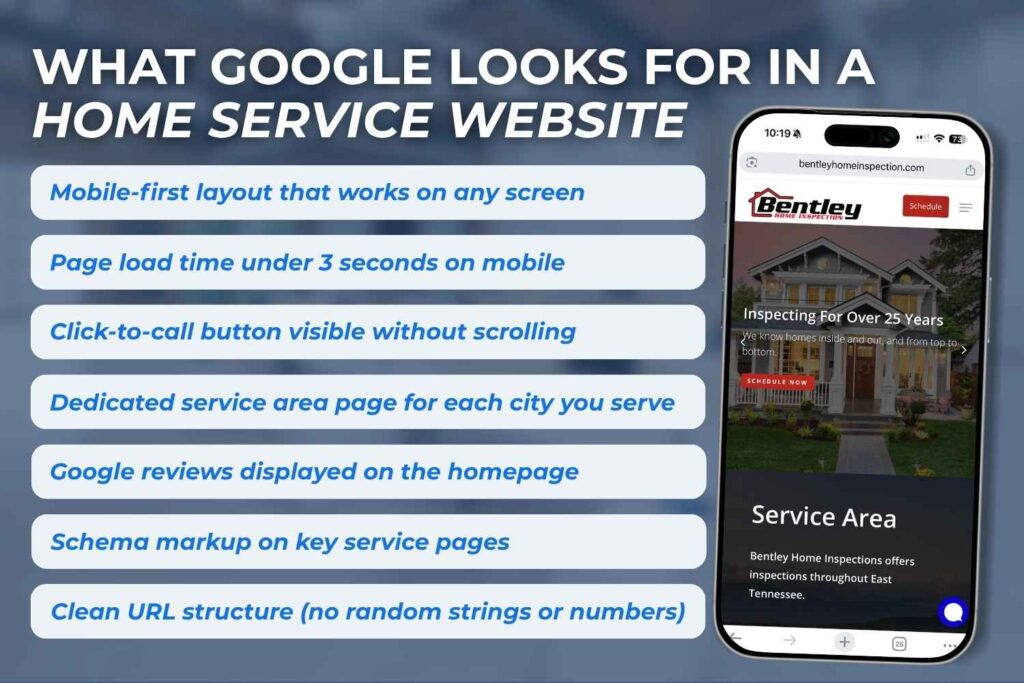
Home service customers search on their phones and want to take action immediately. A click-to-call button that is easy to find, a contact form that loads fast, and a mobile layout that does not require zooming are not nice-to-have features. They are conversion requirements.
Consider this: the industries with the highest website conversion rates are all in home services. Plumbing leads at 15.61%, followed by pest control at 15.52% and HVAC at 15.11%. That conversion potential, however, is only realized when the design supports it.
Service Area Pages Built for Local SEO
If you serve multiple cities or counties, each one needs its own dedicated page. This is both a design decision and a local SEO strategy.
Service area pages help Google understand exactly where you work. As a result, they allow your site to rank for city-level searches like “HVAC repair in [city name]” instead of just broad terms. They also give potential customers a page that feels relevant to where they live.
Forty-six percent of all Google searches have local intent. Furthermore, businesses that show up in the local results get a 44% click-through rate. Service area pages are, therefore, one of the most direct ways to capture that traffic.
Reviews, Trust Signals, and Social Proof
Home service customers are inviting you into their homes. Trust, as a result, is not optional.
Integrating Google reviews, before-and-after photos, certifications, and guarantees into your site design builds credibility on the page. It also keeps visitors engaged longer, which in turn improves the behavioral signals that influence rankings.
Research shows that 75% of consumers judge a business’s credibility based on its website design. That judgment happens in under a second. If your site does not build trust immediately, most visitors are already gone.
How to Know If Your Website Is Holding Back Your SEO
Signs Your Design Is Hurting Your Rankings
You do not need a technical audit to spot warning signs. Here are the most common ones:
- Pages load slowly on mobile
- Visitors leave quickly without clicking anything
- You rank for very few keywords in Google Search Console
- Your site does not appear in local search results for your service area
- Service pages are thin or missing key information
- There are no dedicated pages for each city or area you serve
Any one of these is worth addressing. Several at once, however, is a signal that your technical foundation needs attention.
How to Check Your Site’s Performance
Two free tools will give you a clear picture.
First, Google PageSpeed Insights (pagespeed.web.dev) scores your site on mobile and desktop performance. A mobile score below 70 is worth prioritizing. Any failing Core Web Vitals score should be treated as urgent.
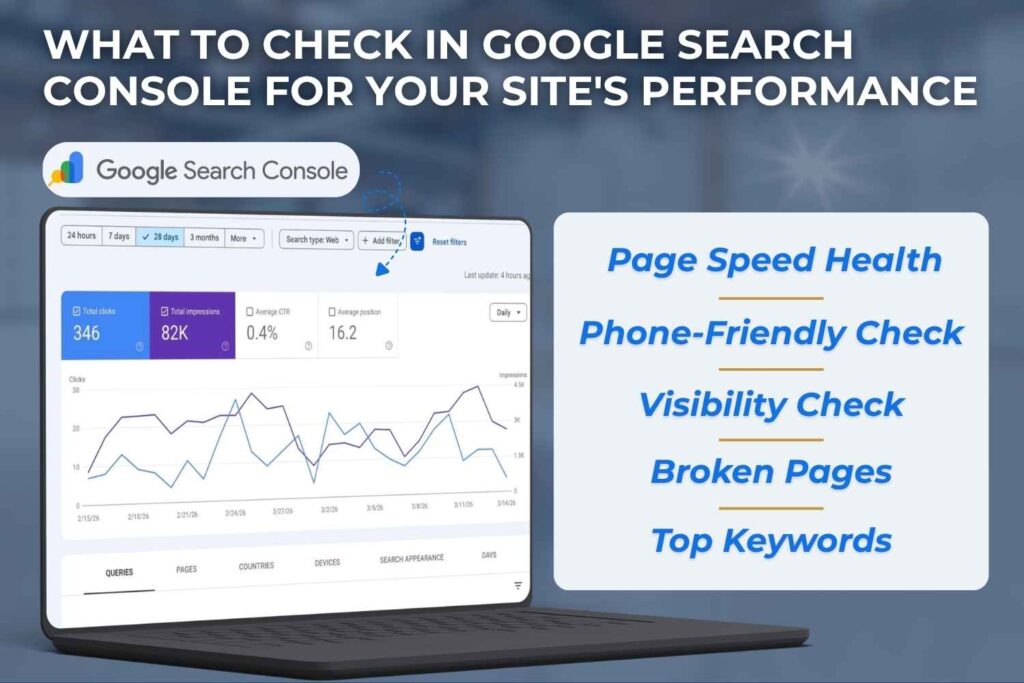
Second, Google Search Console shows mobile usability issues, crawl errors, and which pages Google is indexing. If you are not in Search Console yet, setting it up is one of the highest-return free actions you can take.
When a Rebuild Makes More Sense Than a Patch
Sometimes the right answer is targeted improvements. For instance, compressing images, improving load speed, or adding schema markup can move the needle without a full rebuild.
But if your site was built on an outdated platform or a template never designed for mobile performance, patches have limits. In that case, a rebuild on the right technical foundation often produces faster results and lower long-term costs than continued attempts to fix a site that was not built for search from the start.
Related Questions
Does website design affect SEO rankings?
Yes, directly. Mobile performance, page speed, site structure, and internal linking are all design decisions that Google evaluates when determining where to rank your pages.
What is the connection between web design and SEO?
SEO determines whether people can find your site. Web design, on the other hand, determines whether they stay and take action. When both are built together, they reinforce each other. When they are separated, each one limits the other.
How do I know if my website is hurting my SEO?
Start with Google PageSpeed Insights and Google Search Console. Low mobile scores, failing Core Web Vitals, and mobile usability errors are the most common indicators. A slow site with a high bounce rate on mobile, in particular, is a strong signal.
Should I hire the same company for SEO and website design?
In most cases, yes. When one team is responsible for both, there is no gap between how the site is built and how it is optimized for search. Moreover, the data from our own client base shows a clear performance advantage for sites where design and SEO were integrated from the start.
How long does it take to see SEO results after a website redesign?
Most businesses see early improvements within 60 to 90 days after a properly optimized rebuild. Full ranking growth typically takes three to six months as Google recrawls and reindexes the site. The key, therefore, is making sure the new site is built correctly from launch.
Conclusion
SEO and website design are not two separate projects. They are two parts of the same system. When they are built together, your SEO work has a strong foundation to build on. When they are treated separately, however, every improvement is slower and harder than it needs to be.
The data from our own client base shows a 2.3x traffic advantage for sites where design and SEO were integrated from the start. That gap does not come from doing more SEO work. It comes, instead, from building the right foundation in the first place.
If you are not sure where your current site stands, that is worth finding out.
WolfPack builds and optimizes websites for home service businesses that need to rank, convert, and stay competitive. Book a free discovery call with our team today and find out exactly what your website is doing for your SEO and what it is not.