

If you have been blogging and not seeing much happen, you are not alone, and we’ve got some pro tips for you. A lot of home service business owners try blogging for a few months, notice the traffic never really moves, and figure it just does not work for their kind of business.
But here is the thing: in most cases, the blog is not the problem. The strategy behind it is.
Blogging works. It is one of the most reliable ways to show up on Google when someone in your area is searching for what you do. But there are a handful of common mistakes that quietly kill results, and most business owners have no idea they are making them.
This post walks through the most common reasons blog posts underperform and gives you practical blogging tips to address each one, from topic selection all the way through to what you do after you hit publish.
Contents
Is Blogging Even Worth It Anymore?
It is a fair question, and a lot of business owners are asking it right now. With AI tools like ChatGPT and Google’s AI overviews changing how people search, it can feel like blogging is becoming less relevant. It’s actually the opposite.
Most people don’t realize that AI tools do not make up answers out of thin air. They pull from real content on the web, like your blog posts.
A business with a strong blog is far more likely to get mentioned when someone asks an AI tool, “who does pest control near me,” or “what should I look for in a home inspector.” Your blog is what puts you in that conversation.
Beyond that, consistent blogging does three things for your home service business:
- It helps customers find you. Every blog post you publish is a new opportunity to show up when someone in your area searches for what you do.
- It builds trust before anyone calls. Readers who find helpful answers on your site are far more likely to reach out than someone who lands on a page with no useful information.
- It works for you long after you hit publish. A good article can bring in traffic and leads for months or even years.
Blogging is a slow build. Most businesses take six months to a year to see real traction. But the ones that stay consistent always pull ahead and stay ahead because their content keeps their relevance growing.
Are You Writing About What Your Readers Search For?
You have an idea for a blog post, and you just start drafting with no target keyword. This is the most common blogging mistake we see. The fix starts with one question: what are your customers actually typing into Google or ChatGPT?
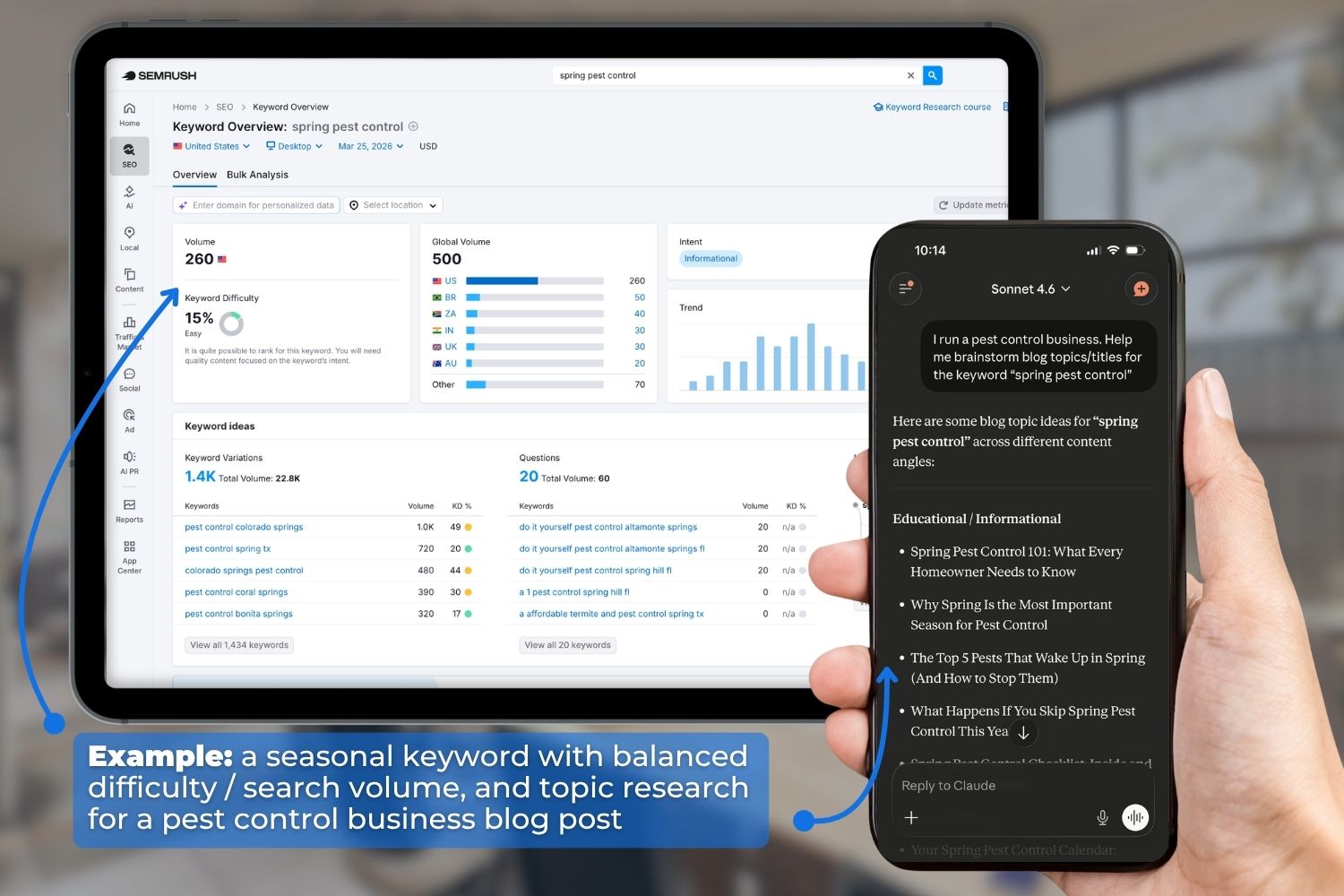
Start with what you already know. Write down every question you get asked on the phone, at the door, or after a job. Those are real pain points your audience has, and they almost always make strong blog post ideas.
Then use free tools to go further:
- Google’s People Also Ask shows related questions that real people are searching for
- Answer the Public generates question-based ideas around any topic or service
- Google Trends shows what is gaining or losing interest over time (the WolfPack team loves this one)
Finding the Right Topics
This is where a lot of business owners go wrong without realizing it. Every keyword or topic has two things worth paying attention to before you write about it:
- Search volume: how many people are actually searching for that topic each month. A topic with very low volume means very few people will ever find your article, even if you rank for it.
- Keyword difficulty (KD): how competitive that topic is. More difficult keywords mean bigger, more established websites are already dominating those search results, and a smaller local business website has almost no shot at breaking through.
The sweet spot is topics with decent search volume and lower competition, usually more specific, local questions rather than broad industry terms.
For example, “home inspection” is highly competitive and searched by everyone from homeowners to real estate investors nationwide.
But “what does a home inspection include in [your city]” is far more specific, less competitive, and much more likely to reach the exact customer you are trying to attract.
You do not need to become an SEO expert to apply this. Free tools like Google’s People Also Ask and Answer the Public give you a solid starting point. Paid tools like Ahrefs or SEMrush show you exact volume and difficulty numbers if you want to go deeper.
Does Your Content Answer Questions the Way People Ask Them?
Once you know what your readers are searching for, the next step is making sure each article answers those questions in a way that is easy to find and understand.
People search differently now than they did five years ago. Instead of typing a few keywords, they are asking full questions: “What should I look for during a home inspection?” or “How long does pest control take to work?” Voice search and AI tools have made this even more common, which means the way you write and structure each blog post matters just as much as the topic itself.
When you write content, structure it around real questions your readers ask. Put the answer right at the top of each section before you explain anything. Do not make someone read four paragraphs to find out what they came for.
That kind of answer-first approach creates a better experience for your audience and makes your blog posts more useful to search engines at the same time.
Here is a simple example of what that looks like in practice:
| Instead of this | Try this |
| “About Home Inspections” | “What Does a Home Inspector Actually Check?” |
| “Our Pest Control Process” | “How Long Does It Take for Pest Control to Work?” |
| “Septic System Information” | “How Often Should a Septic Tank Be Pumped?” |
This kind of structure also makes your content more likely to show up when someone asks an AI tool a question you could answer.
It is a practice called AI Engine Optimization, or AEO, and it starts with something simple: writing like you are answering a real question from a real person.
Are Your Blog Posts Hard to Read on a Phone?
Most of your readers are on their phones. If your blog looks like a wall of text on a small screen, they are going to scroll right past it, and of course, that means fewer readers engaging with your content and weaker signals to Google.
Good formatting is not just about looking nice. It directly affects whether people stay on your page, and how long they stay matters to search engines.
A few formatting tips to address right away:
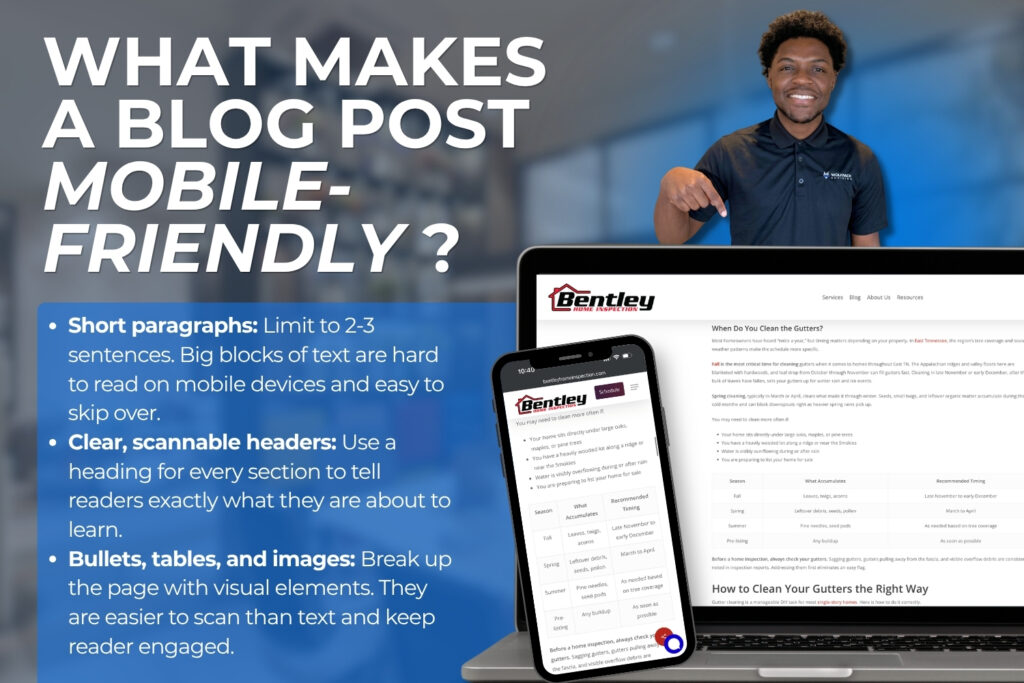
- Short paragraphs. Two to three sentences max. Big blocks of text are hard to read on mobile and easy to skip.
- Clear headers. Every section should have a heading that tells readers what they are about to learn.
- Bullet points and simple tables. Use them when you have a list of items or a comparison to make. They are much easier to scan than a paragraph and make useful information stand out on the page.
- Images that break up the page. You do not need a lot of them, but a couple of images or graphics help with readability and keep your audience engaged longer. Always compress images before uploading so they do not slow your site down.
One more thing worth mentioning: page speed. If your site loads slowly, people leave before they even read a single word.
Large uncompressed images are one of the most common culprits. Google’s free PageSpeed Insights tool can give you a quick read on where your website stands and what to fix first.
Do You Have Any Links in Your Blog Posts?
Links are one of the most overlooked blogging tips out there, and they do more work than most people realize.
Adding them is free, takes very little time, and makes a real difference in how search engines read your content.
There are two kinds worth thinking about:
- Internal links point to other pages on your own website. If you write an article about what to expect during a pest inspection and your website has a pest control services page, link to it.
- This helps search engines understand how your site is organized, keeps readers on your site longer, and moves people closer to contacting you.
- External links point to other websites. Linking out to a credible resource, like a local government site, a university extension program, or a trusted industry association, signals to search engines that your content is well-researched and worth ranking.
- You do not need a lot of them, but one or two per article is a good habit to create.
A simple rule to follow: every blog post should have at least one internal link to a blog or page on your site, and at least one external link to a trustworthy source.
Are You Posting Consistently Enough to Build Momentum?
One of the most common questions we get at WolfPack: “How often should I be posting?” Quality and consistency matter more than volume.
Here is what that looks like in practice:
| Posting habit | What happens |
| One solid article per month, every month | Steady momentum, search engines see an active site |
| Five posts in one week, then nothing for months | Short spike, then the signal fades |
| Irregular posting with no clear schedule | Hard to build authority or audience trust |
For most home service businesses, one to two posts per month is a realistic and sustainable target. Create a simple content calendar, even just a running list of ideas with rough publish dates, and treat it like any other recurring business task.
A few things worth keeping in mind:
- Longer posts in the 1,500 to 2,000 word range tend to perform better in search results
- Writing content on a regular basis signals to Google that your website is active and current
- Start building your content library now, even if it feels slow at the beginning
Are You Promoting Your Blog Posts on Other Channels?
Most business owners hit publish and move on. That is one of the biggest missed opportunities in blogging, and it costs nothing to fix.
Publishing is the starting line, not the finish line. One good article can do a lot more work for your brand if you put it in front of your audience after it goes live.
Think about all the useful information sitting in your blog that most of your readers have never seen. You change that by repurposing content to promote on other channels.
Simple Ways to Promote Every Blog Post
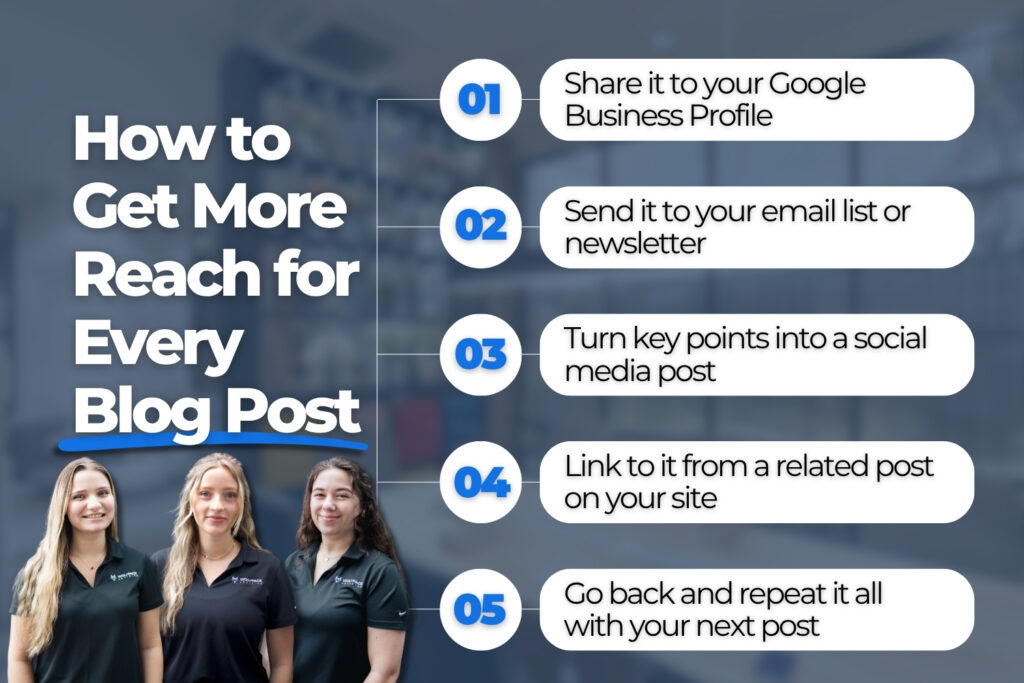
- Email your list: This is one of the highest-return things you can do after publishing. If you have a customer email list or send a regular newsletter, drop a link with a short note about what the article covers. Your email audience already knows and trusts your brand, which makes them far more likely to read, share, and take action.
- Share it to your Google Business Profile: Takes two minutes, keeps your profile active, and helps with local search visibility.
- Create a social media post around it: Pull one useful tip from the article and turn it into a quick caption with a link back to the full blog post. Respond to any comments you get. That engagement builds trust with your audience and signals activity to the algorithm.
- Link to it from a previous post: If you have an existing article on a related topic, go back and add a link to your new one. This helps search engines find it faster and keeps readers moving through your site.
One blog post, four channels, far more reach. That is a much better return on the time you already spent writing it.
Is Old Content Working Against You?
Your older blog posts are still out there, and they can either help you or quietly drag your site down.
Content ages. Stats get outdated. Services change. If you wrote an article a few years ago that references something no longer accurate, that post is slowly decaying.
Outdated blog posts send the wrong signals to search engines and give readers a reason to leave without taking action.
A few signs a blog post might need attention:
- It used to get traffic and stopped
- It references services, prices, or information that have changed
- It has links that go nowhere anymore (broken links)
- It is too thin, meaning only a few hundred words that do not really address the question
The good news is that updating an older article is often faster and more effective than writing something new from scratch. Google already knows the page exists. Refreshing it with current information, better structure, updated images, and more useful words throughout can bring traffic back without starting over.
Start building a habit of reviewing your top ten posts a couple of times a year.
Ask yourself: is this still accurate, does it serve my audience well, and does it represent my brand the right way? If the answer to any of those is wrong, it is worth the time to fix it.
Related Questions
How long should a blog post be for SEO?
Longer posts in the 1,500 to 2,500 word range tend to perform better in search results. Let the topic guide the length. Write enough words to fully address the question, cover the pain points your readers care about, and stop when you have done that.
Why are my blog posts not showing up on Google?
Common reasons could be thin content, topics that are too competitive, inconsistent publishing, slow page speed, or articles that do not focus on what your audience is actually searching for. A quick website audit can help you figure out where to begin.
What should a home service business write about on its blog?
Start with the questions you hear most from customers. Free tools like Google’s People Also Ask are a great way to find more blog post ideas based on what people in your area are searching for. FAQ-style posts, local how-to guides, and service explainers are a solid place to start building your content library.
Do links in my blog posts actually help my SEO?
Yes. Internal links help search engines understand your site structure and keep readers engaged longer. External links to credible resources add trust signals to your content. Both are worth creating in every article you write.
What is the difference between SEO and AEO?
Search engine optimization helps your blog posts rank on Google. AEO, or Answer Engine Optimization, helps your content get referenced by AI tools like ChatGPT and Perplexity. Writing clear, question-based articles with direct answers at the beginning of each section supports both goals at the same time.
Conclusion
If you have been blogging but not seeing results, there is usually a fixable reason you can address with these tips.
WolfPack works with home service businesses to build blogging strategies that actually drive traffic and leads, from finding the right blog post ideas to writing and publishing articles consistently.
If you want a fresh set of eyes on your blog or help building a strategy from scratch, we are here to help. Book a chat with our team today.