
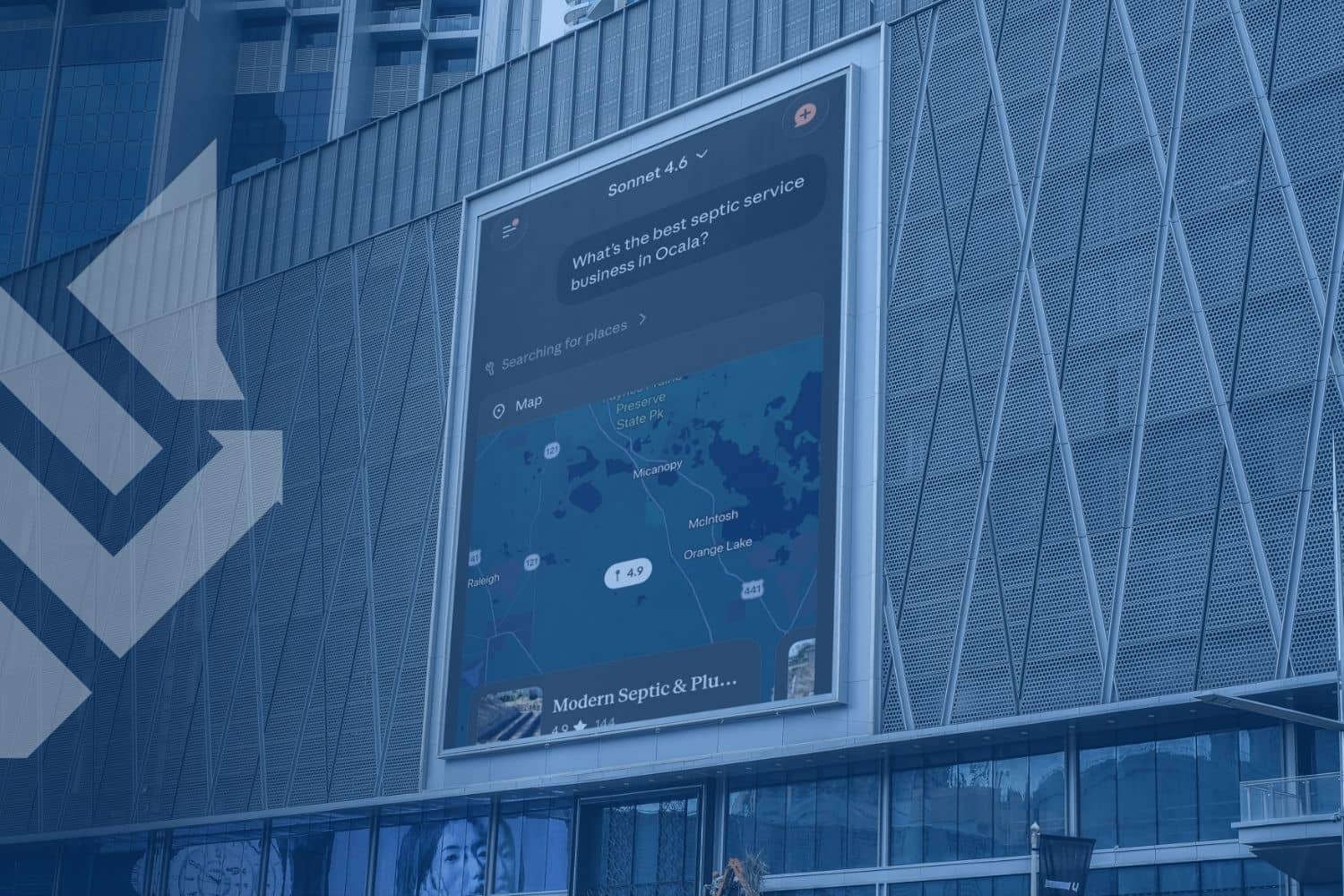
When someone needs a home inspector, a pest control company, or a septic service, a lot of them are not opening Google anymore. They are opening ChatGPT or Perplexity and just asking. And those tools are giving them actual business names in response.
Most home service business owners have never thought to check whether their name is one of them. That is the blind spot this post is here to help you close.
Tracking your brand mentions in AI search does not require tech expertise, a marketing background, or a big budget. It just requires knowing where to look and what to do with what you find. You’ll find all of that info below.
Contents
What AI Brand Mentions Actually Are
An AI brand mention is when an AI tool includes your business name in a response to someone’s question.
AI tools like ChatGPT, Perplexity, Google AI Overviews, and Gemini do not work the same way traditional search engines do. Instead of returning a list of links, they read content from across the web and write an actual answer.
Sometimes those answers include specific business names. When your business is one of them, that is a brand mention.
There are two types worth understanding:
| Type | What It Means | Real-World Example |
| Mention | Your business name appears in the AI’s answer | “Sunrise Home Inspections is a well-reviewed option in the Orlando area.” |
| Citation | Your website is linked as a source in the answer | Your URL appears as a clickable reference below the AI’s response |
A citation carries a bit more weight because it means the AI pulled from your actual website content and trusted it enough to point people toward it. But a mention still matters. It means AI recognized your business as a relevant, credible answer to a real customer question. Both are worth tracking and working toward.
Unlike traditional search, where you can check your local ranking and see exactly where you stand, AI search visibility is harder to see. There is no rank report for it. AI-generated answers shift constantly, vary by platform, and are not tracked by your existing website analytics.
That is exactly why you have to go looking for it yourself.
Why Tracking AI Brand Mentions Matters for Your Business
AI tools are recommending specific businesses by name every day. If yours is not one of them, you are losing customers you never knew you had a shot at.
This is not about keeping up with trends. It is about where your customers are going to find their next home service provider. AI Engine Optimization is becoming just as important as traditional SEO for any business that relies on being found online.
What Makes AI Search Different From Google
When someone searches on a traditional search engine, they get a list of results and decide which to click. When someone asks an AI tool the same question, they might get a direct recommendation. One or two business names. Maybe three.
That is a completely different experience for the customer, and it has a different impact on your business. A few things worth knowing:
- AI mentions influencing trust: When AI recommends your business by name, that person arrives pre-sold. AI said you were a good answer to their specific question.
- Brand visibility in AI affects how customers perceive you: AI answers shape how users see a business’s expertise and credibility compared to competitors, even before anyone visits a website.
- You will not know if you are missing out: AI platforms do not notify you when a competitor gets recommended instead of you. You have to go check.
- Visibility gaps add up: AI search platforms process a massive volume of queries every day. Each one where your competitor shows up, and you do not, is a real opportunity cost.
Why This Is Worth Your Time Right Now
Tracking brand mentions in AI search helps you understand your reputation and competitive positioning in AI-driven discovery.
It also helps you spot and correct visibility gaps before they cost you business.
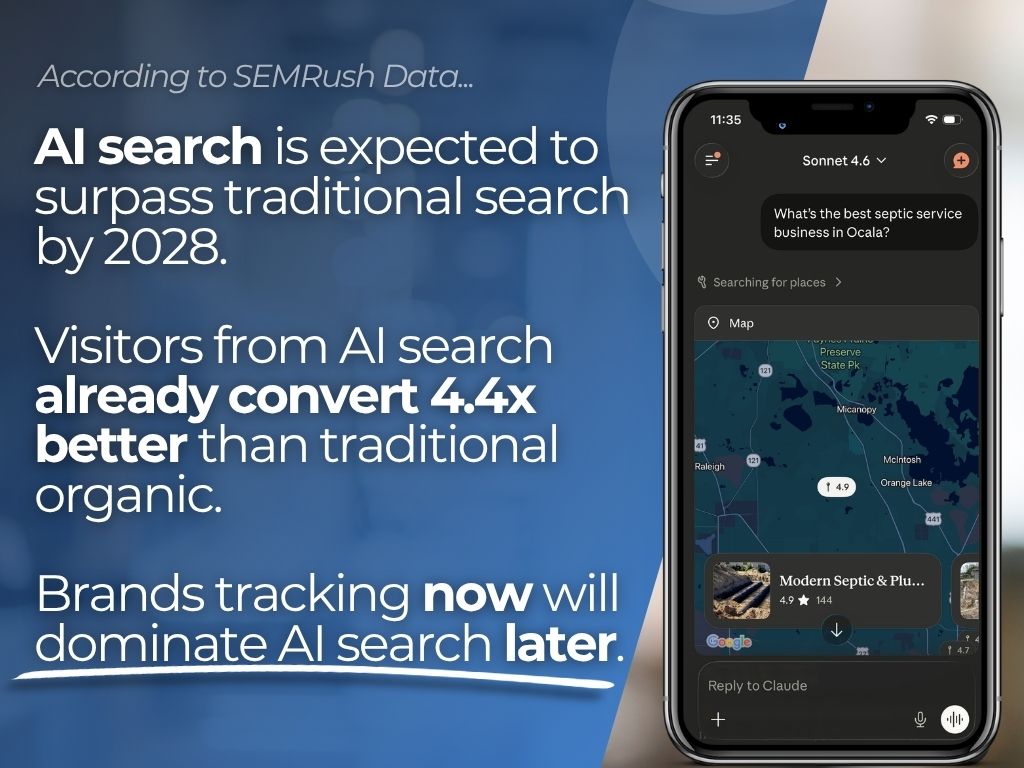
AI search is projected to surpass traditional search by 2028. The businesses paying attention now are building an advantage that will be much harder to close later.
Quick stat: Samsung attributed 28% of branded searches to increased zero-click exposure from AI Overviews and AI-generated summaries.
That means getting your name in front of the right person at the right time is still the goal, whether it happens on Google or inside a ChatGPT response.
This is the visibility gap our AEO Grader was built to surface. Home service businesses that run their site through it often find they are far less visible in AI results than they assumed, even with solid Google rankings.
How to Track Brand Mentions in AI Search
Start with a manual self-check. Pick five to ten questions your customers would actually ask, run them across the main AI search platforms, and write down what you find. You do not need a paid tool or the whole team for this check.
How to Choose Your Test Prompts
The questions you test with have to sound like something a real customer would say out loud, not just the way you would describe your own business. Think like someone who just moved to your area and needs help fast.
Examples across common home service trades:
- “Who are the best home inspectors in [your city]?”
- “What’s a good pest control company in [your county]?”
- “Is there a septic service I can trust near [your city]?”
- “Who do people recommend for basement waterproofing in [your area]?”
- “How do I find a reliable home inspector before closing?”
- “What should I look for in a pest control company?”
Write down five to ten prompts that match your trade and service area. These become your tracking list going forward.
Where to Check Your Visibility
Open each of these in a browser and paste in your test prompts one at a time. No special accounts or setup required.
- ChatGPT (chat.openai.com): The most widely used AI tool right now. Type your prompt and read the full response.
- Perplexity (perplexity.ai): Pulls from live web results and often shows exactly which sources it used. Good for seeing whether your site is being cited.
- Google AI Overviews: Run a regular Google search. If an AI-generated summary block appears at the top, read it carefully. Google AI Mode is also worth checking when available.
- Gemini (gemini.google.com): Google’s native AI assistant. Worth checking separately since it ties directly into Google’s data and local business information.
Each AI search engine pulls from different sources, so your brand may appear in one and not another. Checking across multiple AI platforms gives you the most complete picture!
What to Look For and Log
Depending on what tools and methods you’re using to track, different details may be available to you (like the exact AI platform, vs just the prompt topic).
After each check, record what you found in a simple Google Sheet:
| Column | What to Record |
| Date | When you ran the check |
| Platform | ChatGPT, Perplexity, Google, or Gemini |
| The Prompt | The exact question you asked |
| Brand Name Mentioned? | Yes or No |
| Website Cited? | Yes or No |
| Competitors Named? | Yes or No; If yes, note which ones appeared |
| Notes | Accuracy issues or anything else worth flagging |
Do this once a month. It takes 20 to 30 minutes and gives you a running record of whether your AI search visibility is growing, holding steady, or slipping.
Over time, you will see which prompts consistently surface competitor names and which platforms are picking you up. That tells you exactly where to focus.
Tools That Help You Monitor Brand Mentions
If manual monthly checks feel like too much, there are tools that help simplify the whole process and offer better understanding of your brand’s visibility.
- Semrush AI Visibility Toolkit: SemRush is our go-to for SEO and AEO. It layers AI visibility tracking on top of your existing SEO data for ongoing, automated monitoring across all the major platforms.
- WolfPack AEO Grader: Not ready for a paid tool yet? This tool is free, fast, and consistently improving. Check AI search visibility for any home service business in about two minutes.
For most home service business owners, the free AEO Grader paired with a basic monthly spreadsheet is enough to get real, actionable information.
If you are running a larger operation or want to track brand visibility across multiple areas, a dedicated tool or process for monitoring AI search is worth the investment.
What to Do If Your Business Is Not Showing Up
Not showing up in AI search results usually means AI does not have enough clear, consistent information about your business to recommend you confidently. That’s fixable, though.
Here are the four most common reasons and what to do about each:
- Your business information is inconsistent across the web. If your name, address, phone number, or website URL varies across directories, AI search engines have a harder time confirming your business is legitimate.
- Check Google, Yelp, Angi, the BBB, and trade-specific directories and make sure everything matches exactly. Consistency is how AI models understand that all your listings belong to the same business.
- You do not have enough reviews, or your reviews are outdated. Reviews are one of the strongest trust signals AI uses when deciding whether to recommend a business.
- A steady stream of recent, detailed reviews from real customers carries far more weight than a handful from three years ago. Ask every satisfied customer for a Google review.
- Your website does not answer customer questions directly. If your site is mostly a homepage, a services page, and a contact form, AI has very little to pull from.
- Adding pages or blog posts that answer real customer questions closes content gaps and gives AI-generated answers more to work with.
- You have not thought about AEO yet. Generative engine optimization, also called answer engine optimization or AEO, is the practice of building your online presence specifically to show up in AI-generated answers. Our post on building an AEO strategy is a good place to start.
How AI Visibility Fits With Your Other Marketing
You probably won’t have to build your AI search presence from scratch. It grows out of the marketing foundations you should already have in place.
Here is how each one plays into your brand’s presence in AI search.
Your Google Business Profile
Everything on your GBP feeds into AI answers: your business description, service categories, reviews, Q&A section, and photos.
Keeping your profile accurate, complete, and active supports your AI search visibility and your traditional search rankings at the same time.
Your Website Content
Website pages that clearly explain what you do, who you serve, and where you work are exactly what AI looks for when building a local service response.
Blog posts and FAQ pages that answer common customer questions do double duty, working for traditional search engines and AI search visibility simultaneously.
They also help AI models understand what your business does and who it serves, which is what earns you a spot in AI-generated answers.
Online Reviews and Third-Party Mentions
Every credible mention of your business name online strengthens your brand’s presence in AI search.
Reviews on Angi, Yelp, HomeAdvisor, and trade directories all count. So do mentions in local news, community Facebook groups, and neighborhood apps like Nextdoor. AI visibility data consistently shows that brands with strong third-party mention profiles outperform those relying on their website alone.
Benchmarking your AI visibility against direct competitors can also reveal where they are showing up that you are not, and what to do about it.
If you want to go deeper on how all of this connects, WolfPack’s post on building an AEO strategy covers the full picture.
Related Questions
Can AI search actually send me leads?
Yes. When AI tools recommend your business by name, that exposure drives direct brand searches, phone calls, and form submissions, even when no one clicks a link in the moment. Brands mentioned in AI answers consistently see measurable increases in direct brand searches as a result.
What is AEO, and how is it different from SEO?
SEO focuses on ranking in traditional search engine results. AEO focuses on getting your business included in the answers AI tools generate.
The two overlap significantly, with AEO putting extra emphasis on question-answering content and a consistent, credible web presence.
Does my Google Business Profile help me show up in AI results?
Yes, significantly. Your GBP is one of the primary data sources AI tools use for local service questions. An accurate, active profile with strong reviews directly supports your AI search visibility.
Why does my competitor show up in ChatGPT but I don’t?
Almost always, it comes down to three things: more recent reviews across more platforms, more website content that directly answers customer questions, or more consistent business information across the web. All three are fixable.
Conclusion
Tracking your brand mentions in AI search is not complicated, and it does not have to cost anything to get started. The hardest part is building the habit of checking.
Start with a simple prompt list and a free manual check across ChatGPT, Perplexity, Google AI Overviews, and Gemini. Write down what you find. Do it again next month. Over time, you will have a clear picture of where your business stands, which competitors are getting recommended instead of you, and what to do about it.
AI search is projected to surpass traditional search by 2028. The companies paying attention to their AI search visibility now are going to have a real head start on the ones that wait.
If you want to start dominating AI search for your space, book a chat with our team today.