A location page for every territory
Templated for consistency, written for the market: services, service area, team, reviews, and local proof, never the same paragraph with a new city name.
01 / Services
Every channel. One pack.
Brand, leads, and automation under one roof, tracked to revenue.
Your digital marketing foundation.
Reach people ready to hire you.
Nurture leads. Build lasting relationships.
02 / Who We Help
Built for service businesses.
Home services, construction, and professional practices that live on local leads.
03 / About
Meet the pack.
Former operators. Transparent reporting. Results you own.
04 / Resources
Sharpen your edge.
Guides, a podcast, free tools, and how-to help.
One brand strategy, a location page and Google Business Profile for every territory, and reporting broken out by location. We run it today for multi-location brands across the U.S., including a national franchise with more than 200 locations.


Overview
Franchise SEO is the work of getting every location in a system found in its own market under one brand. It is local SEO run at scale, with a problem a single-location business never has: your own locations can outrank each other, and the corporate site can outrank them both.
The failure modes are familiar. Thirty location pages that share one paragraph with a different city name, which Google treats as duplicates. Google Business Profiles that franchisees set up themselves with different names, categories, and hours. A brand site that ranks for the company name but sends a searcher in one city to a national page instead of the office down the road. Reviews piling up on one listing while the rest sit empty.
We fix the structure first, then build local authority one territory at a time: a page for every location that says something true about that market, a profile for every location that matches it, and tracking that shows which markets are winning and which need work. The same clean, consistent data is what AI assistants rely on when someone asks who to call nearby, so the work pays twice.
Why WolfPack
Corporate and Local, in One Plan. The franchisor owns the brand, the site structure, technical SEO, the templates, and corporate content. Franchisees own what happens in their territory: the profile, the reviews, the local proof. We split the work the same way, with a brand program the franchisor runs and per-location programs each franchisee can join, under one set of standards.
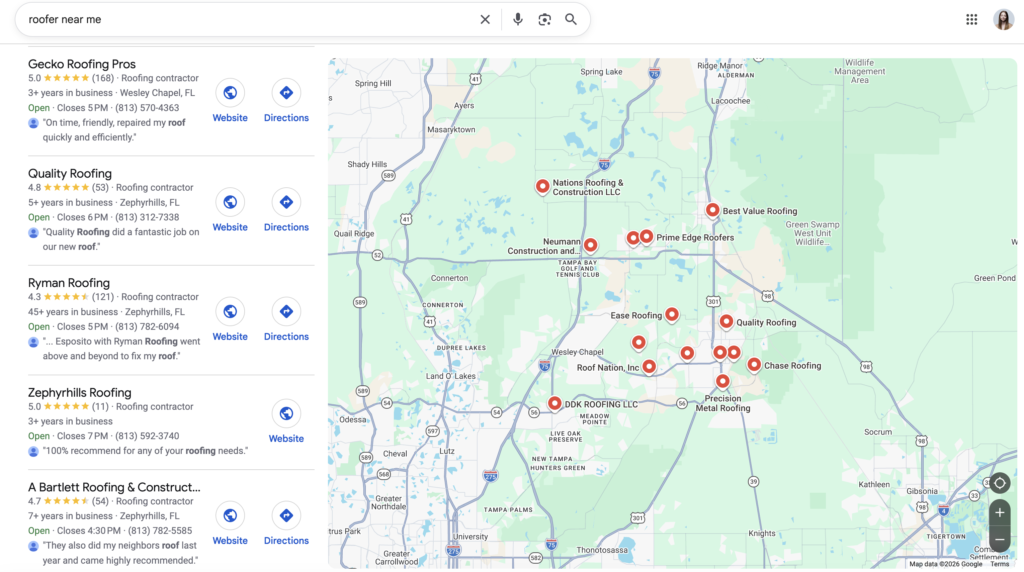
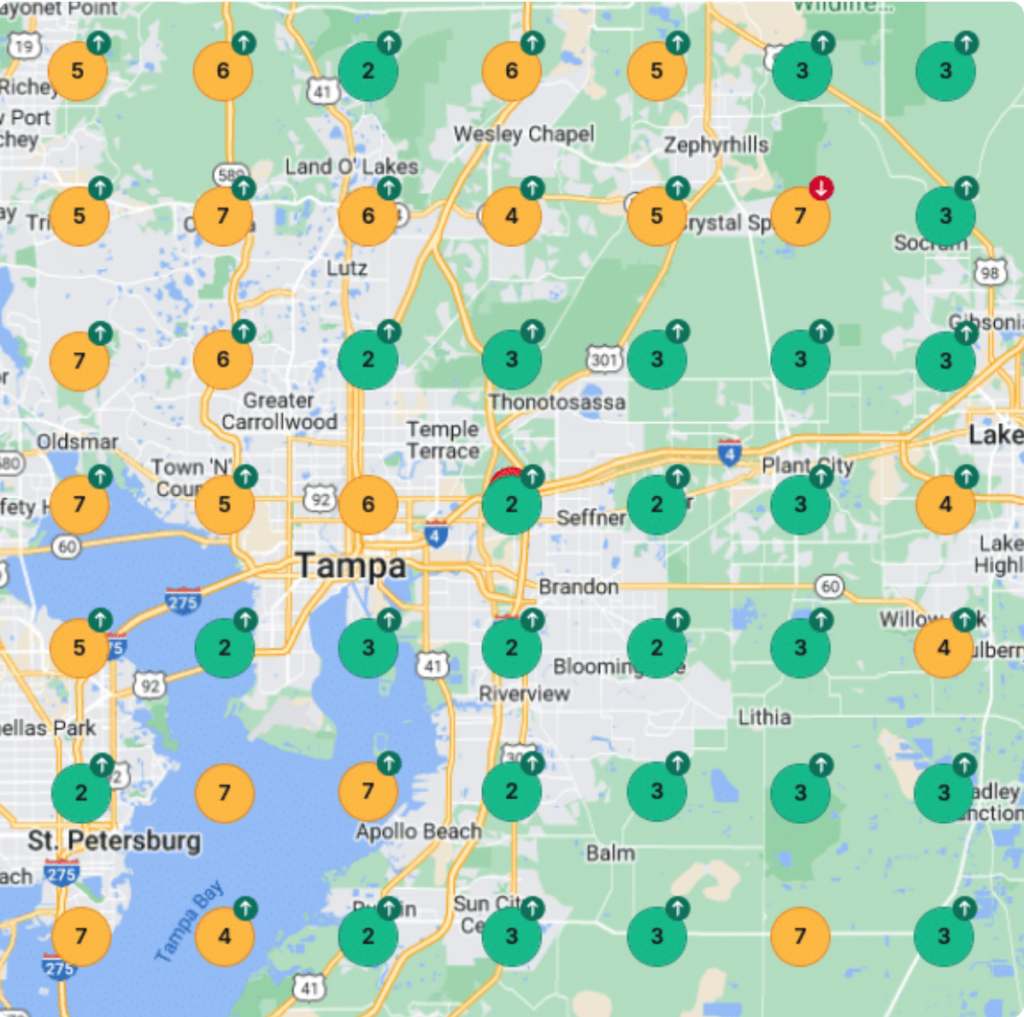
We Report by Location, on a Map. A single ranking number means nothing across twenty markets. Every location gets a geographic rank grid, and we connect GA4, Search Console, and our own lead tracking platform to your CRM so each location sees its organic leads, qualified leads, and closed revenue against spend. Corporate sees the roll-up.
We Do Our Own SEO, With the Same Team. The specialists who would run your system run ours, in-house and U.S.-based, white-hat only, month to month. Organic is where a large share of our own new business comes from, so this is not a side project.
We Come From Home Services, and We Run Franchise SEO Today. WolfPack was founded by owners of home service businesses, and most of the brands we serve are home service companies: inspection, pest control, restoration, HVAC, plumbing, and lawn care. We run multi-location SEO for brands across the U.S., from regional companies with a handful of offices to a national franchise with more than 200 locations, so the franchisor and franchisee sides of the work, and the territory model behind them, are things we manage every month.
What's Included
Templated for consistency, written for the market: services, service area, team, reviews, and local proof, never the same paragraph with a new city name.
Every location's profile claimed or created, verified, categorized, and kept consistent, with posts and Q&A managed from one place.
Name, address, and phone matched across directories for every location, including the listings franchisees set up on their own.
A clear hierarchy for brand, service, and location pages, with internal linking, schema, speed, and indexing fixes made once and applied everywhere.
Service pages, guides, and articles at the brand level that build authority every location inherits.
A review process each franchisee can run, with monitoring and responses across every profile.
Consistent entity data across locations, so AI assistants cite the right office when someone asks who to call nearby.
A geographic rank grid, organic leads, and revenue for each location, plus the system-wide view for corporate.
The Process
We audit the brand site, every location page, every Google Business Profile, and every directory listing, then map each territory against where that location actually ranks. That shows us cannibalization, duplicate content, orphaned profiles, and the competitors in each market before we touch anything.
We fix the site hierarchy so brand, service, and location pages each rank for the search they should. Then we build the location page template, set schema and internal linking rules, and document the standards franchisees follow, so consistency does not depend on memory.
Every location gets a claimed, verified Google Business Profile with the right name, categories, hours, and service area, plus clean, matching citations across the directories that matter. The same checklist onboards each new location in days instead of months.
Each location page is written for its market with real local detail, while brand content at the corporate level builds the authority every location inherits. A simple review process gives each franchisee a steady flow of recent reviews on their own profile.
We connect GA4, Search Console, and our lead tracking platform to your CRM, broken out by location. Each office sees its organic leads, qualified leads, and closed revenue. Corporate sees the whole system in one view.
Every month we review each location's grid, traffic, and leads, fix what slipped, and push the markets with the most upside. New openings are onboarded on the same template and checklist, and corporate gets a quarterly roll-up across the system.
Benefits
By Location
Each location gets its own rank grid, lead count, and revenue view. Corporate gets the same data across the system, so you can see which markets are winning, which need help, and what the whole program returns.
Brand Control
Templates, schema, naming, and profile rules are set once and applied everywhere. Within that frame, every location page carries real local detail, so the brand stays consistent and each office still ranks in its own market.
Real ROI
Rankings are an input. We connect your analytics and our lead tracking to your CRM so the report shows what each location earned from organic search against what it spent.
In-House Team
No white-label partners and no offshore handoffs. The specialists who would run your system run ours, with white-hat methods and a month-to-month agreement, so the work has to earn its place every month.
Pricing
Month-to-month plans. Franchise systems with several locations get a custom program scoped after a short strategy call.
From $389 per month
Setup & Onboarding
Local SEO
Reporting
Included
Setup & Onboarding
SEO & AEO
Reporting
Included
Setup & Onboarding
SEO & AEO
AI Brand Analysis & Optimization
Reporting
Pricing starts at $389 per month and can be customized based on your needs.
Meet the Pack

SEO Specialist

SEO Specialist

SEO Specialist

SEO Specialist
Case Studies
+75.5 Positions Improvement (Avg. Keyword Ranking)
+77.94 Positions Improvement (Avg. Keyword Ranking)
649 tracked leads Leads in 6 Months
Related Reading
Quick Questions
Franchise SEO is search engine optimization for a brand with many locations, each serving its own territory. It combines two jobs. At the brand level, it means a sound site structure, technical SEO, and corporate content that build authority for the whole system. At the location level, it means a page, a Google Business Profile, citations, and reviews for every office, so each one ranks in its own market for local searches and map results. The part that makes it different from ordinary SEO is coordination: keeping locations from competing with each other, keeping data consistent across the system, and reporting results by location so both corporate and each franchisee can see what they are getting. Our guide to managing franchise SEO goes deeper on the tactics.
Local SEO gets one business found in one market. Franchise SEO does that for every location at once, under one brand, which adds problems a single business never has. Location pages built from one template can read as duplicate content. Locations near each other can cannibalize the same searches. Profiles set up by different franchisees drift in naming, categories, and hours. The corporate site can outrank the local office for a local search and send the lead to the wrong place. Franchise SEO solves those with structure, standards, and reporting that is broken out by location, and it needs a process for onboarding each new opening so the system stays clean as it grows.
Both, with a clear split. The franchisor owns what is shared: the website, its structure and templates, technical SEO, brand content, and the standards every location follows. Franchisees own what is local: their Google Business Profile, their reviews, and the local proof on their location page. Problems start when neither side owns the middle, and profiles, citations, and location pages drift. We work with either side. For franchisors we build and run the brand program and give each location a program it can join. For a single franchisee we run the local program for that territory and work inside the brand’s rules, so the location gets results without breaking the system.
Cannibalization usually comes from structure, not from the locations themselves. We give every location one page that targets its own city and service area, with a distinct title, content, and schema, so Google has an obvious best answer for each market. Service pages at the brand level target the service, not a city, and link down to the locations. Google Business Profiles are set with the right service areas so overlapping offices are not both pushed into the same map results. When two locations do share a market, we decide which one should win which searches and build toward that instead of letting Google guess. Then the per-location rank grid shows whether it worked.
No, and this is the most common franchise SEO problem we see. A template is fine. The same paragraph with a new city name is not, because Google treats near-duplicate pages as one page and ranks few or none of them. We keep the template for structure and brand consistency, then give each location real local detail: the services that office offers, the towns it serves, the team, recent reviews, local photos, and answers to the questions people in that market ask. It takes more work up front, but it is what lets each location rank, and it is the same content that AI assistants draw on when they recommend a nearby provider. Our content writing team handles it.
Usually not. Separate microsites split the brand’s authority across many weak domains, create inconsistent experiences, and are hard to keep updated. Location pages on the main brand site, in a clear folder structure, inherit the authority of the whole system and are far easier to manage and report on. There are exceptions, such as a franchisee operating under a legacy local brand or a system where locations are nearly independent businesses, and we will say so if that applies to you. If the current site cannot support location pages well, our website team builds it so it can. See our guide to franchise web design for how that structure should look.
We start by finding every profile that exists, including the ones franchisees or former managers created, and consolidating them under one business group so corporate has oversight and each location keeps access. Then we standardize every profile: name, categories, hours, service areas, attributes, and links to the right location page. From there we manage posts, photos, Q&A, and review responses across all of them, and we watch for suggested edits and duplicates that would otherwise go unnoticed. New locations get a profile on the same checklist before they open, so they are verified and ranking by launch day instead of months later.
Our SEO plans are month to month and are shown on this page. For a single franchisee, a plan for that territory usually fits as is. For a franchisor or a multi-location group, we scope a program after a short strategy call, because the cost depends on the number of locations, the state of the site and profiles, how much local content each market needs, and how the work is split between corporate and the locations. Many systems fund the shared work at the brand level, such as structure, technical SEO, and brand content, while each location funds its own local program. We will show you both sides clearly before anything starts.
The fastest movement comes from the profile and listing work, often within the first one to three months, because fixing a location’s Google Business Profile and citations changes map results quickly. Location pages and brand content build over three to six months as Google re-crawls and the pages earn authority. Systems with a large cleanup, such as duplicate profiles or many near-identical pages, take longer to untangle but tend to see the biggest gains once they are fixed. Because results are reported by location, you will see the early markets move before the whole system does, and we use those to set priorities for the rest.
Each location gets a geographic rank grid, so you can see where it wins and where it does not, block by block, instead of a single average position. We connect GA4, Search Console, and our own lead tracking platform to your CRM and break the data out by location, so each office sees its organic traffic, leads, qualified leads, and closed revenue against spend. Corporate sees the same data rolled up across the system and ranked by market, which makes it easy to see which locations to support and which to copy. See how our lead tracking and ROI reporting works.
New locations go through the same checklist every time, so they launch ranking instead of catching up. Before opening, we create and verify the Google Business Profile, publish the location page on the brand template with real local detail, set the service area and schema, and push matching citations to the directories that matter. At launch, the location is added to tracking and reporting, and the review process starts on day one. Because the structure and standards already exist, onboarding a new location is a matter of days of work, and it does not disturb the locations already ranking.
Reviews
Tell us how many locations you run and where. We will audit the system, map the territories, and show you what each market needs on a short call.